A Party Picnicking Near a Village — History & Facts
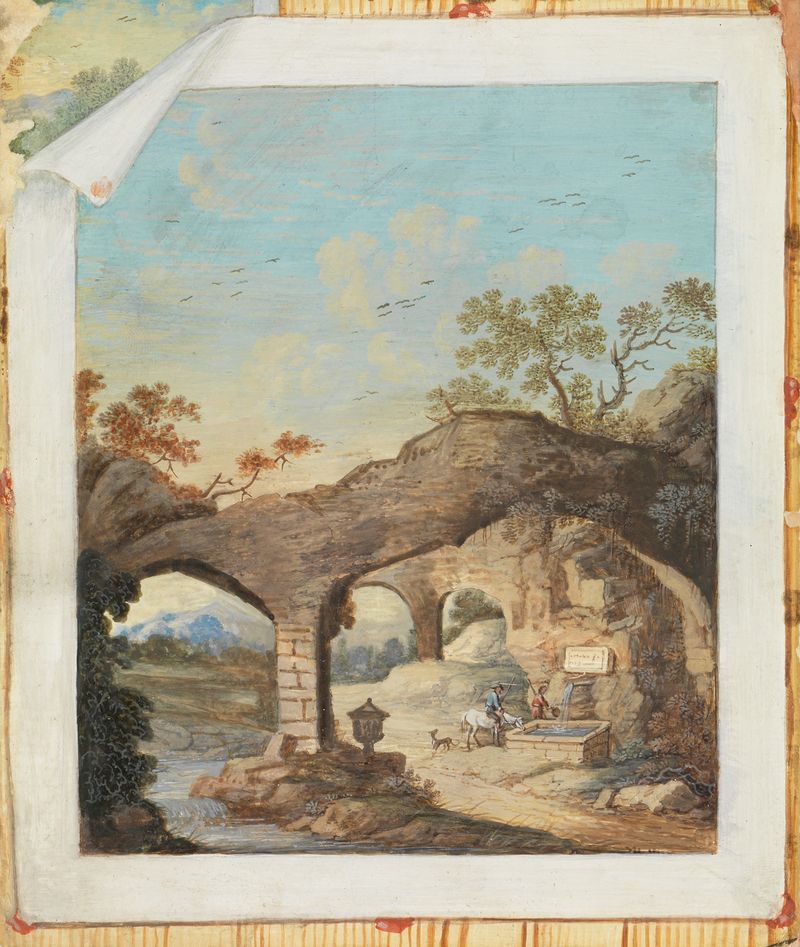
Could beauty survive in a century of chaos? In A Party Picnicking Near a Village, the artist captures a fleeting moment of joy amidst the backdrop of an ever-changing world. The painting invites us to ponder not just the leisure of the figures depicted, but the obsessive pursuit of serenity in tumultuous times. Look to the left, where a verdant stretch of grass cradles a lively gathering of elegantly dressed individuals, their laughter almost audible. The delicate brushwork reveals an array of textures, from the sumptuous fabric of their clothing to the shimmering plates of food laid before them.
Notice how the dappled sunlight breaks through the trees, illuminating their faces in soft highlights while casting gentle shadows, creating a harmonious balance between light and darkness that echoes the complexities of human experience. Delve deeper into the painting’s subtleties, where the juxtaposition of leisure and nature hints at an underlying tension. The cheerful expressions of the picnickers contrast with the distant village, suggesting a fleeting escape from the realities of life outside their idyllic bubble. Each figure, though immersed in conversation, seems to harbor an unspoken yearning, a subtle obsession with perfection amidst uncertainty, as if grasping at a moment that could easily slip away. During the late 1760s in France, van Blarenberghe painted this piece, a time marked by political unrest and the precursors to the French Revolution.
As he captured scenes of pastoral beauty and sociability, the artist was also navigating his own place within the tumultuous world of art, where the Rococo style—celebrated for its charm—began to yield to the emerging values of Neoclassicism. This painting stands as a testament to the search for beauty as a counterbalance to chaos.