
A Portal of a Church — History & Facts
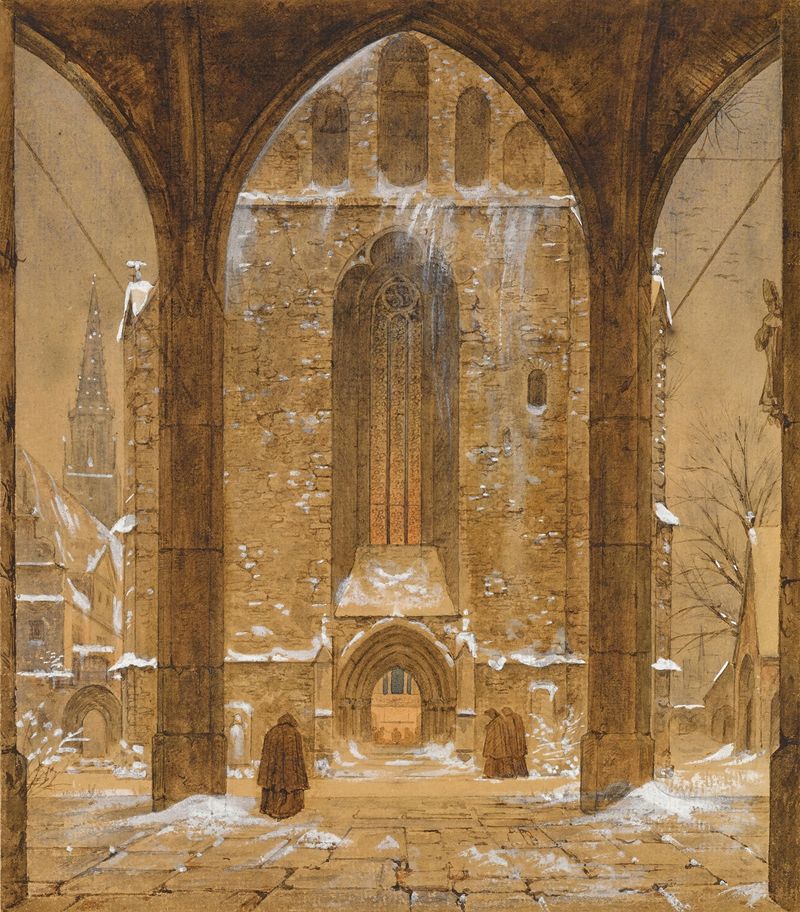
In the stillness of a sacred space, hope flickers like a candle’s flame, asserting its presence amidst the shadows. Look to the center of the composition, where the grand portal beckons with an inviting arch, intricately defined by soft hues of ochre and muted greens. The light spills gently through the doorway, creating a luminous contrast that draws your eye inward, suggesting an alluring journey into the soul of the church. Notice the delicate detailing on the stone, each chisel mark a testament to time and labor, echoing the devotion that infuses this sacred space. Yet, it is the juxtaposition of light and darkness that carries the emotional weight of the piece.
The rich shadows looming in the corners seem to envelop the promise of entry, hinting at the duality of faith—hope intertwined with uncertainty. The architectural elements are not merely physical structures; they symbolize the pathways of belief and the search for solace. Each stone whispers stories of prayer, redemption, and the human spirit’s resilience. In the first half of the 19th century, during a period of burgeoning Romanticism, Oehme crafted this work while exploring spiritual themes against a backdrop of socio-political upheaval in Europe.
His approach combined meticulous detail with an emotional perspective, as he sought to transcend mere representation and evoke a deeper connection between the viewer and the divine. This painting reflects both his artistic aspirations and the societal quest for meaning in uncertain times.
More Artworks by Ernst Ferdinand Oehme
Browse all →


More Architecture Art
Browse all →
The statue of Liberty
Frédéric Auguste Bartholdi

View of Houses in Delft, Known as ‘The Little Street’
Johannes Vermeer

View of Houses in Delft, Known as ‘The Little Street’
Johannes Vermeer

The Cathedral in Rouen. The portal, Grey Weather
Claude Monet

The yellow house
Vincent van Gogh

The Church in Auvers-sur-Oise, View from the Chevet
Vincent van Gogh