Cloister in Winter — History & Facts
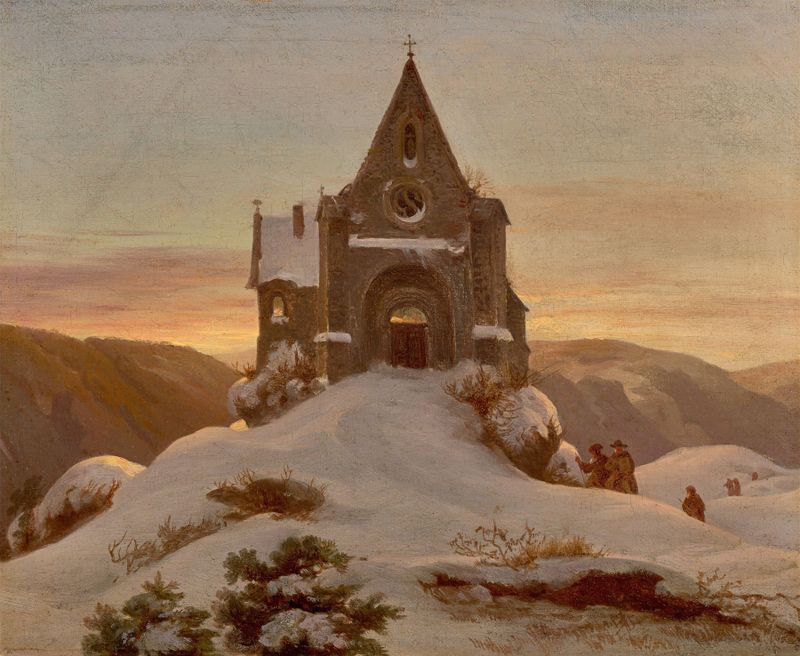
Can beauty exist without sorrow? The answer whispers through the branches and shadows of a winter cloister, cradling both elegance and unease. Look to the left where the archway frames a world steeped in cold tranquility. The muted tones of pale blues and grays envelop the scene, a delicate balance of light and shadow that casts a soft glow upon the snow-laden ground. Notice how the intricate details of the stonework draw the eye, each carving alive with history, yet softened by a gentle layer of frost.
The starkness of the bare trees contrasts with the cloister's serene architecture, creating an atmosphere that is both inviting and chilling. Hidden within this artwork lies a tension that transcends mere beauty. The juxtaposition of the warm architecture against the frigid landscape evokes a sense of longing, as if the cloister itself is a refuge from the harshness of winter. The absence of figures invites contemplation, allowing the viewer to ponder the solitude that often accompanies such serene moments.
Each element harmonizes to reveal a deeper narrative about the fragility of peace amid the pervasive chill of fear and isolation. Ernst Ferdinand Oehme created this work during the early 19th century in Germany, a period marked by romantic explorations of nature and emotion. Immersed in the shifting art world, Oehme sought to capture the interplay between the sublime and the melancholic, reflecting contemporary themes of longing and existential uncertainty. At this time, he was navigating his own artistic voice, striving to evoke profound feelings through landscape and architecture, elements that would define his legacy.