
Burg Scharfenberg at Night — History & Facts
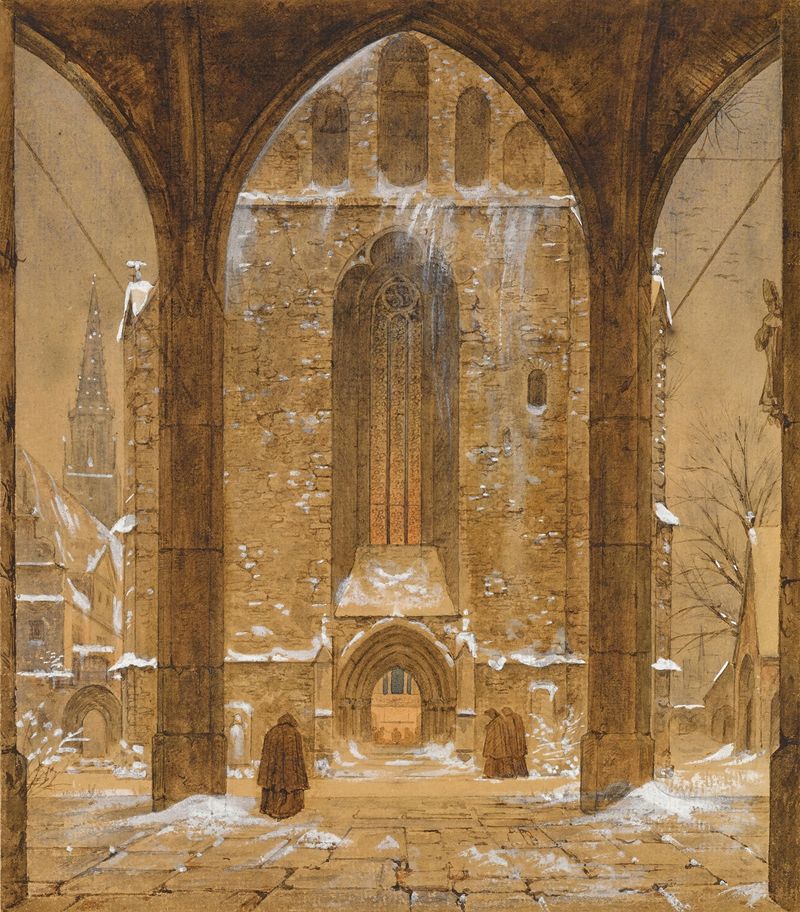
In the twilight of existence, fragility weaves its way through the still air, cloaked in shimmering hues that invite contemplation. Look closely at the luminous sky; the blues and deep purples bleed into one another, hinting at the whispers of dusk’s arrival. Your gaze is drawn to the imposing silhouette of the castle, Burg Scharfenberg, perched precariously on the edge of a rocky precipice. The flickers of light from the windows, though sparse, cast a warm glow that contrasts sharply with the coolness of the scene, creating a sense of eerie isolation.
Notice how the brushstrokes soften the harshness of the fortress, making it appear both majestic and vulnerable under the fading light. The interplay between light and shadow speaks to the duality of strength and weakness inherent in the structure. Each illuminated window suggests human presence and yet also evokes loneliness, like fleeting memories held captive within stone walls. The rugged landscape surrounding the castle further amplifies this tension, embodying both beauty and foreboding—a testament to nature’s indifferent embrace of mankind’s creations.
Herein lies a poignant reminder of the transient nature of beauty, where fragility is often hidden beneath the surface. In 1827, Oehme painted this work during a time when Romanticism dominated the art landscape in Germany. The artist was exploring themes of the sublime, reflecting his own struggles with identity and belonging within a rapidly changing society. The movement was marked by a yearning for nature and emotional depth, and Oehme’s choice to depict a powerful yet isolated castle encapsulates this era’s fascination with the interplay between humanity and the natural world.
More Artworks by Ernst Ferdinand Oehme
Browse all →


More Architecture Art
Browse all →
The statue of Liberty
Frédéric Auguste Bartholdi

View of Houses in Delft, Known as ‘The Little Street’
Johannes Vermeer

View of Houses in Delft, Known as ‘The Little Street’
Johannes Vermeer

The Cathedral in Rouen. The portal, Grey Weather
Claude Monet

The yellow house
Vincent van Gogh

The Church in Auvers-sur-Oise, View from the Chevet
Vincent van Gogh