Cathedral in Winter — History & Facts
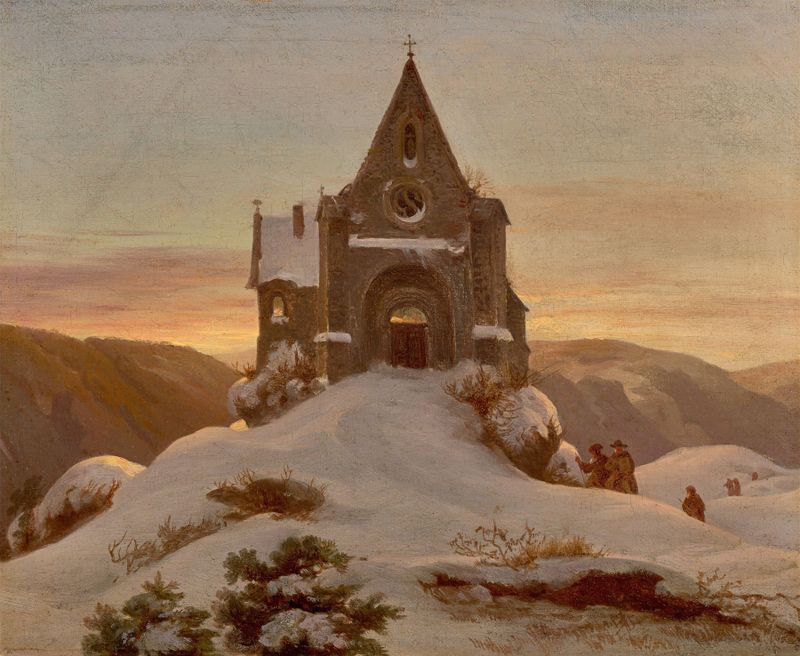
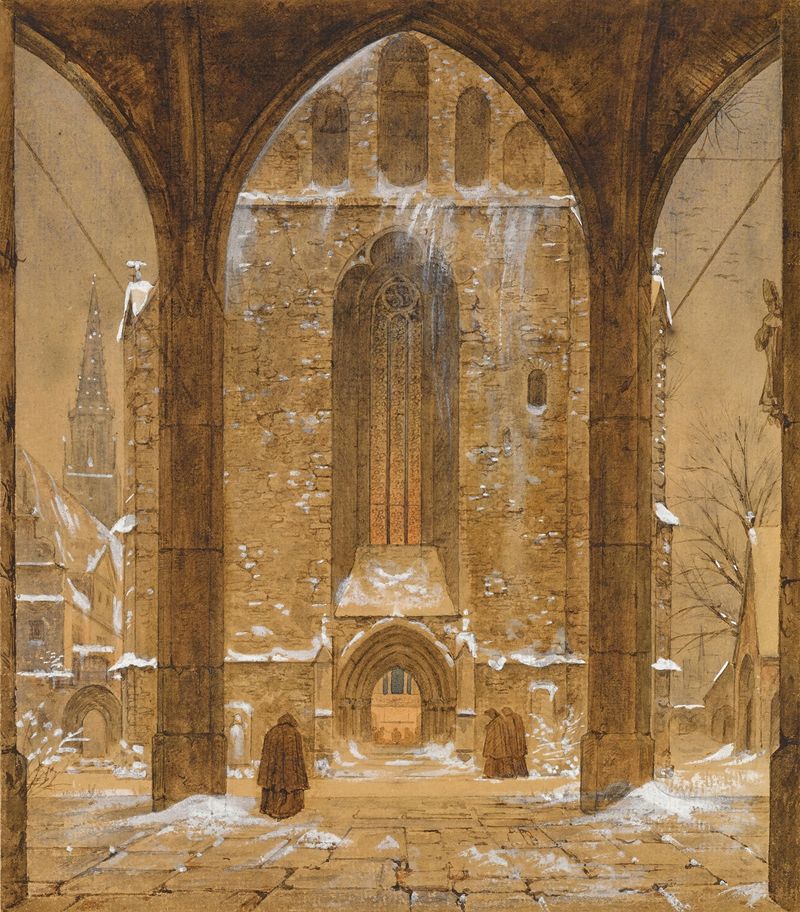
Can beauty exist without sorrow? In Ernst Ferdinand Oehme’s Cathedral in Winter, the delicate interplay of light and shadow evokes a profound yearning that resonates deeply with the heart. Look to the center of the canvas where the grand cathedral stands proud against a backdrop of snow-draped trees. The cool, crystalline blues and whites create a stark contrast with the warm, golden hues illuminating the building's intricate architecture. Notice how the sunlight filters through the frosty air, casting ethereal reflections that seem to dance on the frozen ground, inviting you to step into this serene yet haunting scene. As you explore further, the silent figures in the foreground begin to emerge.
They appear small and solitary against the monumentality of the cathedral, emphasizing the isolation often felt amidst beauty. This juxtaposition evokes a sense of longing, suggesting that the grandeur of faith and structure is intertwined with the quiet melancholy of winter, a season of both stillness and fleeting moments. The meticulous brushwork and layered textures enhance the emotional gravity, inviting viewers to reflect on their own experiences of beauty and loss. In 1821, Oehme painted this work during a period of burgeoning Romanticism in Europe, which sought to capture emotional depth and the sublime in nature.
Living in Dresden, he was influenced by the picturesque landscapes surrounding him, as well as the existential questions posed by his contemporaries. This painting emerges from a time when artists were increasingly exploring themes that bridged the divide between the spiritual and the temporal, echoing the sentiments of a society grappling with change and uncertainty.