Mountain chapel in Winter — History & Facts
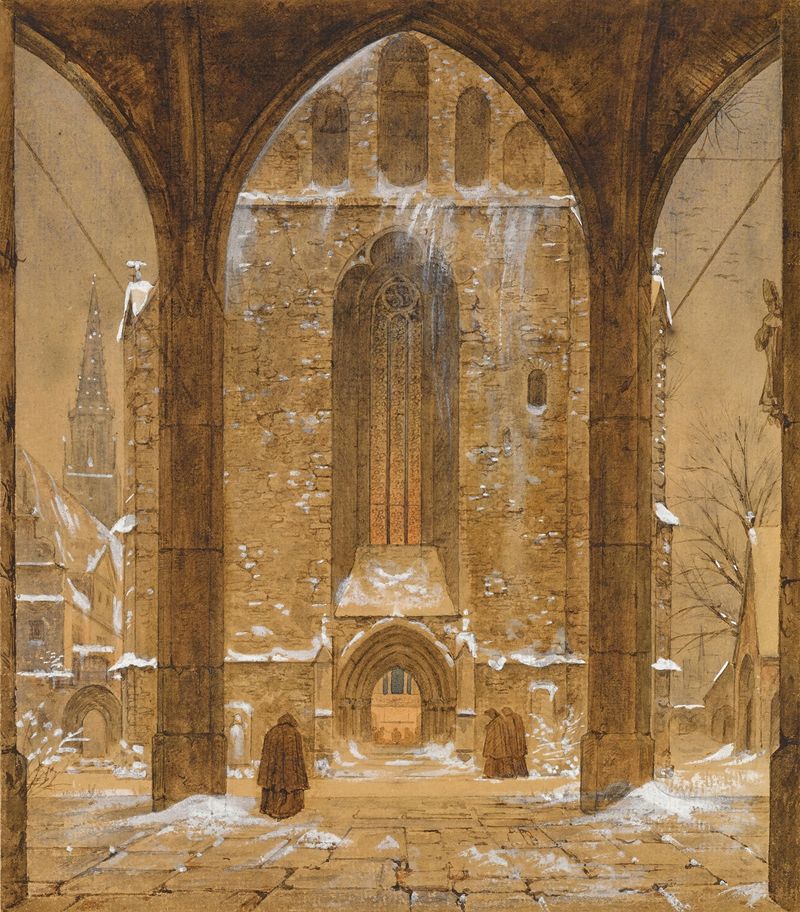
Could a single brushstroke hold eternity? In Mountain chapel in Winter, the quiet solitude of faith resonates through a serene, snow-blanketed landscape, inviting reflection on the divine. Look to the center where the chapel stands, its weathered stones kissed by the soft glow of a winter sun. Notice how the gentle light cascades down the snowy slopes, creating a stark contrast between the brightness of the illuminated chapel and the shadows that cradle it. The muted color palette evokes a tranquil mood, with shades of blue and white harmonizing to suggest both the chill of the season and the warmth of sanctuary, creating a visual paradox that draws the viewer in. The artwork whispers stories of solitude and contemplation, revealing a tension between the harshness of winter and the resilience of faith.
The twisted trees, heavy with snow, seem to bow in reverence to the chapel, suggesting a connection between nature and the divine. Each brushstroke encapsulates both the fragility and strength of belief, as if inviting the observer to reflect on their own spiritual journey amid the vast stillness. In 1850, Ernst Ferdinand Oehme captured this piece during a period of romanticism in Germany, where artists sought to express profound emotions and the sublime aspects of nature. He was influenced by the era's fascination with spirituality and the natural world, striving to convey a sense of peace and introspection through this idyllic winter scene.
Oehme's work reflects both personal belief and broader cultural movements, grounding it in a moment of artistic evolution.