
A quiet afternoon on the river — History & Facts
The delicate interplay of movement and stillness in this piece captures the essence of fleeting time, where tranquility masks the tumultuous ebb and flow of life. Look to the gentle strokes that define the river's surface, shimmering in hues of turquoise and gold. Your eyes should be drawn to the figures in the foreground, their soft outlines blending into the landscape, as if they, too, are part of the scenery. Notice how the sunlight dances across the water, creating a hypnotic rhythm that invites the viewer to pause and reflect.
The soft brushwork and muted palette envelop the scene in a serene glow, evoking a sense of calm amidst the undercurrents of emotion. Yet, beneath this peaceful façade lies an undercurrent of tension. The figures, though stationary, seem poised to move, hinting at transient moments in life where decisions hang in the balance. The flowing river symbolizes the relentless passage of time, while the surrounding nature offers solace and refuge from the chaos of existence.
This tension between movement and stillness resonates deeply, suggesting that even in tranquility, life is ever-changing. Emilio Sánchez-Perrier painted this work during a period of great artistic evolution in late 19th-century Spain, a time marked by shifting societal norms and a burgeoning appreciation for impressionism. Living in Madrid, he was influenced by the interplay of light and shadow, a hallmark of his artistic style. As he explored these themes, he created works that captured the essence of nature, revealing both its beauty and the complexities of human emotion.
More Artworks by Emilio Sánchez-Perrier
Browse all →
La Rivière, Environs de Santiponce
Emilio Sánchez-Perrier

At The Mouth Of The Grand Canal, Santa Maria Della Salute In The Distance
Emilio Sánchez-Perrier

Paysage
Emilio Sánchez-Perrier
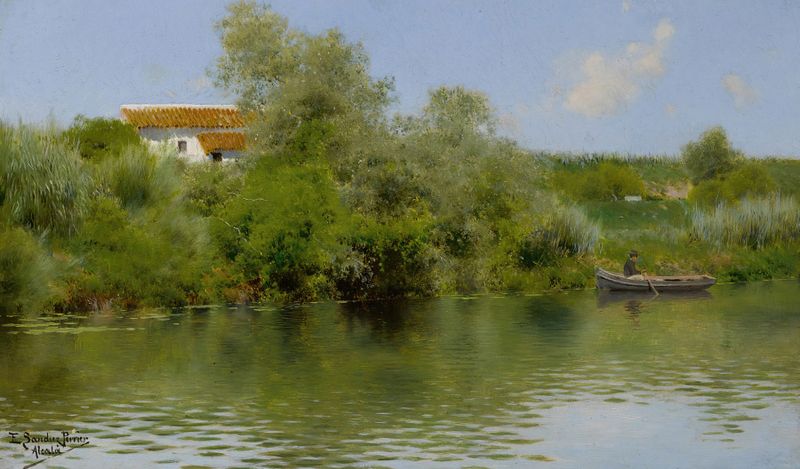
The River at Alcalà
Emilio Sánchez-Perrier

On the river
Emilio Sánchez-Perrier

A summer day on the river
Emilio Sánchez-Perrier

A QUIET STRETCH OF RIVER
Emilio Sánchez-Perrier
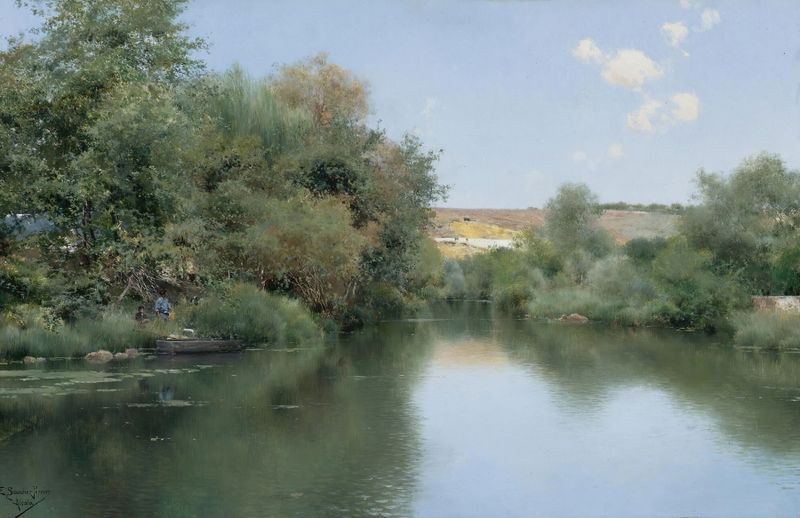
El Rialaje
Emilio Sánchez-Perrier
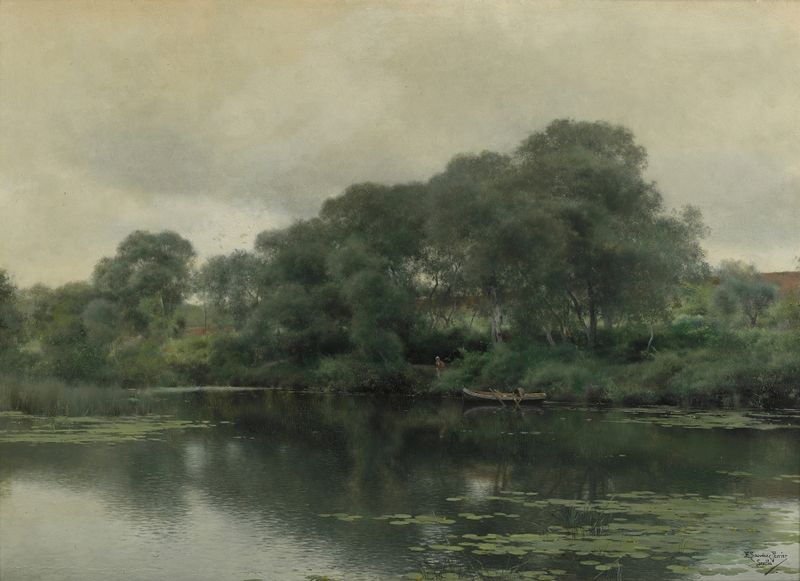
Stillness on a lily pond
Emilio Sánchez-Perrier
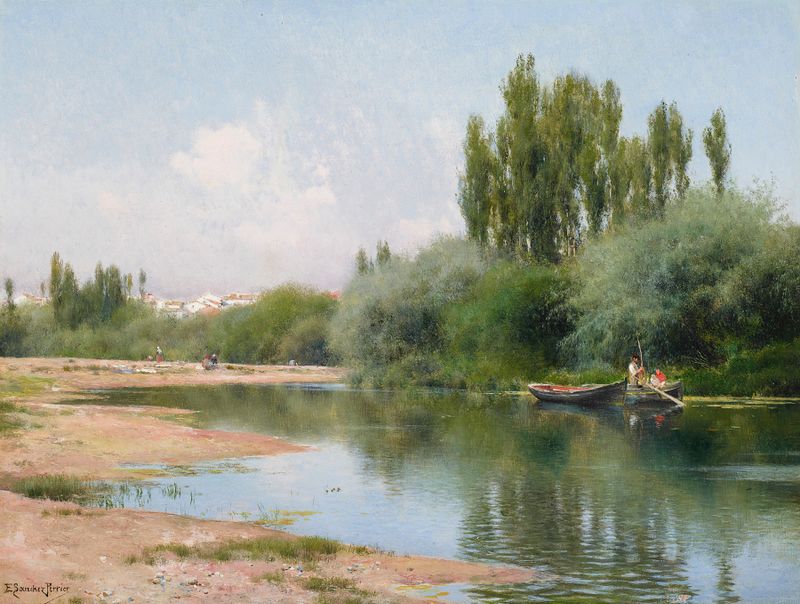
On the Guadalquivir, Seville
Emilio Sánchez-Perrier





