
A Quiet Evening on the Ferry over the Blyth — History & Facts
Is this a mirror — or a memory? The gentle ripples of the water seem to reflect not only the fading light but also the whispers of time. In A Quiet Evening on the Ferry over the Blyth, the delicate interplay of nostalgia and reality invites us to explore the essence of fleeting moments captured on canvas. Look to the left, where faint silhouettes of figures can be seen against the calming hues of dusk. The soft blue and amber tones blend seamlessly, creating an atmosphere that feels both serene and introspective.
Notice how the brushstrokes convey the texture of the water, reflecting the gradual descent of the sun, while the ferry acts as a bridge between the two worlds — a transition from day to night, life to memory. As you delve deeper, consider the emotional weight of the scene. The figures, seemingly lost in their thoughts, embody a sense of solitude amidst companionship, suggesting an inner world that contrasts with the external calm. The quiet waters may symbolize a moment of peace, but they also evoke the bittersweet nature of reminiscence, where the beauty of now is tinged with the awareness of what is to come. Sir Frank Short created this work in 1890, during a period marked by a growing interest in landscape and the effects of light.
Living in England, he was influenced by the Impressionist movement and the technological advances that transformed how artists portrayed nature. This painting reflects his mastery in capturing ephemeral moments, echoing the sentiments of a time when art began to embrace both emotional depth and atmospheric nuance.
More Artworks by Sir Frank Short
Browse all →
Morning Haze in Chichester Harbor
Sir Frank Short
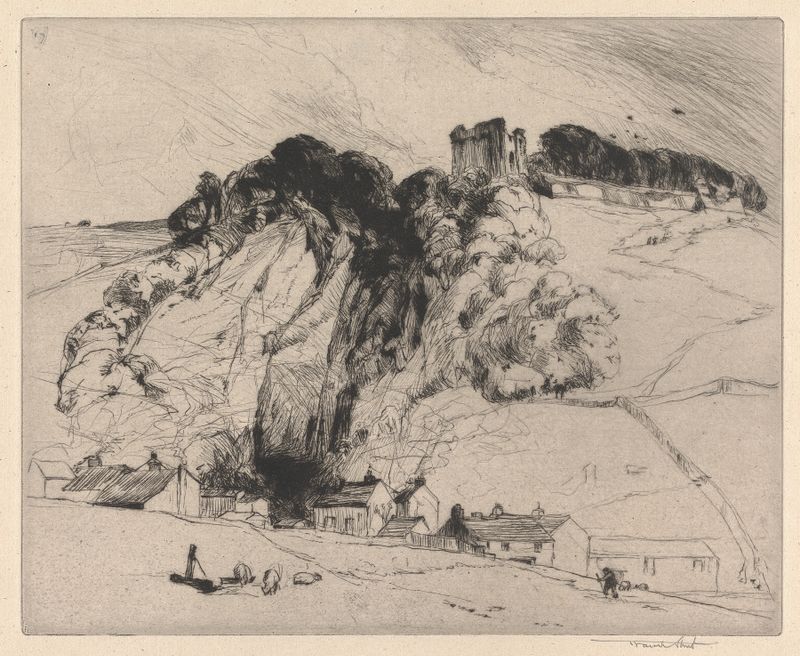
Peveril’s Castle, Derbyshire
Sir Frank Short
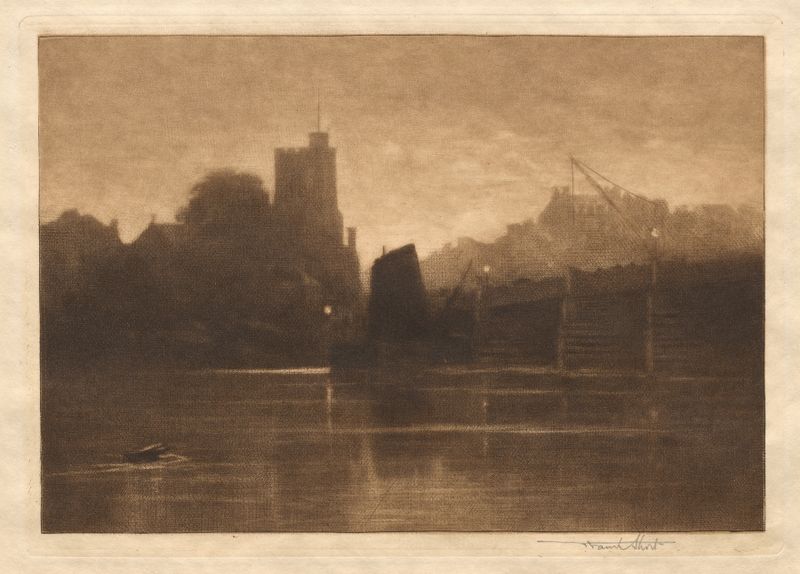
Ebb Tide, Putney Bridge
Sir Frank Short
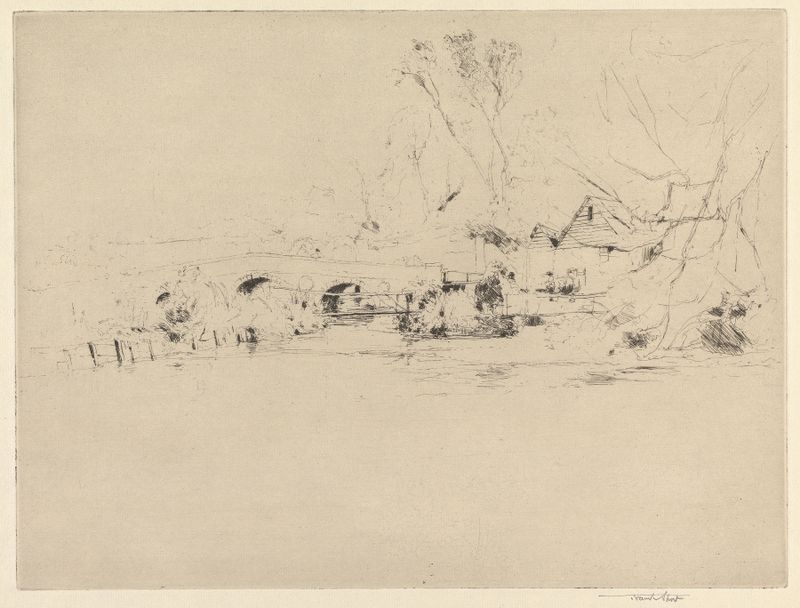
Old Mill on the Wandle, at Mitcham
Sir Frank Short

Moonlight on the Medway at Chatham
Sir Frank Short

Parkgate
Sir Frank Short
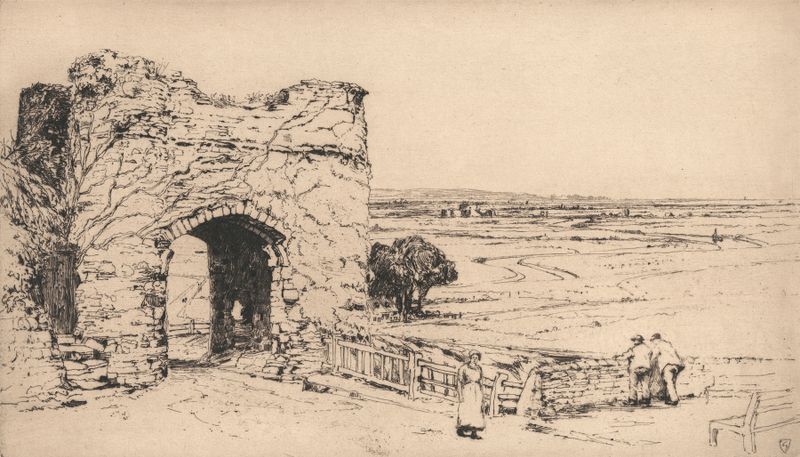
The Strand Gate, Winchelsea
Sir Frank Short

Bridgenorth
Sir Frank Short
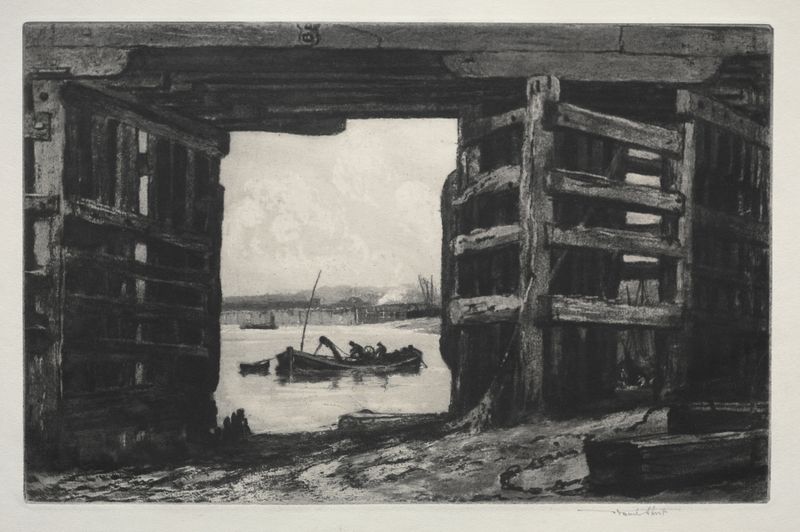
A Span of Old Battersea Bridge
Sir Frank Short

The Rope Walk, Spittal Bridge Whitby
Sir Frank Short





