A River Landscape — History & Facts
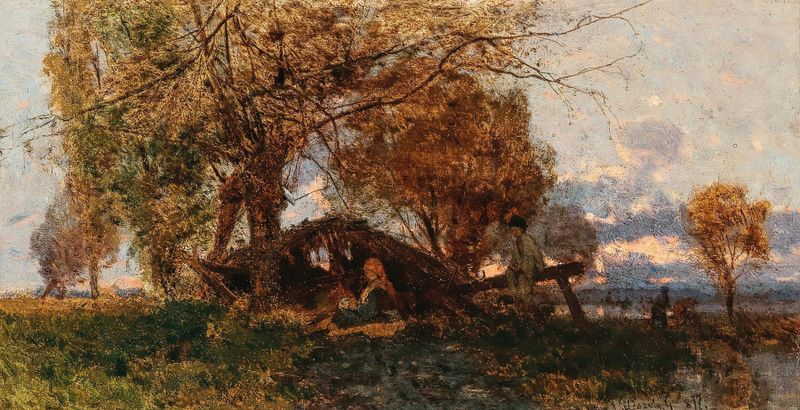
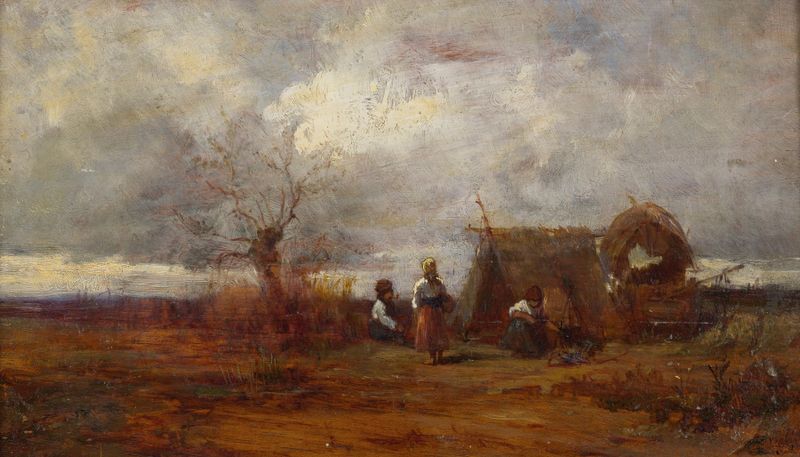
In a realm where chaos might reign, there exists a profound obsession with capturing fleeting moments, essence, and tranquility. It’s in this pursuit that the heart finds its voice, and the artist invites us to listen. Look to the horizon, where a gentle river flows, its surface a shimmering pathway reflecting a tranquil sky. The artist’s brushwork captures the subtle play of light on the water, while vibrant greens and earthy browns intertwine to create a harmonious balance.
Notice how the trees stand sentinel along the bank, their organic forms contrasting with the smoothness of the river, as if guarding a sacred secret waiting to be unveiled. Beneath the surface of this serene landscape lies a tension between movement and stillness. The river, a symbol of time's relentless flow, suggests both change and continuity, echoing the artist's yearning for permanence amid life’s transience. The softness of the clouds above juxtaposes the solidity of the earth, perhaps hinting at the complexities of human emotion—how we remain grounded yet often find ourselves drifting in the currents of our own desires. During this period, the artist worked in an era when nature was celebrated for its beauty and mystery.
The precise date is unknown, but the painting reflects a longing that resonated deeply with many during a time when the world was grasping for connection amid the rapid industrialization surrounding it. Mészöly’s focus on the landscape speaks to a wider artistic movement that sought solace in natural beauty, fostering an intimate dialogue between viewer and creator.