Resting by a Mill — History & Facts
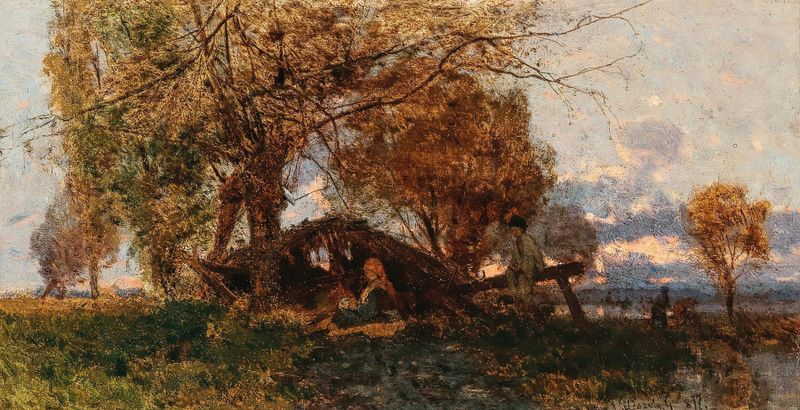
What secret hides in the quiet of the canvas? In the stillness of Resting by a Mill, the passage of time feels both palpable and elusive, inviting contemplation of life’s fleeting moments and the inevitability of mortality. Look to the left at the serene figure, draped in muted earth tones as they recline against the weathered mill. The soft, golden light filtering through the trees envelops them, highlighting the textures of their clothing and the lush greenery surrounding them. Notice how the gentle brush strokes create a rhythmic harmony, guiding your gaze across the composition, where the mill stands as a silent witness, its sturdy presence contrasting with the fragility of life. Delve deeper into the work's emotional undertones.
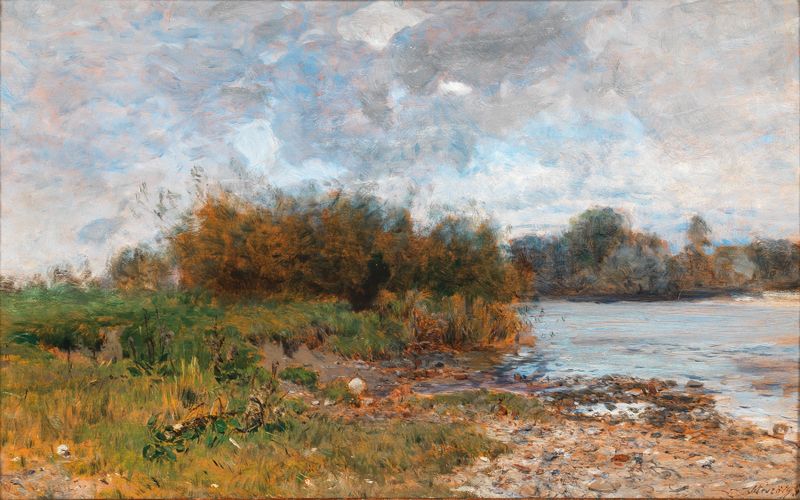
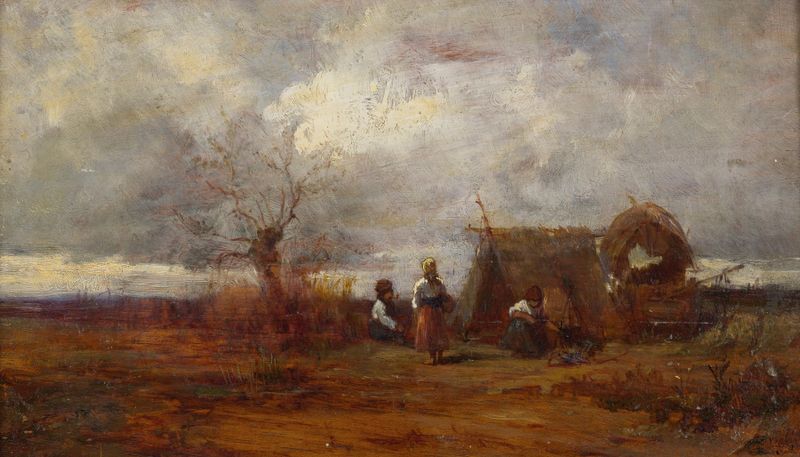
The juxtaposition of the resting figure and the sturdy mill suggests a balance between human vulnerability and the enduring nature of the world. The calm expression of the figure invites a moment of reflection, while the mill, aged yet steadfast, symbolizes the passage of time, urging viewers to ponder what it means to pause in a life that races forward relentlessly. Géza Mészöly created Resting by a Mill during a time of personal and artistic exploration, likely in the mid-20th century, as he sought to convey deeper meanings through simplicity. His works often reflect a blend of realism and impressionism, capturing the essence of the Hungarian landscape while delving into the human experience.
In an era marked by change and uncertainty, this piece stands as a testament to both the beauty of nature and the quiet truths that lie within it.