Gypsy Camp — History & Facts
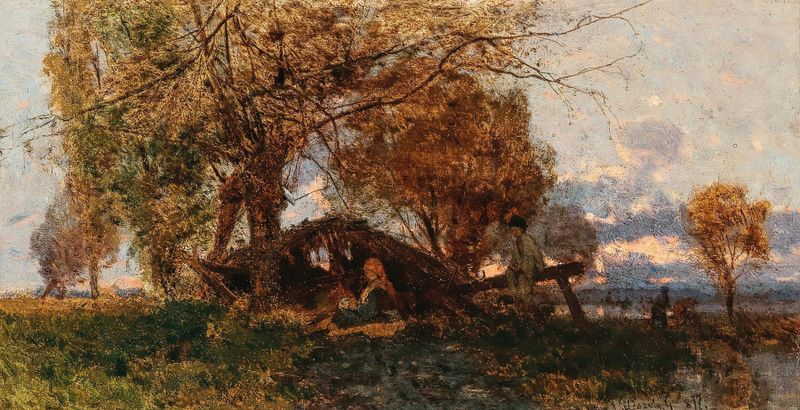
Could a single brushstroke hold eternity? In Gypsy Camp, a vast tableau of solitude unfurls, inviting a profound exploration of loneliness that lingers in the heart like an unresolved note. Look closely at the center of the canvas, where the muted colors blend — ochres and deep blues create a rhythmic pulse, drawing you into the lives of the figures. Notice the texture of the paint, each stroke giving life to the worn faces and tattered garments, as if the canvas breathes the stories of its subjects. The composition guides your gaze from the foreground, where a solitary figure stands apart, to the distant shadows that hint at the presence of a community, fragmented and detached. The emotional tension within this piece is palpable, as the division between the individual and the collective becomes stark.
The lone figure exudes a sense of yearning, with hands clasped and eyes cast downward, while the blurred forms in the background evoke a haunting absence of connection. This contrast between isolation and the faint presence of others captures the profound silence that envelops the camp, resonating with the viewer’s own experiences of solitude. Géza Mészöly created this work during an era marked by a profound exploration of identity and community, although the exact date remains uncertain. Active in the early to mid-20th century, the artist's focus shifted toward capturing human emotion amid the changing tides of society.
This painting reflects a moment in time when the notion of belonging was increasingly scrutinized, echoing broader themes of displacement and connection that resonate throughout his oeuvre.