
A River Landscape (De Young) — History & Facts
The first thing that draws the eye in A River Landscape (De Young) by Asher Brown Durand is the sense of calm that radiates from the wide, sunlit river and the gentle presence of cattle wading at its edge. The artist leads us into the scene by placing the tallest trees on the right, their leafy crowns filtering the golden afternoon light and casting cool shadows onto the grass below. The river, dotted with smooth boulders, reflects the sky’s pale blues and soft clouds, inviting the viewer to follow its winding course toward distant, hazy hills.
Every element seems chosen to slow the viewer’s gaze: the careful detail in the tree trunks, the subtle red of wildflowers in the foreground, and the relaxed posture of the animals all speak to a world at ease, where nature and rural life exist in quiet harmony. Painted around 1858, this work belongs to a period when American artists like Durand helped define the Hudson River School, a movement that celebrated the landscape as a source of national pride and spiritual renewal. Such paintings were often commissioned or collected by those eager to capture the promise and beauty of the American countryside at a time of rapid change and expansion. A River Landscape (De Young), now in the De Young Museum, stands as a testament to that era’s fascination with the unspoiled wilderness and the ideal of peaceful coexistence with nature.
Though history has kept few traces of the painting’s early life, its enduring appeal lies in the way it invites us to linger, to notice the play of light on water, and to imagine the quiet rhythms of a summer’s day.
More Artworks by Asher Brown Durand

A Sycamore Tree, Plaaterkill Clove (The Sycamore, Kaaterskill Clove)
Asher Brown Durand
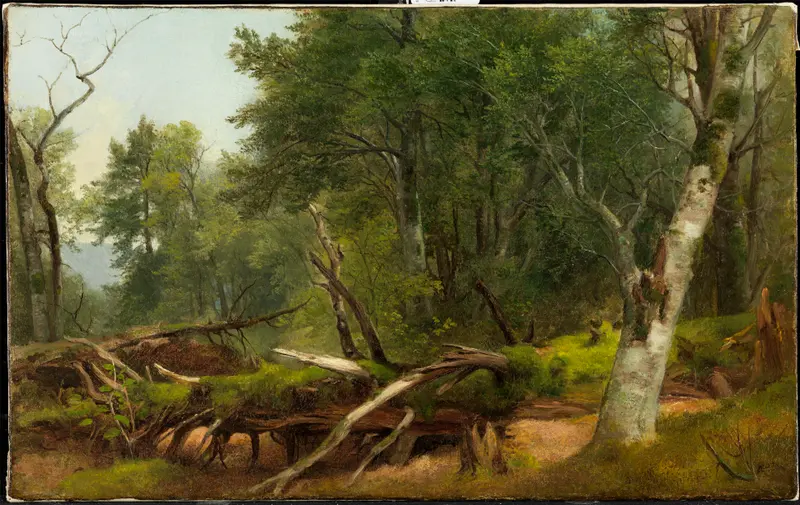
Forest Scene in the Catskills
Asher Brown Durand
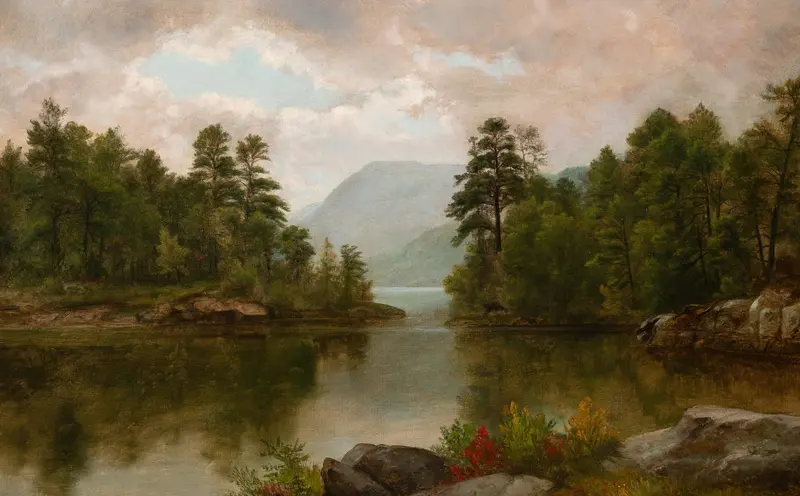
The Narrows, Lake George
Asher Brown Durand
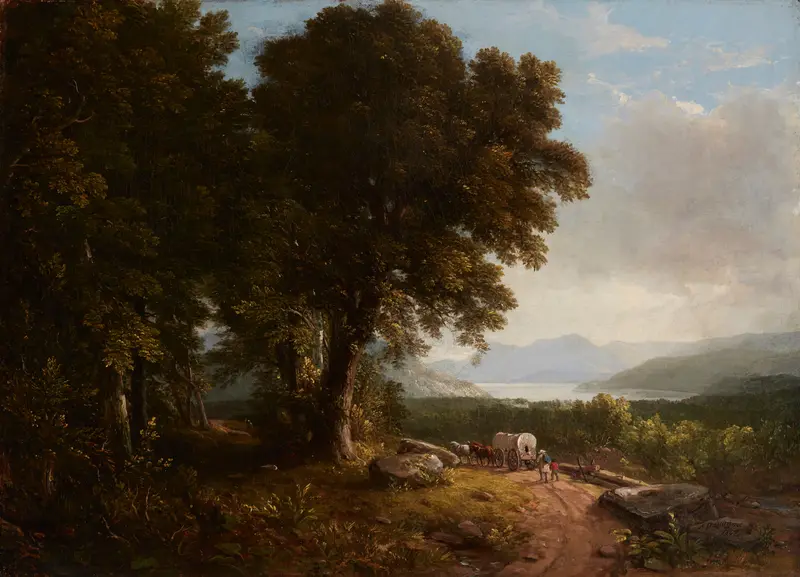
Landscape with Covered Wagon
Asher Brown Durand
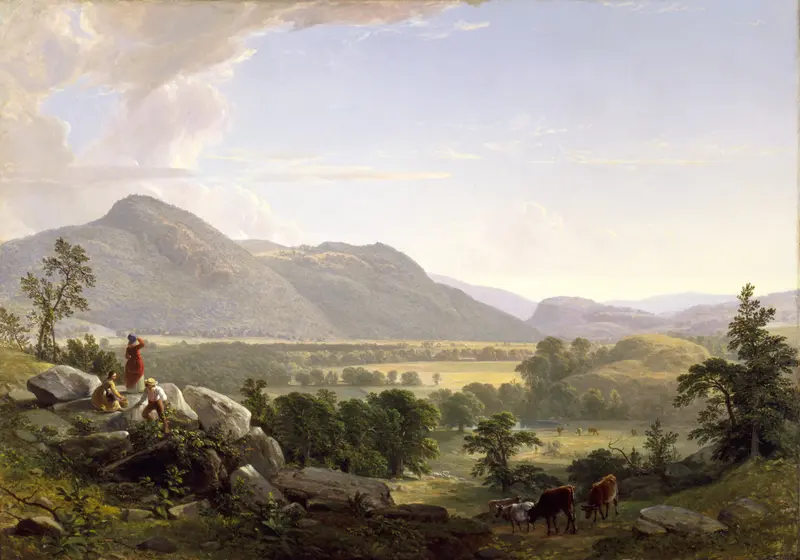
Dover Plains, Dutchess County, New York
Asher Brown Durand
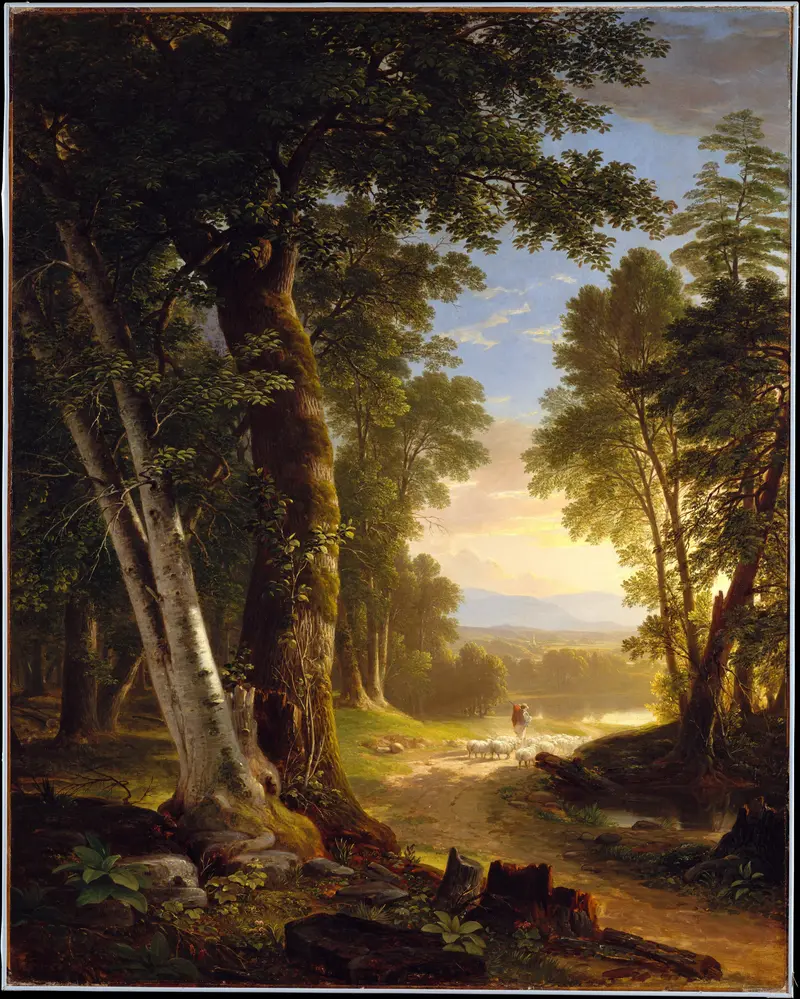
The Beeches
Asher Brown Durand

Kaaterskill Landscape
Asher Brown Durand
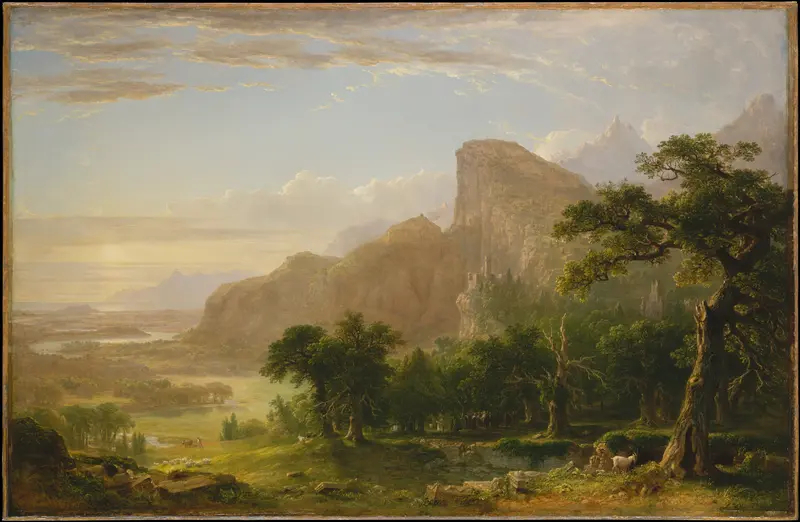
Landscape—Scene from ‘Thanatopsis’
Asher Brown Durand
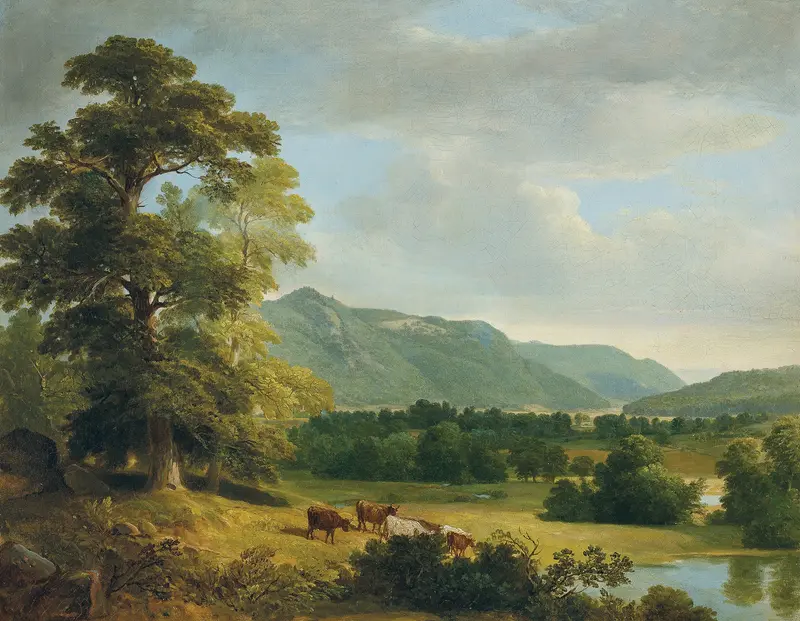
Landscape Study, Dover Plains, New York
Asher Brown Durand
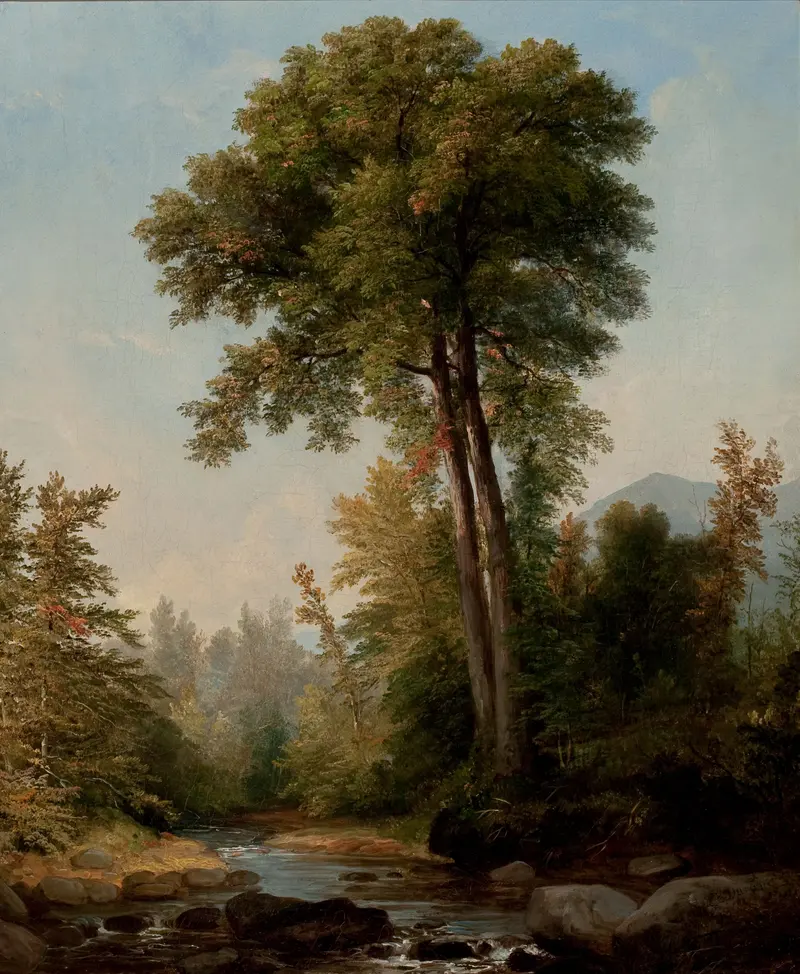
A Natural Monarch
Asher Brown Durand
More Landscape Art

The Starry Night
Vincent van Gogh

View of Delft
Johannes Vermeer

Water Lilies
Claude Monet

The Grand Canal, Venice, looking north-west from the Ca' Corner to the Ca' Contarini degli Scrigni, with the campanile of Santa Maria della Carità
Canaletto

Windsor Castle
Canaletto

The Grand Canal looking North-East from the Palazzo Dolfin-Manin to the Rialto Bridge
Canaletto