A Ruined Castle — History & Facts
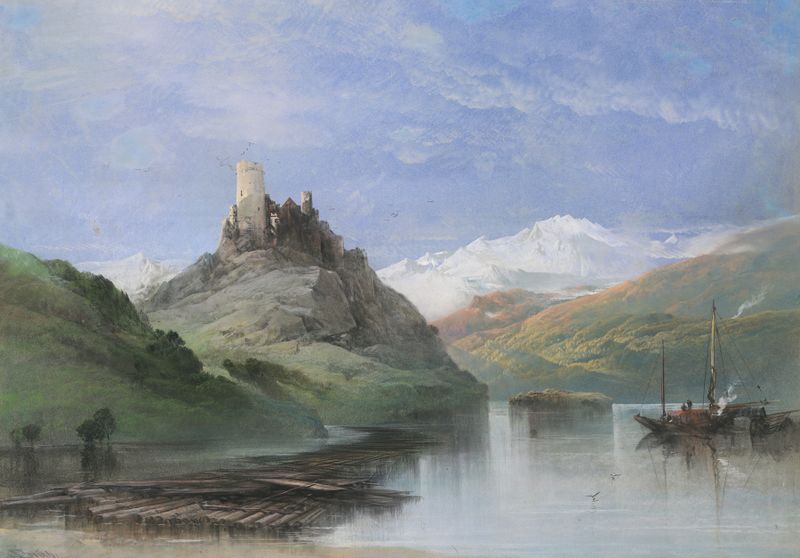
Where does light end, and longing begin? In this haunting landscape, shadows stretch across crumbling stones, inviting contemplation of both ruin and resilience. Look to the left at the remnants of the castle, where jagged walls reach skyward like desperate fingers. Notice how the sun bathes the ancient structure in a warm, golden hue, yet the shadows deepen around the fallen stones, whispering secrets of time lost. The artist employs a delicate palette of muted greens and browns, creating an atmosphere of melancholic beauty, as the light dances tenderly, illuminating the past while leaving much in obscurity. The contrast between light and shadow reflects deeper emotional tensions—between memory and decay, history and oblivion.
The castle, once a symbol of strength, now stands as a testament to the passage of time, evoking feelings of nostalgia and inevitable loss. Each crack in the stone seems to tell a story of battles fought and lives lived, inviting the viewer to ponder how legacies are forged, even in disarray. Henry Bright created this evocative piece during a time when romanticism in art was flourishing, yet his work remains imbued with a unique introspection. While the exact date of composition remains unknown, it is believed he painted it in the mid-nineteenth century, a period marked by a fascination with the sublime and the ruins of history, reflecting both personal and societal contemplations on the impermanence of existence.