The Lake at Holkham, Norfolk — History & Facts
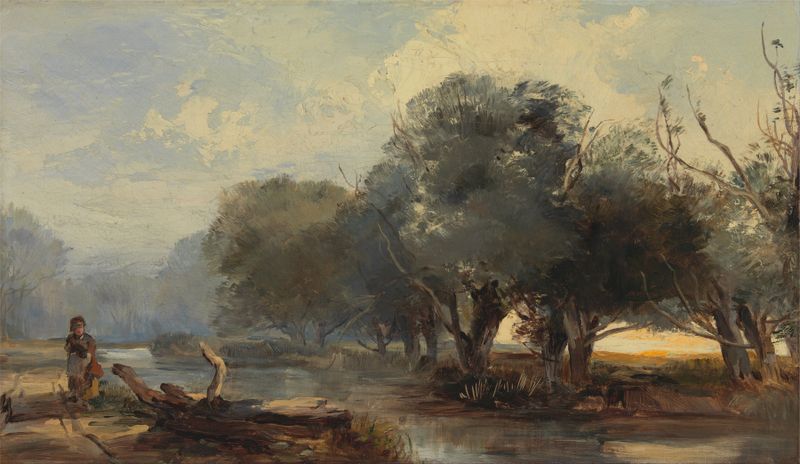
In a world swirling with uncertainty, tranquility can emerge as a powerful whisper, offering a refuge for the soul. Look to the center of the canvas, where the calm waters of the lake reflect the soft hues of a fading day. Gentle ripples dance across the surface, painting a tapestry of blues and greens that beckons the viewer to linger. The meticulous brushwork captures the delicate interplay of light and shadow, infusing the scene with a serene stillness.
Framed by lush foliage, the horizon hints at distant land, inviting the imagination to wander beyond the painting's edge. Hidden beneath its gentle surface, this artwork speaks of contrasts—the lively textures of the trees juxtaposed with the serene expanses of water. The vibrant greens and earthy browns symbolize life, while the lake embodies an oasis of peace and introspection. Together, they evoke a sense of balance, reflecting the harmony that nature offers amidst the chaos of existence. In 1836, Henry Bright was in the midst of his artistic journey while living in Norfolk, England.
The Romantic movement was flourishing, celebrating personal expression and the beauty of nature, which greatly influenced his work. During this time, he painted The Lake at Holkham, channeling his surroundings and his experiences into a moment of stillness, a timeless glimpse into the tranquil embrace of the natural world.