On the Norfolk Broads — History & Facts
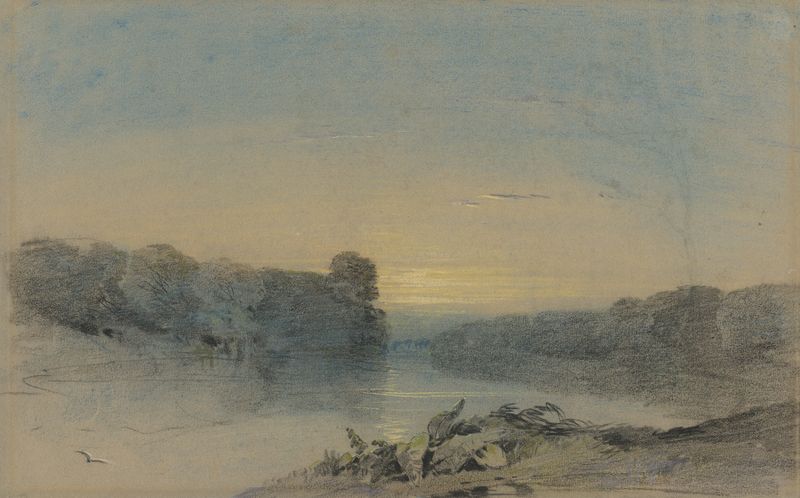
Did the painter know this moment would outlive them? A stillness envelops the canvas, echoing the quiet solitude of nature's embrace, where emptiness transforms into a profound sense of connection. Look to the lower left corner where the gentle ripples of the water cradle the reflection of an expansive sky. The muted blues and greens blend seamlessly, inviting the viewer to explore the serene landscape that stretches beyond the horizon. Notice how the soft brushstrokes convey both movement and tranquility, creating a harmonious balance between the still water and the delicate clouds drifting lazily overhead. In the absence of human presence, the untouched space becomes a character in its own right, evoking feelings of introspection and contemplation.
The quietude of the scene suggests a world untouched by strife, yet it also elicits an undercurrent of longing — a bittersweet reminder of life’s fleeting moments. This duality of emptiness speaks volumes, prompting us to reflect on our place within this vast and beautiful landscape. Henry Bright painted this work in the late 19th century, a period marked by a growing appreciation for natural beauty amidst the burgeoning industrial age in England. Working from his studio in East Anglia, Bright was influenced by movements that sought to capture the essence of rural life.
This painting embodies his dedication to portraying the tranquil charm of the Norfolk Broads, a place that inspired him to celebrate the serene connection between earth and sky.