Ruined Castle on the Banks of the Rhine — History & Facts
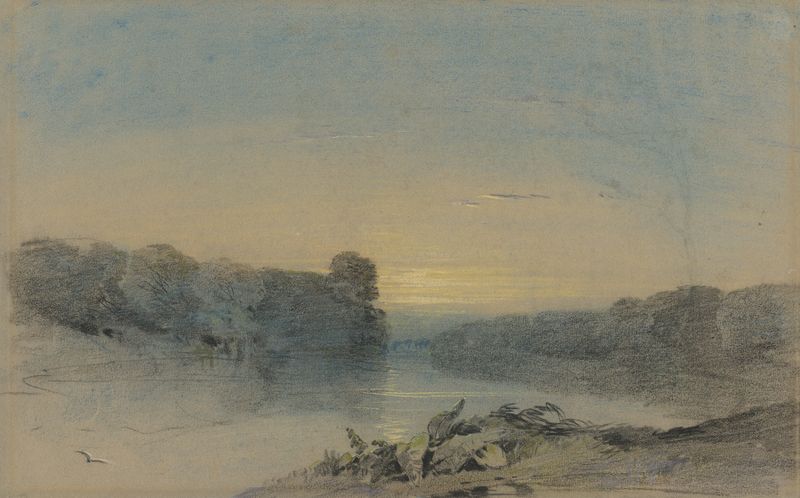
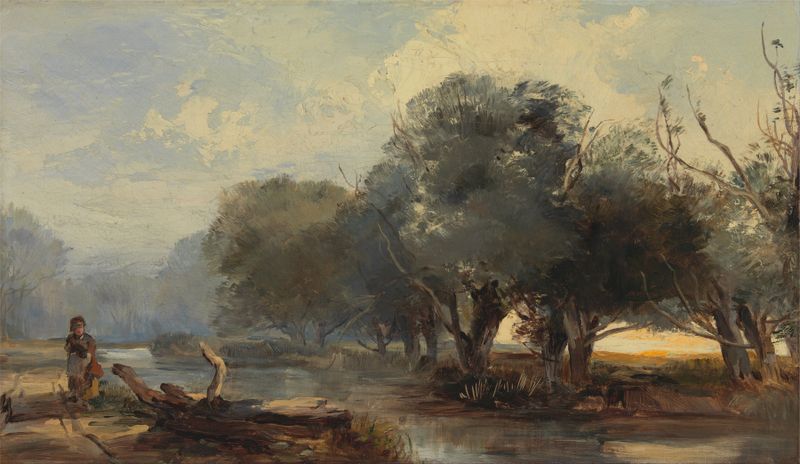
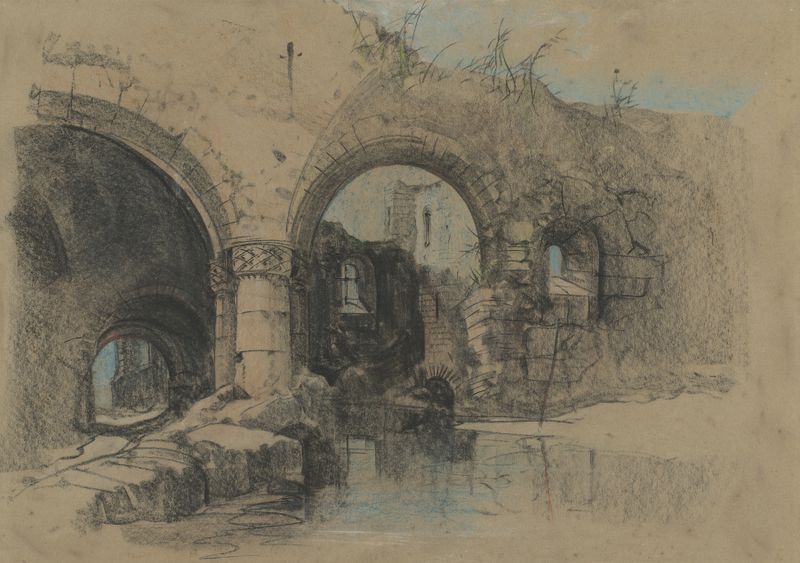
Could a single brushstroke hold eternity? In Ruined Castle on the Banks of the Rhine, the haunting remains of a once-majestic fortress invite us to ponder the passage of time and the shadows of history that linger in our minds. Look to the left at the crumbling stone walls, where shades of gray and brown evoke a sense of decay. The artist's meticulous attention to detail reveals every fissured surface, each crevice telling a story of resilience against the relentless forces of nature. Notice how the soft, golden light of the setting sun bathes the scene, casting long shadows that elongate the castle’s silhouette.
This interplay of light and texture emphasizes not just the physical ruin but also the emotional weight of what once existed. The painting encapsulates a duality: the strength of the castle juxtaposed with its present fragility. Beyond the tangible remnants of stone lies the emotional burden of loss, and the beauty in decay. The still water of the Rhine reflects the scene, creating a sense of continuity between the past and the present, reminding us of the fluidity of time.
This evocative landscape speaks to obsessions with memory, history, and the cyclical nature of life, suggesting that what remains is not merely a structure but a collective yearning for permanence. Created during a time when Romanticism was deeply influencing artists across Europe, Ruined Castle on the Banks of the Rhine reflects Bright's fixation with the sublime beauty of nature intertwined with human history. He painted this piece while immersed in the picturesque landscapes of the Rhine Valley, a period marked by an awakening appreciation for the dramatic ruins that dotted the region. His work captures not only a moment in time but also the fascination with the stories these ruins tell, resonating with audiences who seek connection to the past.