
A Scene in Berchtesgaden — History & Facts
Can beauty exist without sorrow? In A Scene in Berchtesgaden, the delicate landscape offers a fleeting glimpse into nature's ethereal charm, hinting at fragility beneath its serene surface. Look to the foreground, where soft greens and gentle browns cradle a cluster of trees, their leaves whispering secrets to the breeze. The mountains loom in the distance, painted in hues of blue and gray, casting shadows that dance over the valleys below. Notice how the light caresses the peaks, illuminating patches of wildflowers that speckle the scene, each brushstroke revealing Barbarini’s meticulous attention to detail and his understanding of light’s transformative power. Yet, amidst this picturesque tranquility lies an undercurrent of tension.
The stark contrast between the sturdy mountains and the meandering river hints at nature's impermanence, reminding the viewer that this beauty is fleeting. The trees, while vibrant, appear almost fragile against the might of the landscape, evoking an emotional resonance that speaks to the coexistence of joy and melancholy. Each element of the painting captures a moment suspended in time, a reminder of life's transitory nature. Created in 1878, this work emerged during a time of personal evolution for the artist, who was exploring the depths of landscape painting amid the broader Romantic movement.
Barbarini found inspiration in the Alpine scenery of Germany, delving into the interplay of light and shadow as he sought to express both the grandeur and inherent delicacy of the natural world.
More Artworks by Emil Barbarini
Browse all →
Blick auf den Dobratsch
Emil Barbarini
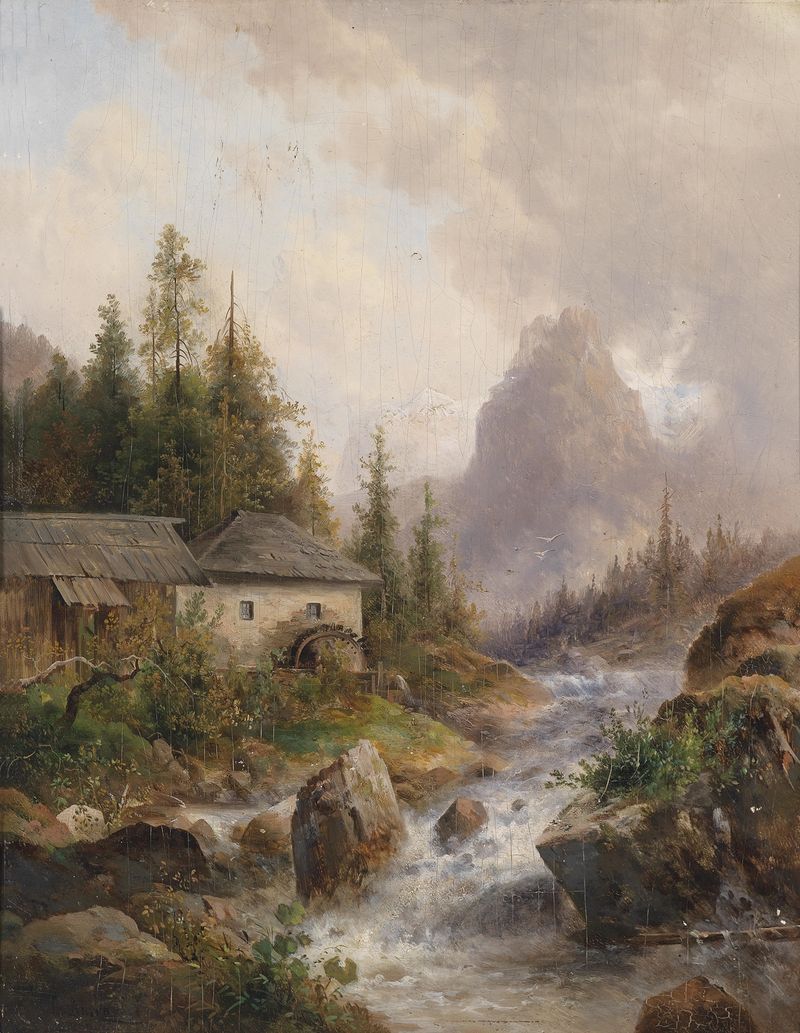
Mühle aus dem Hollthall
Emil Barbarini

Market before the Church of St. Charles, Vienna
Emil Barbarini

A flower market in Paris
Emil Barbarini

Der Haider See
Emil Barbarini
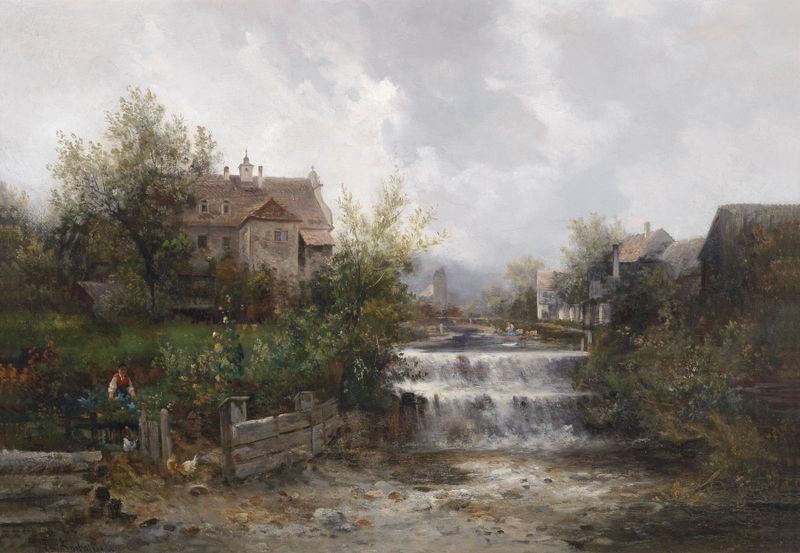
Motiv aus Zell an der Ybbs
Emil Barbarini

On the boulevard
Emil Barbarini
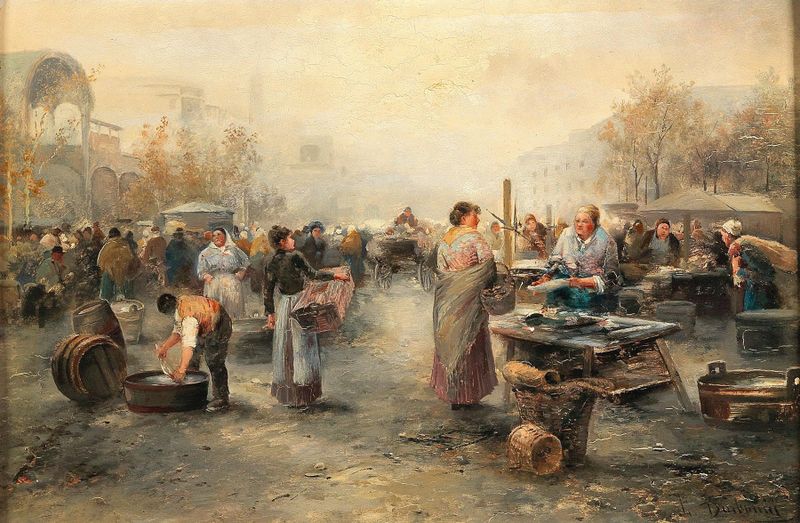
Fish Market
Emil Barbarini
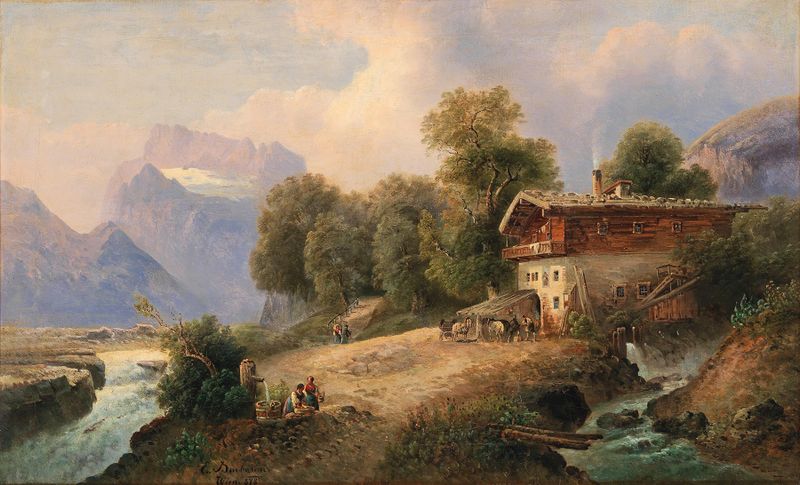
Bei Berchtesgaden
Emil Barbarini

Farmers with cattle
Emil Barbarini





