
Market before the Church of St. Charles, Vienna — History & Facts
Could beauty survive in a century of chaos? In an era marked by conflict and upheaval, the visual symphony of daily life can often convey the weight of grief lingering beneath the surface. Look to the bustling market, where figures blend seamlessly with the architectural grandeur of the Church of St. Charles. The vibrant colors of fresh produce contrast with the earthy tones of the cobblestones, drawing the eye into the rich tapestry of life.
Notice how the shadows play across the faces of the vendors, their gestures conveying a mix of joy and resilience, yet tinged with an unspoken sorrow echoing through their interactions. The scene teems with life, yet each detail suggests a deeper emotional narrative. The light illuminating the church's ornate facade stands in stark contrast to the darker corners of the marketplace, symbolizing hope amid uncertainty. The juxtaposition of vibrant market activity against the solemnity of the church hints at the fragility of beauty in a world burdened by loss, inviting viewers to reflect on the delicate balance between joy and grief. Emil Barbarini painted this scene during a period when Vienna was grappling with the aftermath of World War I.
The tension in his art reflects not only the socio-political climate of the time but also his personal struggles as an artist emerging from a tumultuous era. Amidst the chaos, he sought to encapsulate the resilience of human spirit through the everyday beauty of his surroundings, striving to find solace in the moments of life that persist despite the surrounding turmoil.
More Artworks by Emil Barbarini
Browse all →
Blick auf den Dobratsch
Emil Barbarini
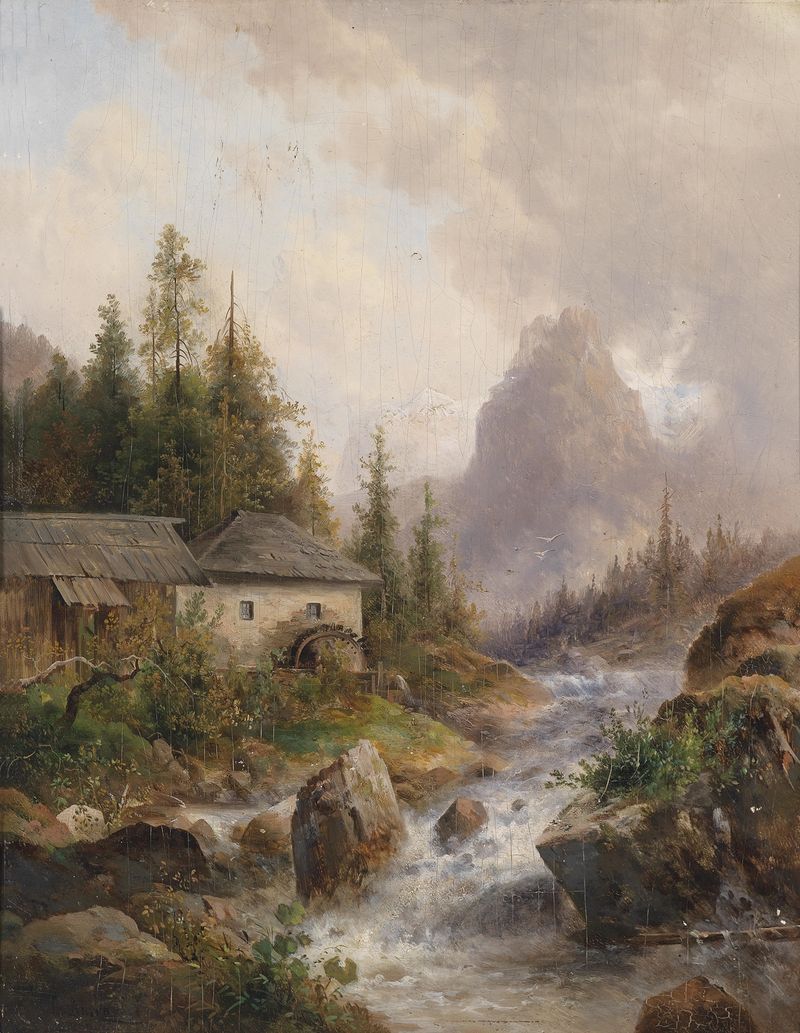
Mühle aus dem Hollthall
Emil Barbarini

A flower market in Paris
Emil Barbarini

Der Haider See
Emil Barbarini
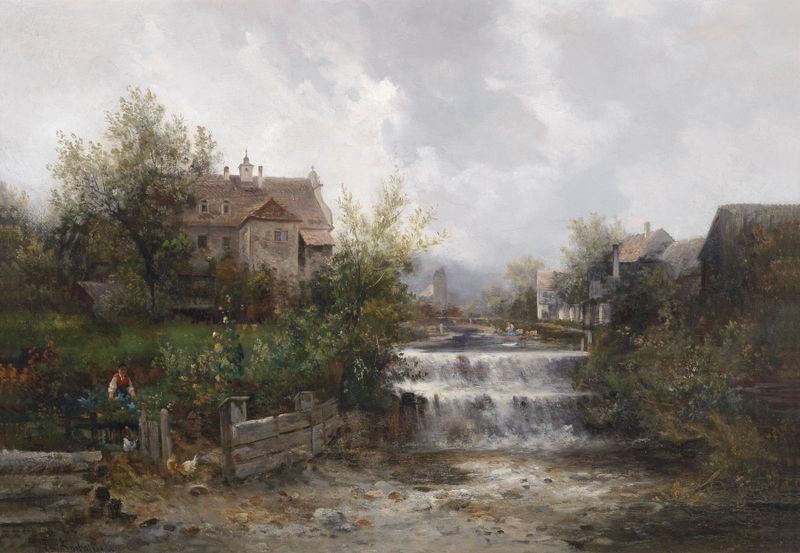
Motiv aus Zell an der Ybbs
Emil Barbarini

On the boulevard
Emil Barbarini
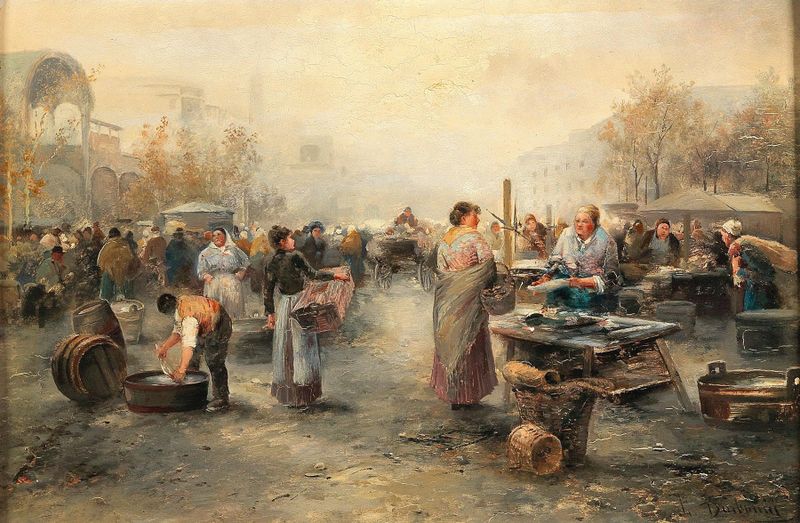
Fish Market
Emil Barbarini
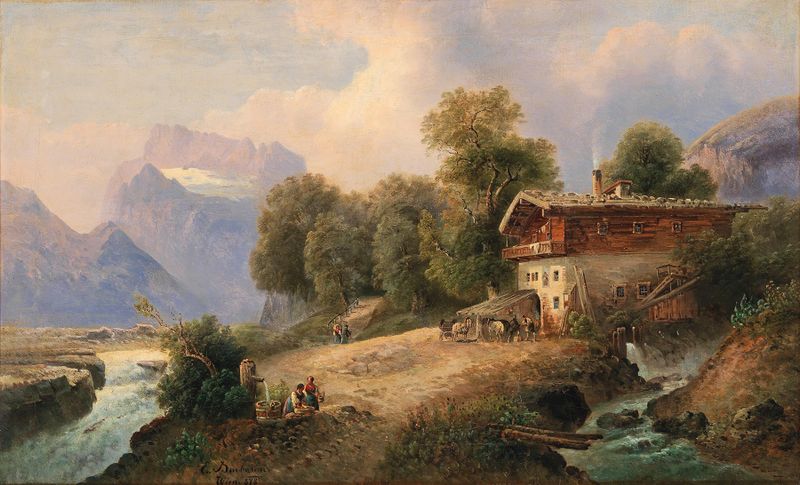
Bei Berchtesgaden
Emil Barbarini

Farmers with cattle
Emil Barbarini

Motiv von der Westerschelde
Emil Barbarini





