
A Sheep Pasture in Rekawinkel — History & Facts
What if beauty was never meant to be finished? In A Sheep Pasture in Rekawinkel, the essence of transformation dances across the canvas, inviting the viewer into a world caught between the realms of nature and art. Look to the foreground, where a serene flock of sheep grazes peacefully on the soft, verdant grass. The painter employs gentle brushstrokes that capture the fluffy texture of the wool, while dappled sunlight filters through the branches of nearby trees, highlighting the deep greens and earthy browns. The composition is balanced, drawing the eye in a fluid manner that evokes tranquility, yet hints at the fleeting nature of pastoral beauty. Hidden within this landscape are contrasting elements of permanence and transience.
Notice how the distant hills cradle the scene, their steadfast presence juxtaposing the ephemeral quality of the grazing sheep. This duality serves as a metaphor for the cycles of life, where moments of tranquil beauty are both cherished and inevitably fleeting. The shimmering light reflects a sense of transformation, suggesting that each glance reveals a new experience, a new feeling, as time flows through the scene. In 1875, Theodor Von Hörmann painted this work during a period of burgeoning interest in naturalism, reflecting the broader movement in art that sought to capture the essence of real life.
Living in Vienna, he was influenced by the surrounding landscapes and the growing appreciation for rural scenes, merging a deep understanding of nature with his artistic vision. This painting stands as a testament to that era, transforming ordinary moments into extraordinary visual narratives.
More Artworks by Theodor Von Hörmann
Browse all →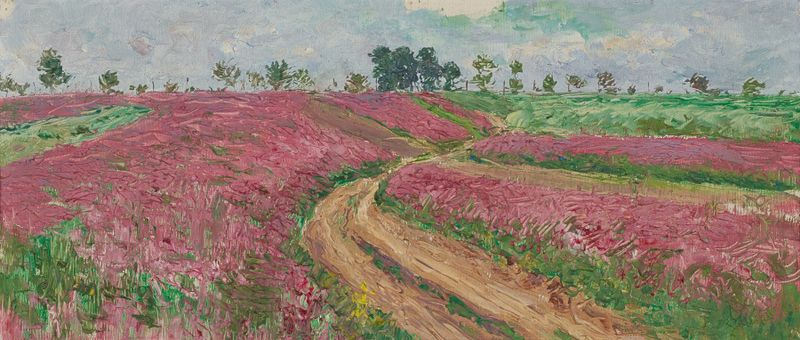
Esparsettenfeld Bei Znaim Ii
Theodor Von Hörmann

Blick Auf Paris
Theodor Von Hörmann

A Watering Place in Kis Bagh
Theodor Von Hörmann

Auf Der Ligethi Puszta
Theodor Von Hörmann
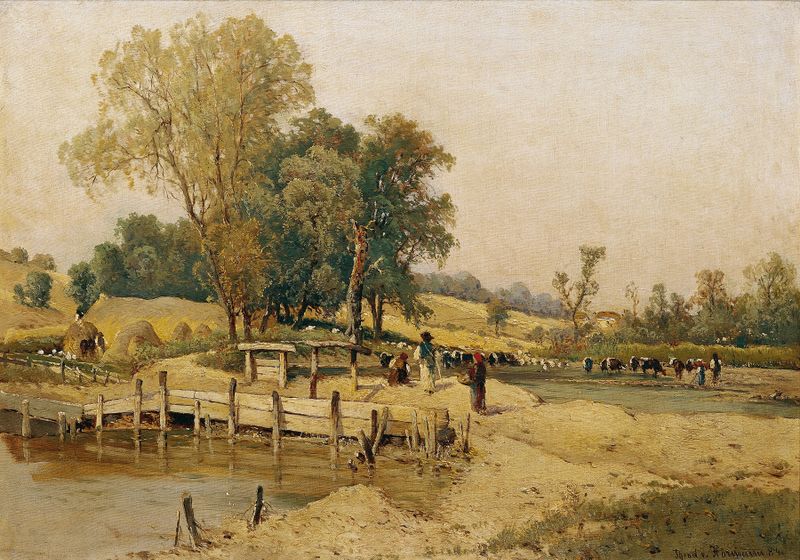
Ungarische Landschaft Mit Viehtränke
Theodor Von Hörmann
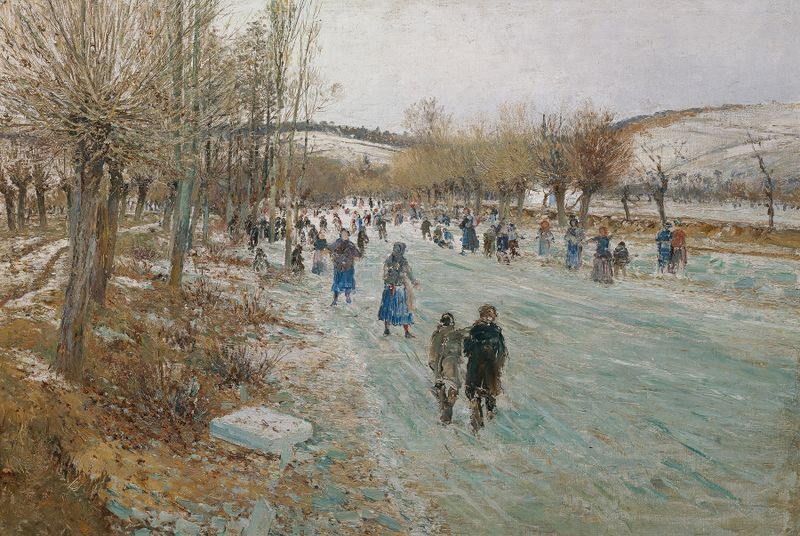
Eisläufer Auf Der Thaya Bei Lundenburg
Theodor Von Hörmann
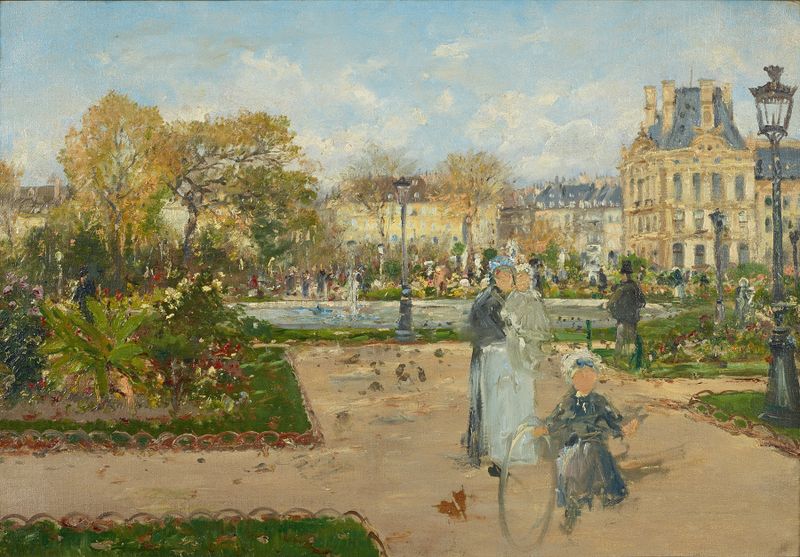
In Den Tuilerien
Theodor Von Hörmann

A Winter Day, Scene near St. Pölten
Theodor Von Hörmann

Znaim Im Schnee Ii
Theodor Von Hörmann
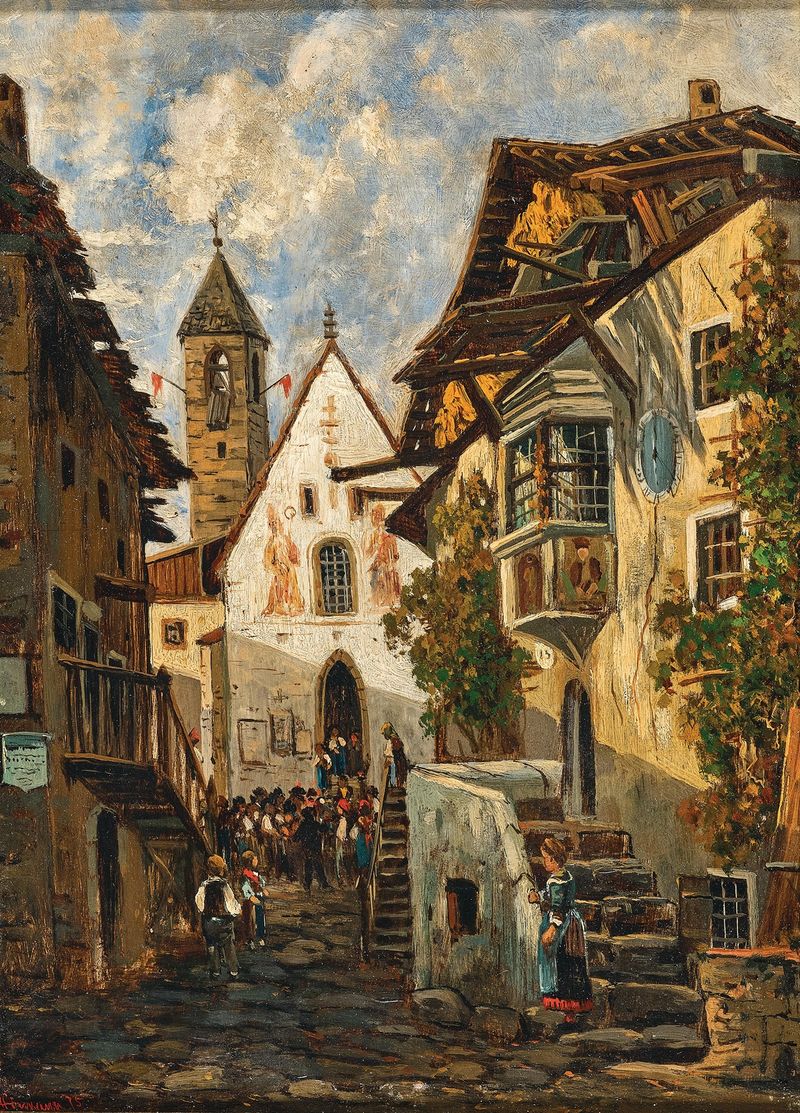
Dorfmotiv von Albeins bei Brixen, Tirol
Theodor Von Hörmann





