
Auf Der Ligethi Puszta — History & Facts
Can beauty exist without sorrow? In Auf Der Ligethi Puszta, the delicate interplay of light and color whispers a tale of rebirth amid the remnants of a fading world. Look to the horizon, where the soft hues of dawn bleed into one another, blending ochres and blues that wrap around the gentle undulations of the landscape. Notice how the brushwork captures the vibrant grasses, swaying in the morning breeze, almost alive in their movement. The focal point invites you to the distant figures—silhouetted against the awakening sky—minuscule yet significant, embodying the quiet resilience of nature and humanity alike. The contrast between the verdant foreground and the ethereal sky evokes a sense of tension; here, life endures despite the encroaching shadows of uncertainty.
Each stroke conveys the pulse of the earth, suggesting that in every cycle of loss, there exists the potential for renewal. The fleeting moment captured in this artwork speaks to the profound connection between joy and sorrow, revealing that one cannot truly exist without the other. Painted in 1884, this piece emerged during a period of transition in Theodor Von Hörmann's life, as he sought to reconcile his own experiences with the broader artistic movements of the time. The artist was immersed in the changing European landscape, where Romanticism was giving way to Impressionism, challenging conventions and inviting exploration of new themes like rebirth.
This work reflects both his personal journey and the evolving perspectives of the art world, marking a poignant moment in history.
More Artworks by Theodor Von Hörmann
Browse all →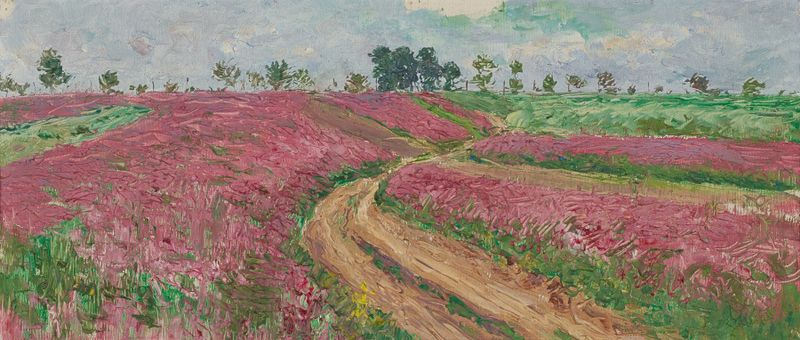
Esparsettenfeld Bei Znaim Ii
Theodor Von Hörmann

Blick Auf Paris
Theodor Von Hörmann

A Watering Place in Kis Bagh
Theodor Von Hörmann
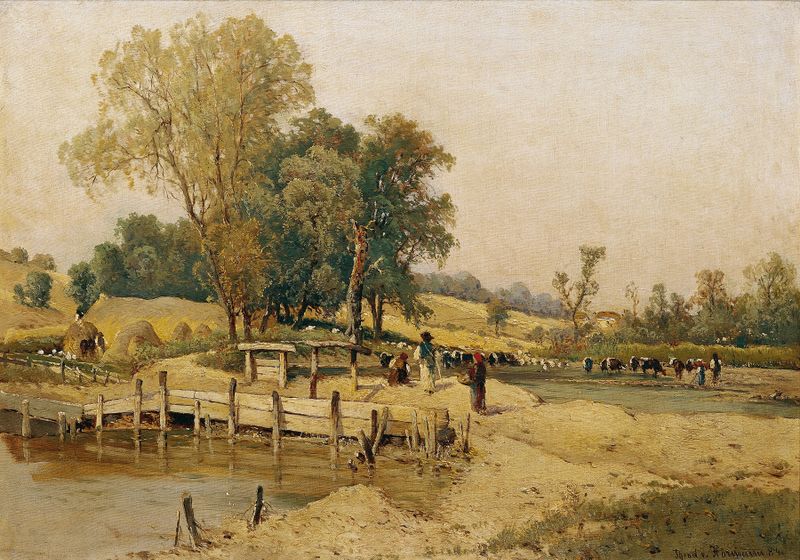
Ungarische Landschaft Mit Viehtränke
Theodor Von Hörmann
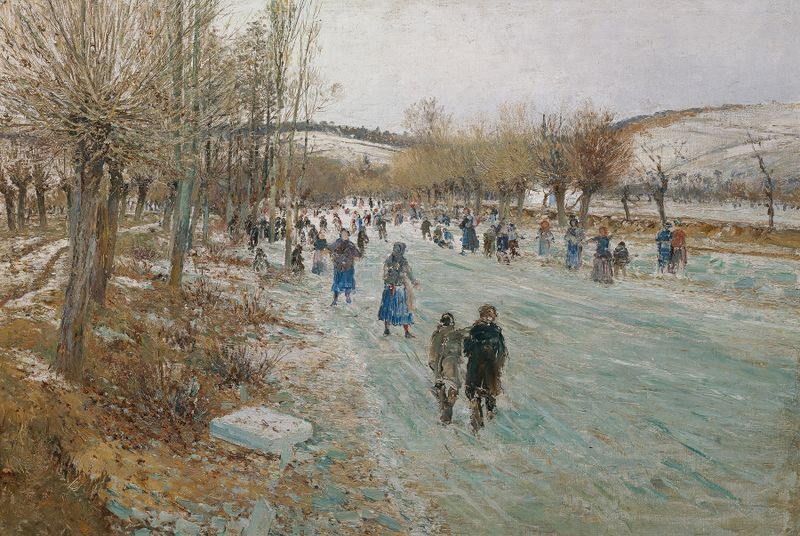
Eisläufer Auf Der Thaya Bei Lundenburg
Theodor Von Hörmann
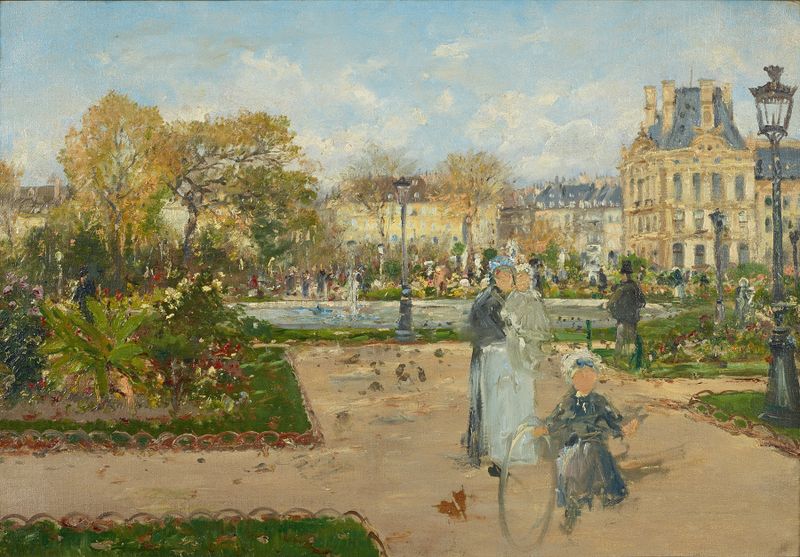
In Den Tuilerien
Theodor Von Hörmann

A Winter Day, Scene near St. Pölten
Theodor Von Hörmann

Znaim Im Schnee Ii
Theodor Von Hörmann
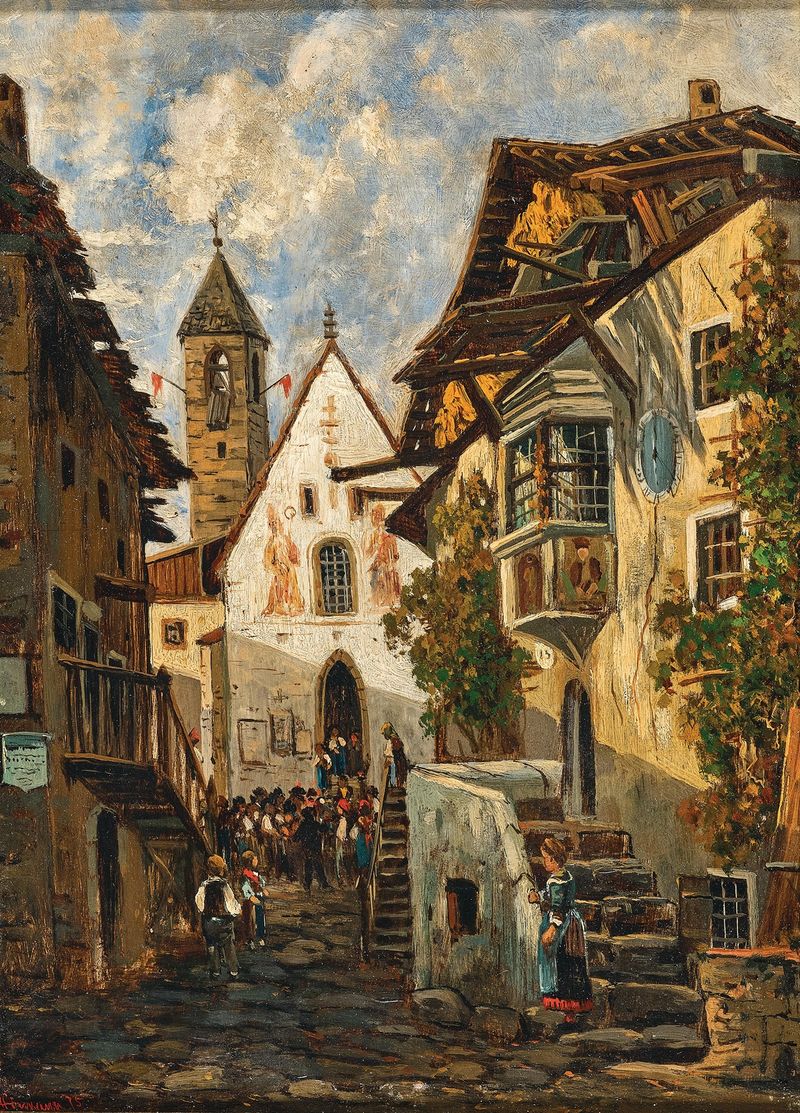
Dorfmotiv von Albeins bei Brixen, Tirol
Theodor Von Hörmann

Ungarische Landschaft
Theodor Von Hörmann





