
Esparsettenfeld Bei Znaim Ii — History & Facts
This notion resonates strongly within the realms of legacy and memory, where every brushstroke recounts untold stories. In the quiet embrace of Esparsettenfeld Bei Znaim II, a landscape emerges, inviting contemplation of what has come before and what lingers beneath the surface. Look to the foreground, where gentle undulations of a verdant field invite you into the heart of the composition. Notice how the artist employs a palette of soft greens and earthy browns, blending harmoniously to evoke a sense of calmness and continuity.
The horizon, stretching into a muted blue, seems to cradle the land, while wisps of clouds hover delicately overhead. Each brushstroke, precise yet flowing, captures not just the essence of the landscape but also the atmosphere of a time long gone. Beneath this serene depiction lies a tension between the permanence of nature and the transience of human existence. The quiet field, though seemingly untouched, carries the weight of history; it is a testament to time’s quiet passage.
In the shadows cast by trees, we sense the whispers of those who walked this land before, their legacy etched into the very soil. The painting invites us to reflect on how landscapes are not mere backdrops but witnesses to our stories and dreams. In 1893, Theodor Von Hörmann painted this work in his native Austria, a period marked by a growing interest in capturing the essence of the natural world. As the art scene embraced Impressionism, he found himself inspired by the delicate interplay of light and color.
This was a time of transition in European art, where the exploration of realism and the emotional depth of landscapes began to flourish, setting the stage for a new artistic legacy.
More Artworks by Theodor Von Hörmann
Browse all →
Blick Auf Paris
Theodor Von Hörmann

A Watering Place in Kis Bagh
Theodor Von Hörmann

Auf Der Ligethi Puszta
Theodor Von Hörmann
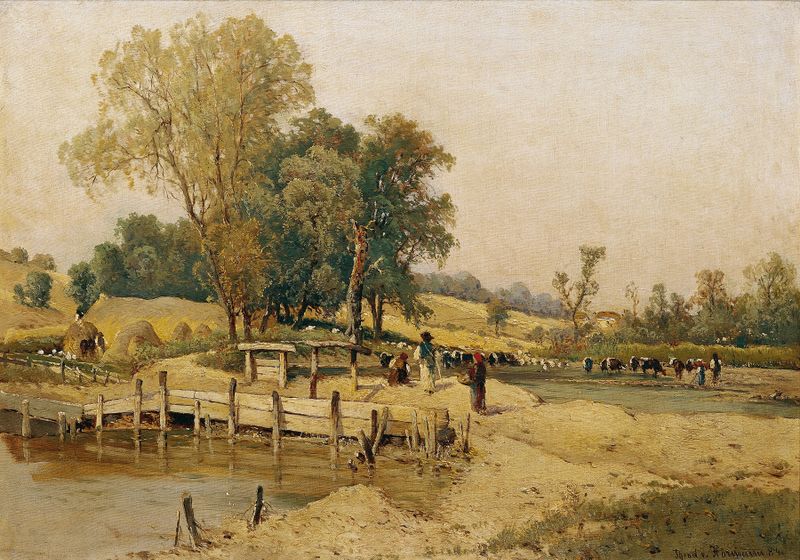
Ungarische Landschaft Mit Viehtränke
Theodor Von Hörmann
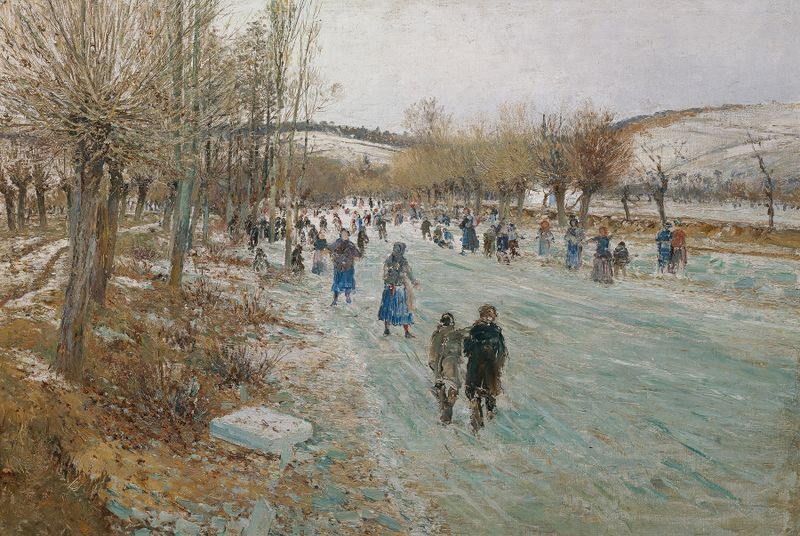
Eisläufer Auf Der Thaya Bei Lundenburg
Theodor Von Hörmann
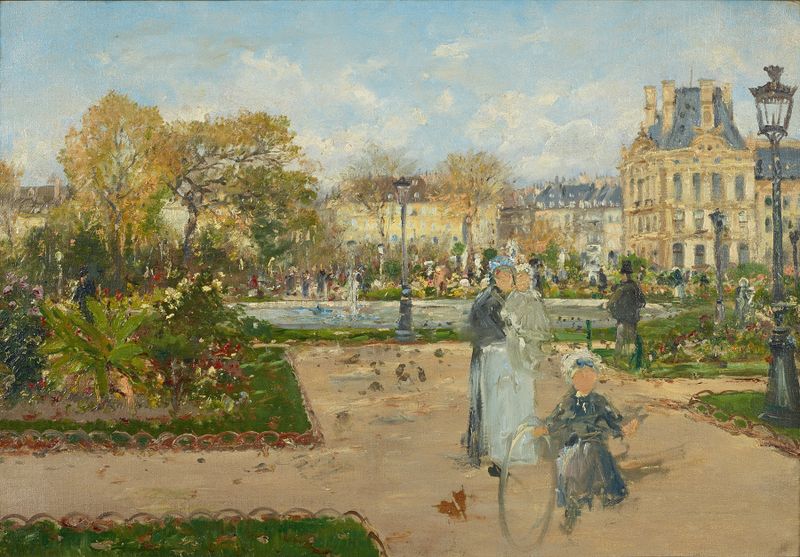
In Den Tuilerien
Theodor Von Hörmann

A Winter Day, Scene near St. Pölten
Theodor Von Hörmann

Znaim Im Schnee Ii
Theodor Von Hörmann
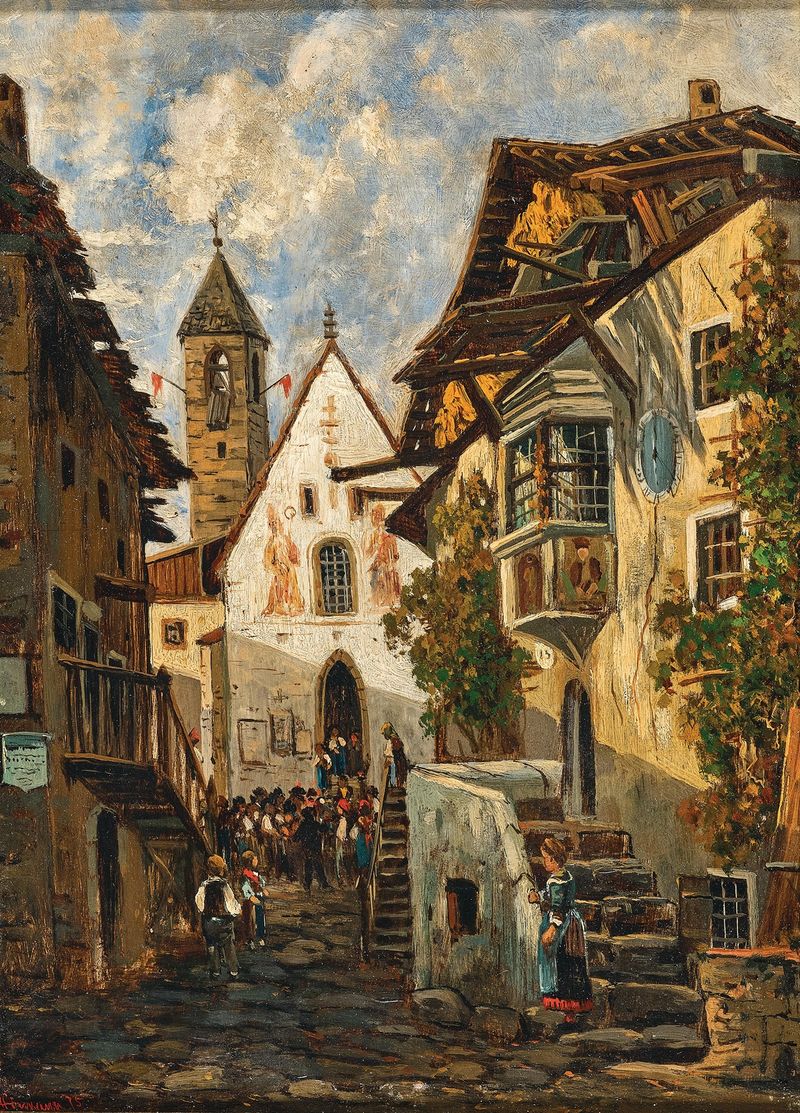
Dorfmotiv von Albeins bei Brixen, Tirol
Theodor Von Hörmann

Ungarische Landschaft
Theodor Von Hörmann





