A Shepherd — History & Facts
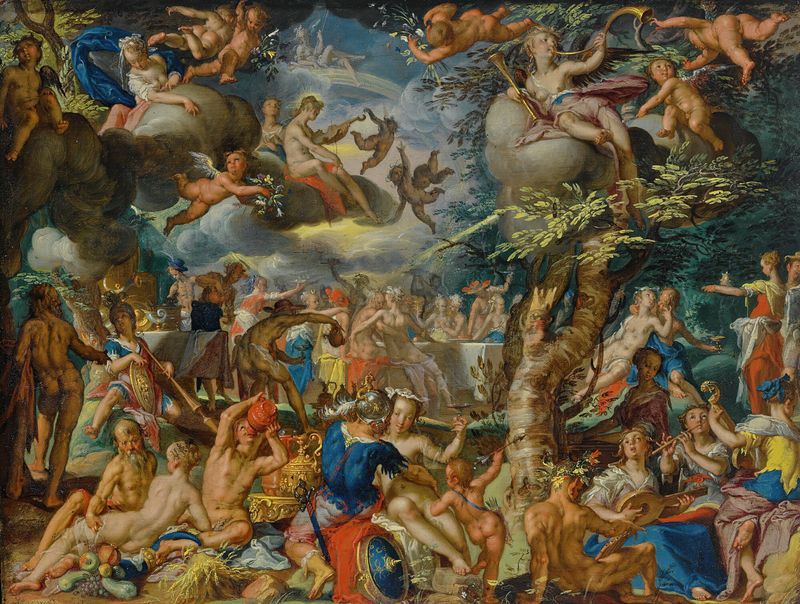
Could beauty survive in a century of chaos? In A Shepherd, we find an answer framed within an enchanting pastoral scene, where nature and human existence converge in sublime harmony. Look to the center of the canvas, where a shepherd stands amidst a lush landscape, his serene expression exuding tranquility. The soft palette of greens and browns creates a sense of warmth, while the delicately rendered sheep graze peacefully around him. Notice how the light bathes the figure in a gentle glow, illuminating the shepherd's garments and casting subtle shadows that add depth to the scene.
The meticulous brushwork reveals the artist's dedication to detail, inviting the viewer to linger over the textures of the sheep's wool and the foliage surrounding them. Beneath the idyllic surface lies a poignant contrast between the shepherd's serene demeanor and the turbulent world outside this picturesque retreat. The shepherd, a symbol of pastoral innocence, offers a fleeting glimpse of peace, yet the viewer can't help but wonder what turmoil brews just beyond the horizon. The juxtaposition of nature's beauty against the backdrop of societal chaos suggests that even in the darkest times, moments of serenity and grace can endure.
Wtewael's choice to focus on this tranquil figure amidst an otherwise chaotic world speaks to the resilience of beauty. Created in 1623, during a period marked by conflict and upheaval in Europe, A Shepherd reflects Joachim Wtewael's fascination with idealized beauty and the human experience. Working in Utrecht, he was part of a burgeoning artistic community that sought to balance the complexities of life with the allure of pastoral imagery. This painting captures an aspiration for peace amidst chaos, encapsulating both the fragility and endurance of beauty in a tumultuous era.