
A Sprig of Gooseberries on a Stone Plinth — History & Facts
What first catches the eye in A Sprig of Gooseberries on a Stone Plinth is the quiet drama of light: a single branch, heavy with ripe gooseberries, sits poised at the edge of a stone ledge, its contours emerging from deep shadow. Each berry is rendered with such care that you can almost feel the thin, veined skin and the slight give beneath your fingertips. The leaves arch upward and outward, their jagged edges catching the faintest glimmer, while the fruit below glows with a subtle, inner warmth.
The stone plinth anchors the composition, its cool solidity a counterpoint to the fragile abundance above. The artist’s signature and the date, inscribed directly on the stone, ground the scene in a tangible moment, inviting the viewer to linger in this suspended stillness. Painted in 1699, this work belongs to the tradition of Dutch still life, a genre that flourished in the late seventeenth century. Such paintings were prized by collectors for their ability to transform ordinary subjects—fruit, flowers, humble objects—into meditations on beauty and transience.
Adriaen Coorte was known for his intimate, almost contemplative approach, often choosing a single sprig or cluster against a stark background, in contrast to the lavish abundance favored by some of his contemporaries. Few details survive about the journey of this particular painting, now in the Rijksmuseum, but its quiet presence speaks across centuries, inviting us to look again at the overlooked marvels of the everyday.
More Artworks by Adriaen Coorte
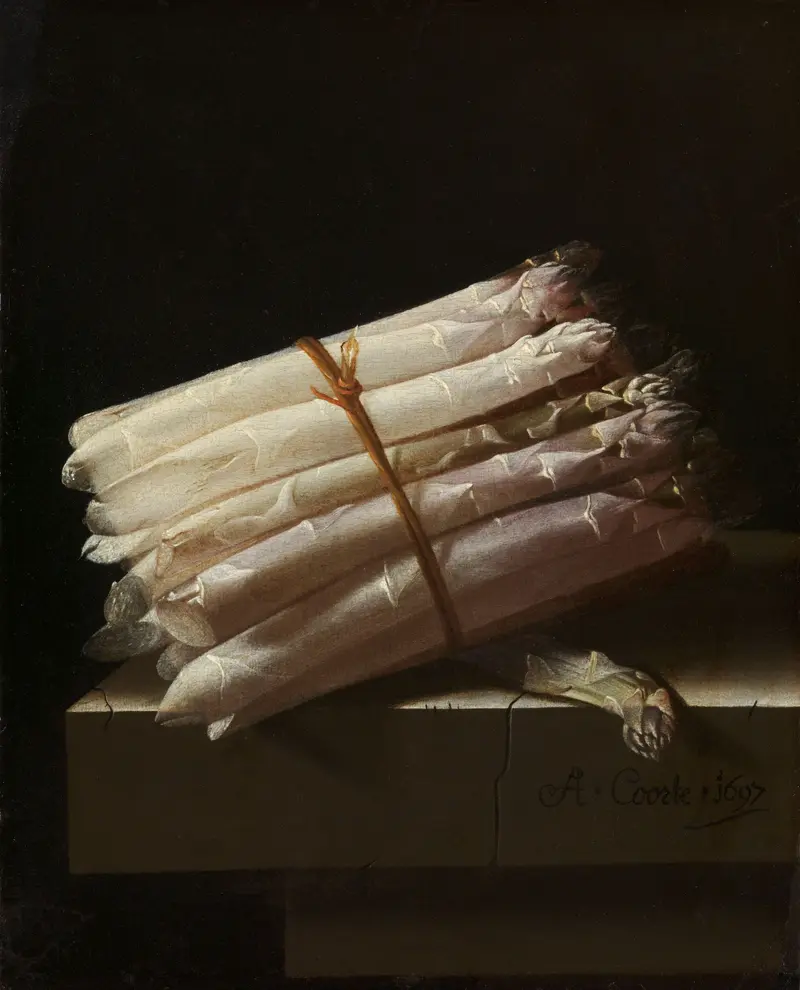
Still Life with Asparagus
Adriaen Coorte
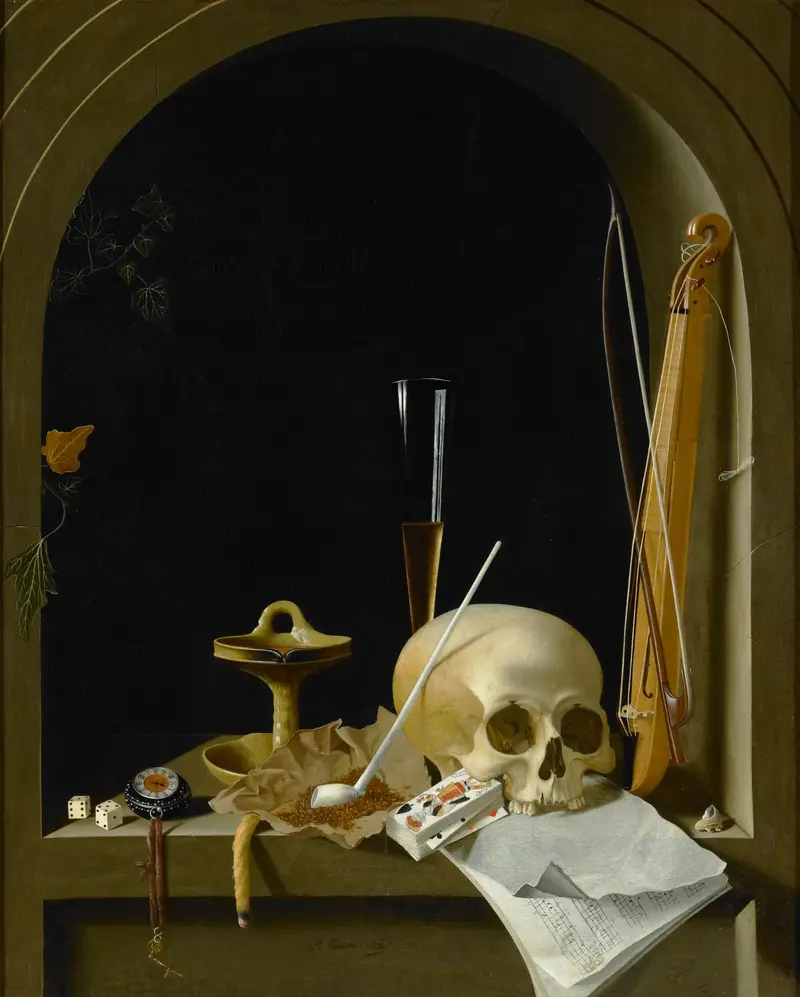
Vanitas still life in a niche
Adriaen Coorte
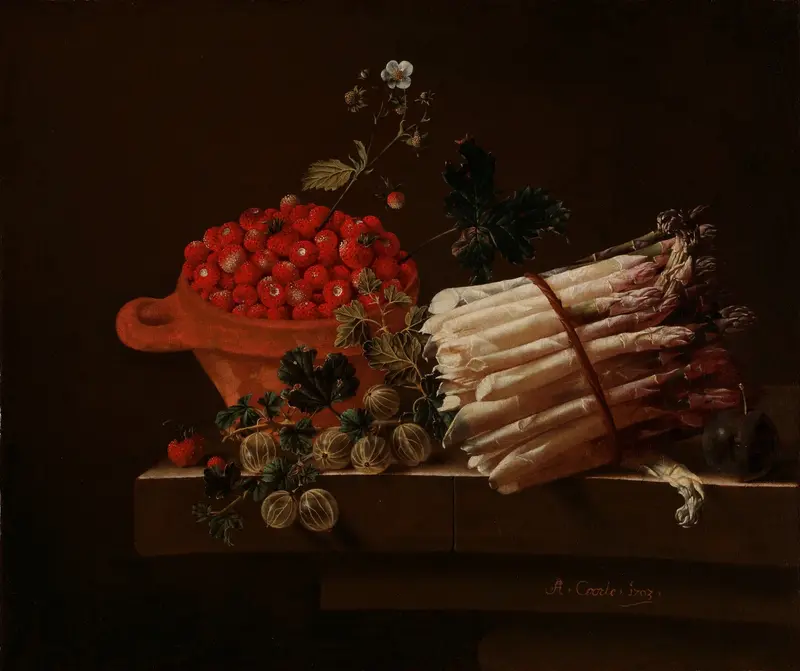
A Pot of Strawberries, Gooseberries, and a Bundle of Asparagus on a Stone Plinth
Adriaen Coorte
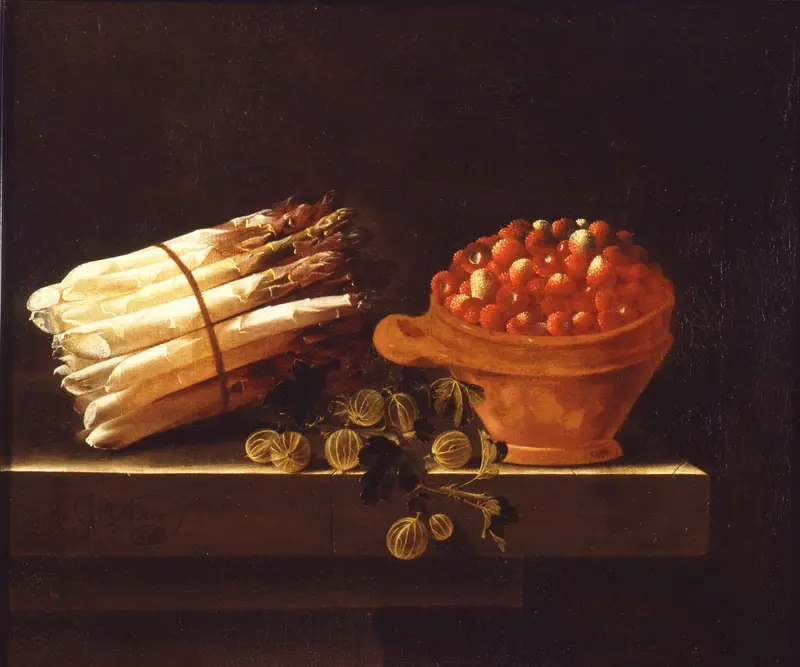
Asparagus, Gooseberries and Strawberries on a Stone Ledge
Adriaen Coorte
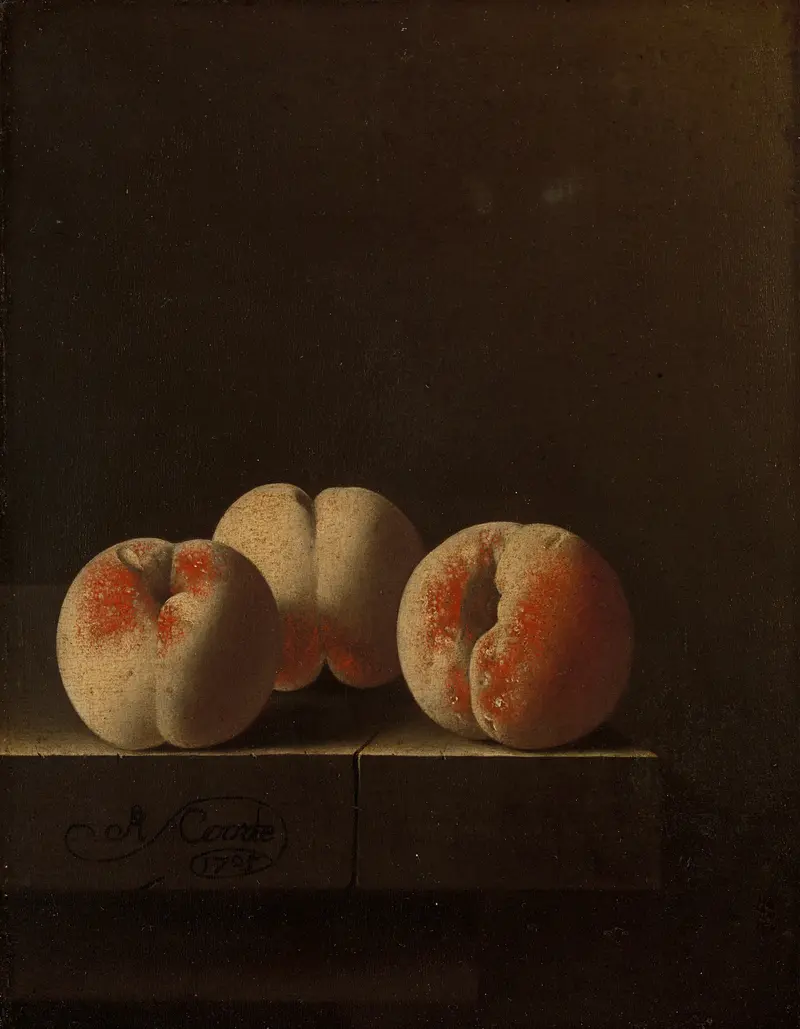
Drie perziken op een stenen plint SK A 5101 Rijksmuseum
Adriaen Coorte
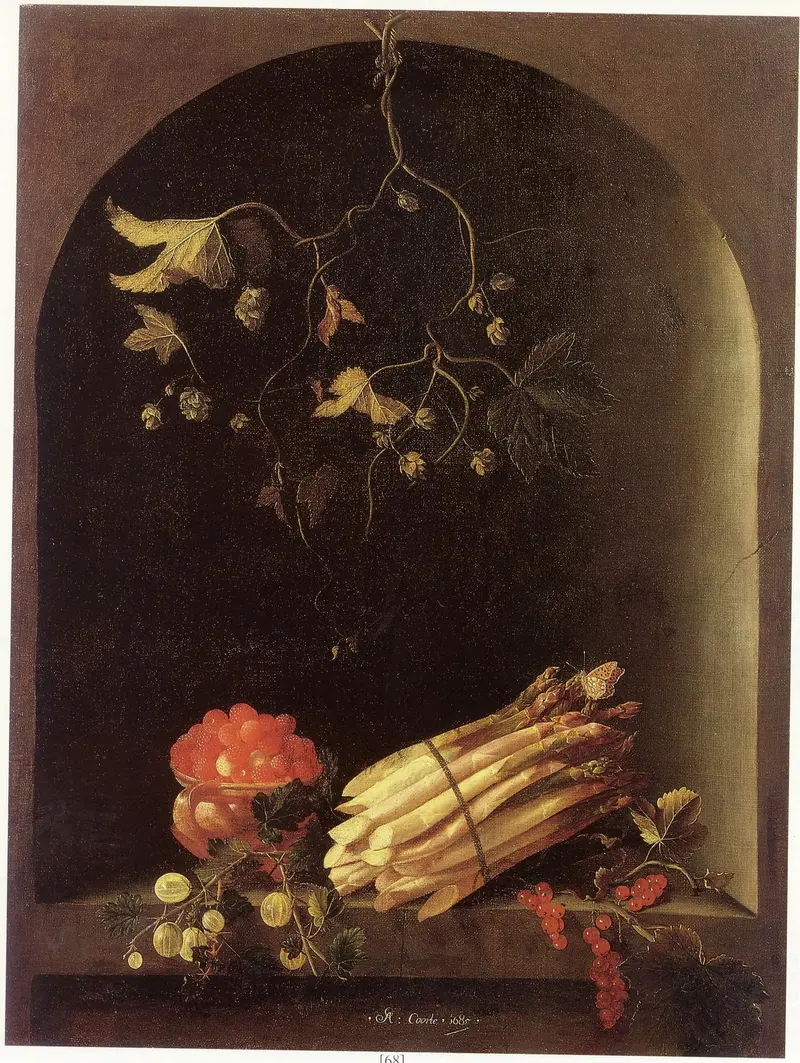
Strawberries, Asparagus, and Gooseberries in a Niche
Adriaen Coorte
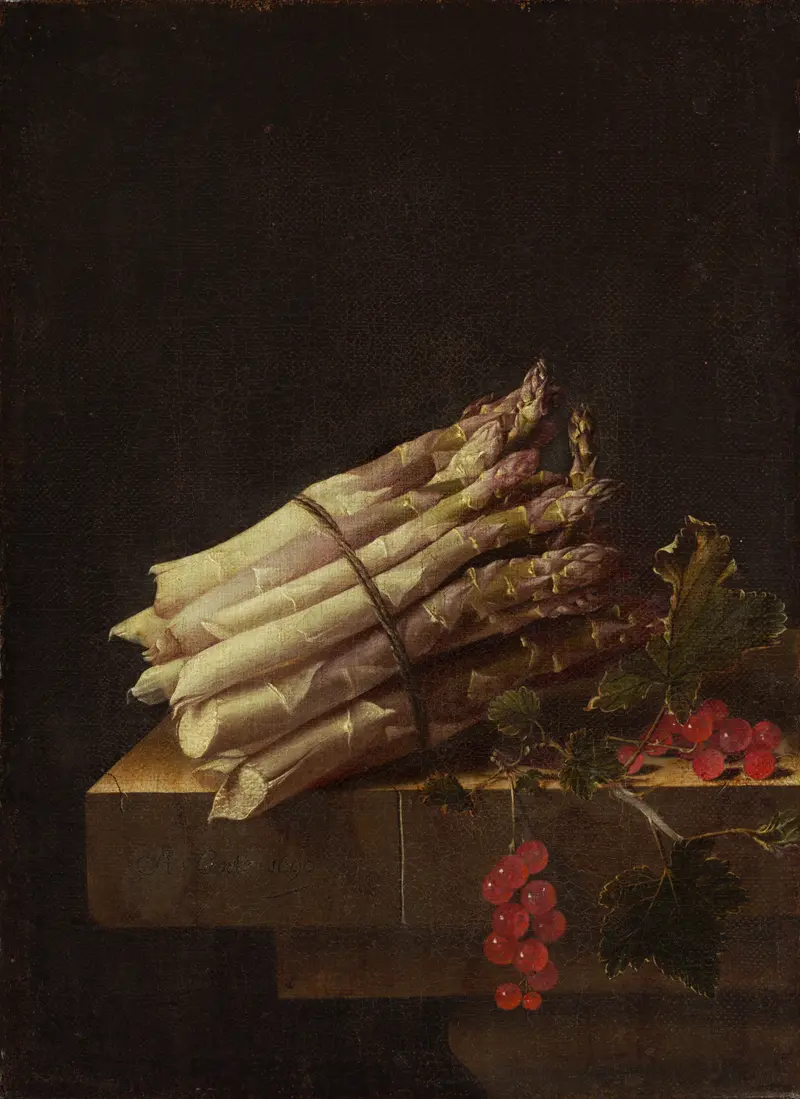
Still Life with Asparagus and Red Currants
Adriaen Coorte
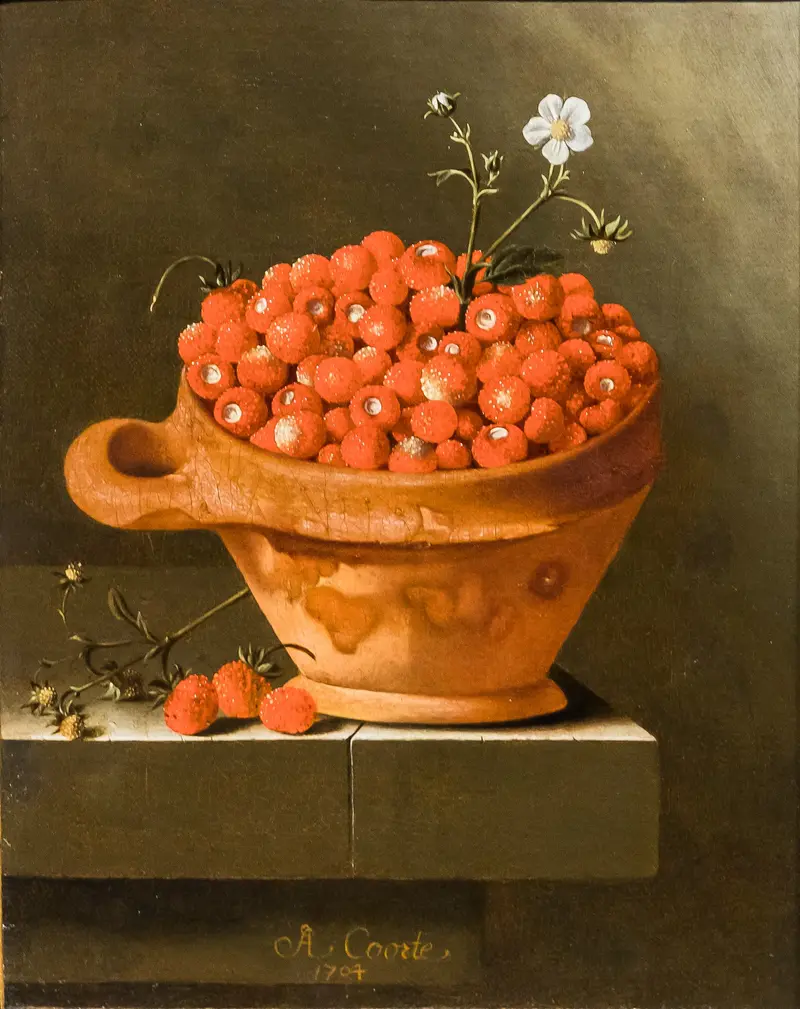
Still life with strawberries in a terracotta pot
Adriaen Coorte
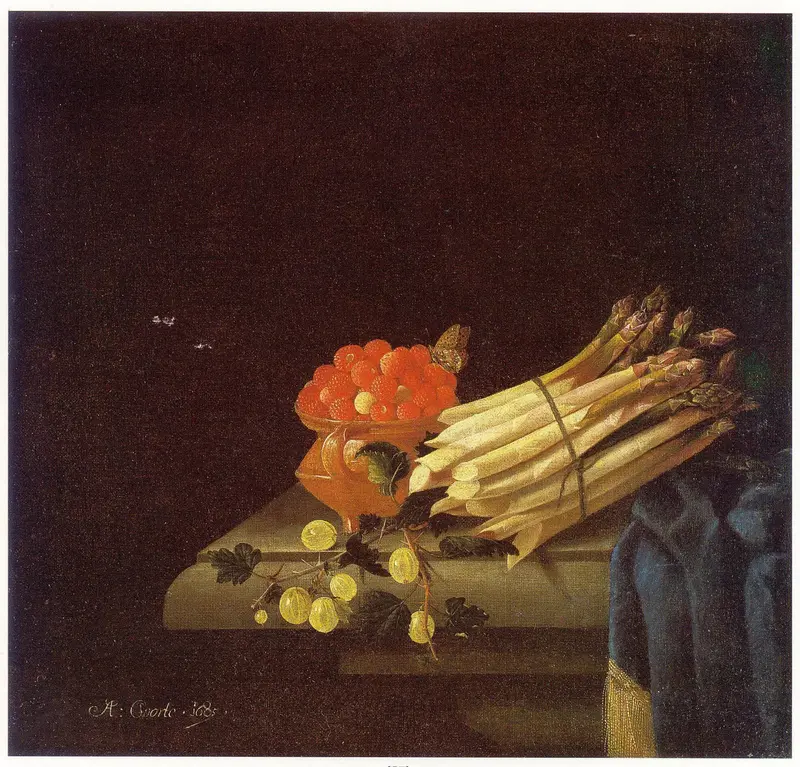
Strawberries, Asparagus, and Gooseberries with a Tablecloth
Adriaen Coorte
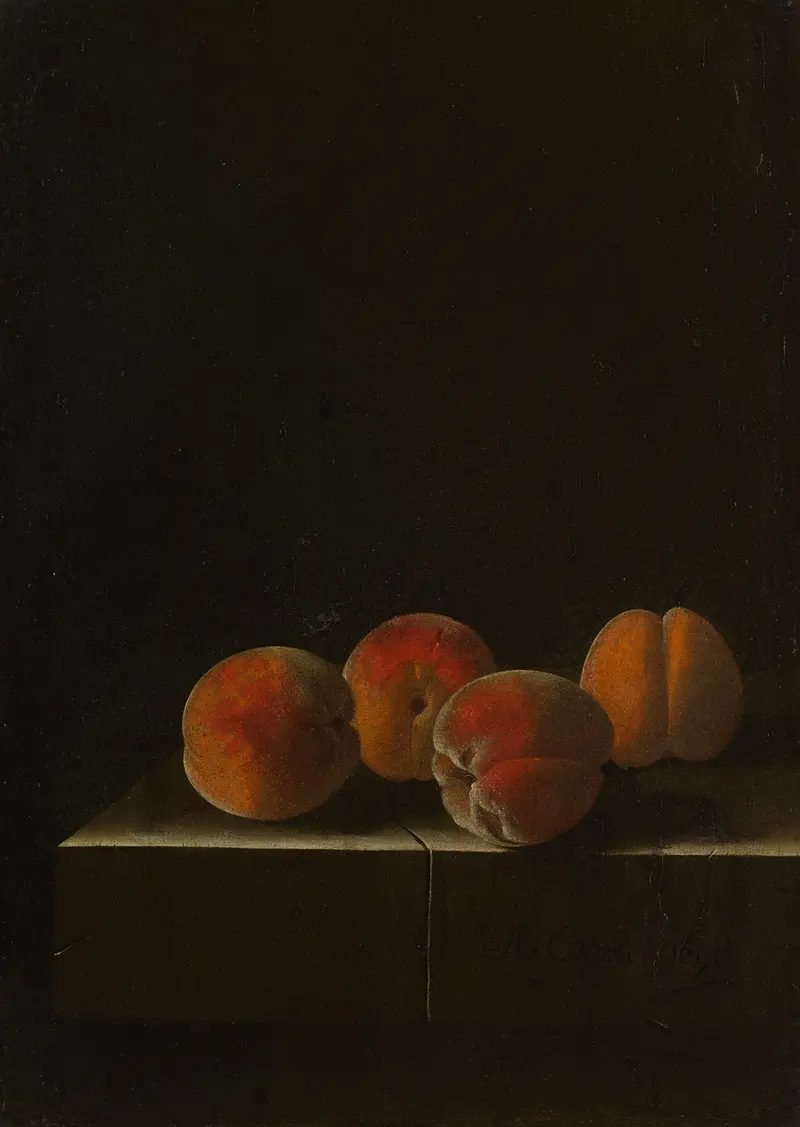
Four Apricots on a Stone Plinth
Adriaen Coorte





