A street scene, Copenhagen — History & Facts
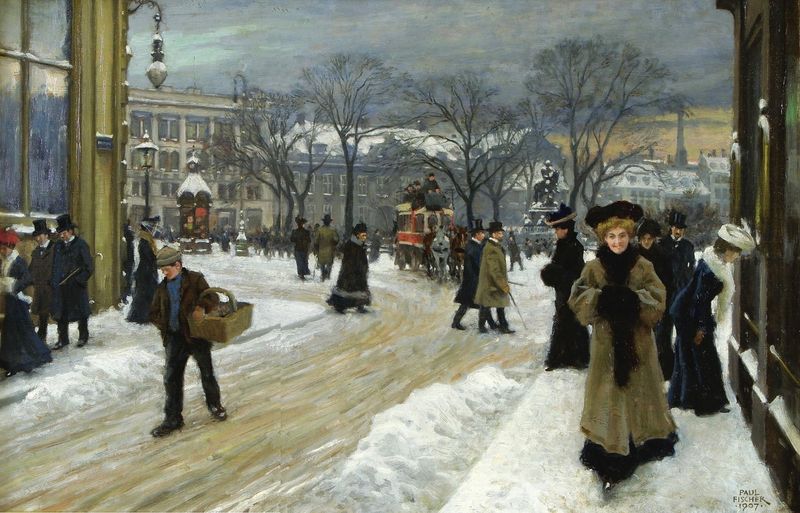
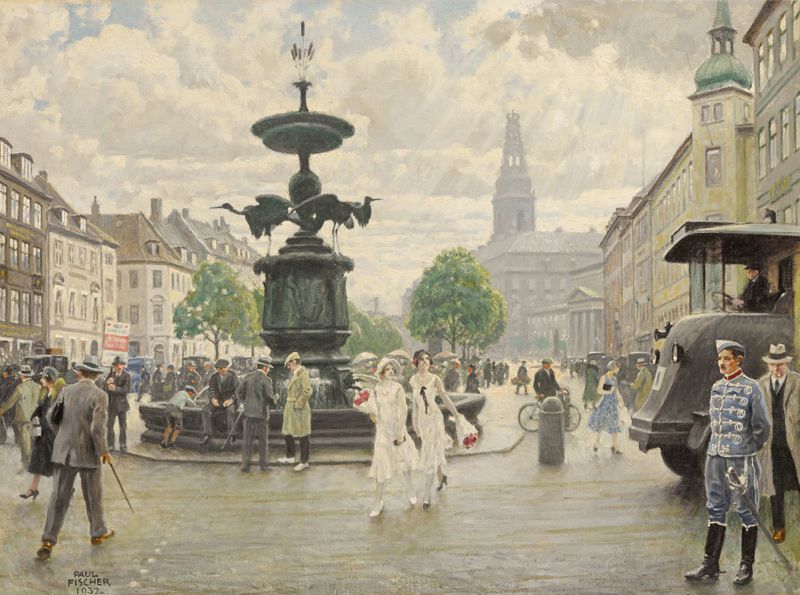
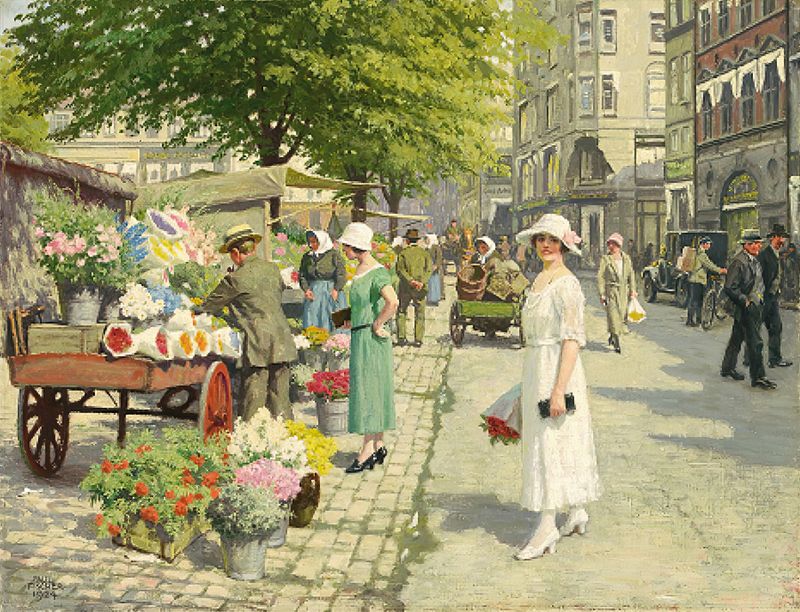
When did color learn to lie? The vibrant hues of A street scene, Copenhagen echo with both allure and deception, drawing viewers into a world that teeters on the brink of reality and fantasy. Look to the left at the bold, sunlit facades of the buildings, their warm yellows and soft greens speaking to the heart of a lively city. The artist's brushstrokes create a rhythm that pulses through the street, guiding our gaze toward the elegantly-dressed figures strolling with purpose. Notice how the shadows stretch beneath their feet, hinting at the fleeting nature of time, even as the colors seem to freeze that very moment. Amidst this bustling atmosphere, there lies a tension within the vibrant palette.
The juxtaposition of lively figures against the stillness of the architecture evokes a sense of obsession with daily life, where each individual is engrossed in their own narrative. Yet, the playful light and exaggerated colors suggest a longing for something more, an escape from the ordinary into the extraordinary, as if the city itself is a stage set for unspoken desires. In 1902, Paul Fischer painted this work while living in Copenhagen, a city burgeoning with modernity and artistic exploration. It was a time when the Impressionist movement was gaining traction, influencing artists to experiment boldly with color and light.
Fischer, deeply rooted in this evolving artistic climate, sought to capture not only the essence of a scene but also the emotions that lay beneath its vibrant surface.