The Bustling Amager Square, Cophenhagen — History & Facts
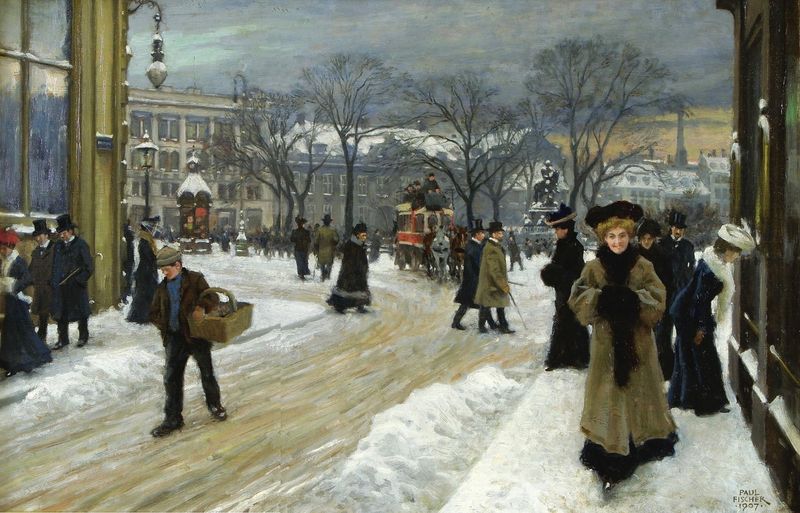
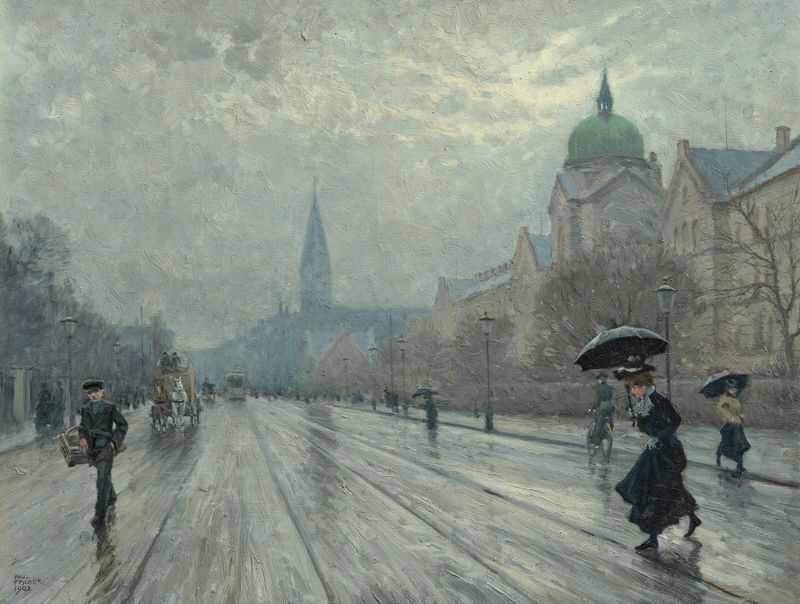
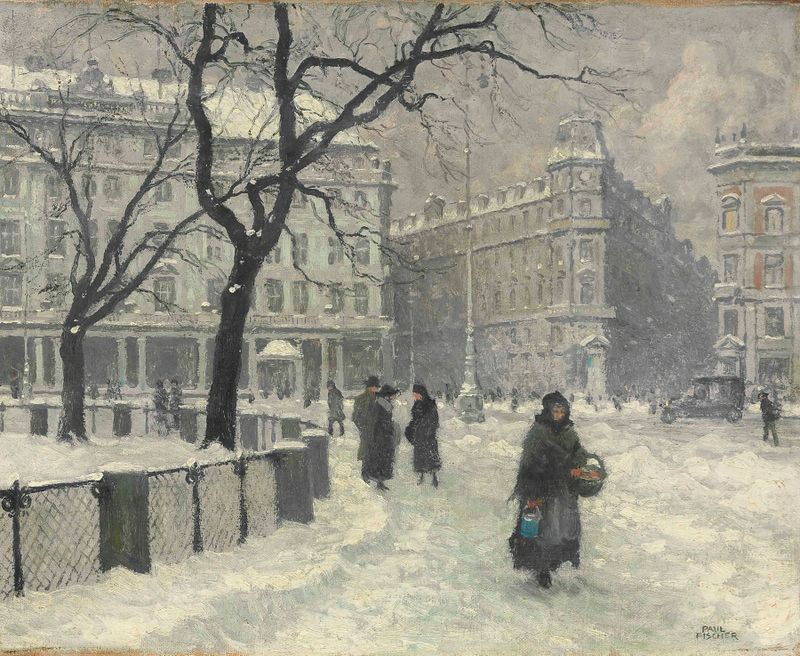
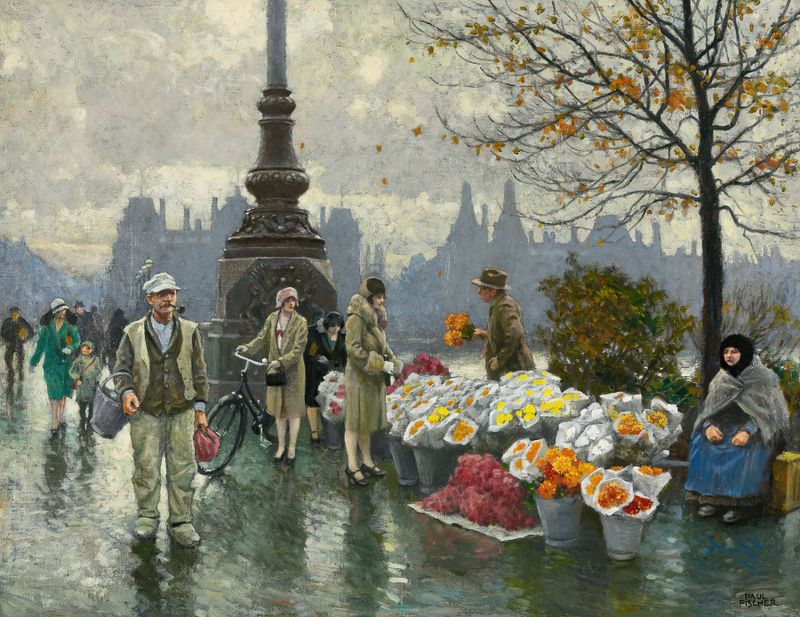
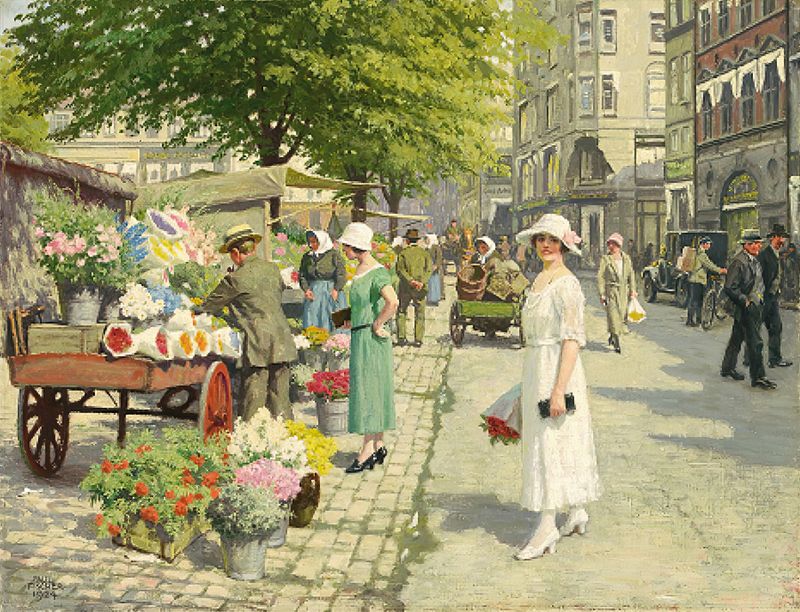
In the bustling urban spaces we navigate, a balance of chaos and calm reflects our own inner struggles. Look to the center of the canvas, where a vibrant crowd thrums with life, each figure a brushstroke of emotion and intent. Fischer masterfully combines warm hues of ochre and deep greens with splashes of blue, guiding your gaze through the layered complexities of street life. Notice how the sunlight dances across the cobblestones, casting whimsical shadows that anchor the frenetic movement above.
Each character, whether animated in conversation or lost in thought, adds richness to the scene, while the juxtaposition of lively activity against the stillness of the surrounding architecture creates a harmonious tension. Amidst the vivid interactions, subtle contrasts emerge: the tension between group dynamics and individual solitude, the vibrancy of urban life juxtaposed with moments of introspection. The bustling figures, some smiling, others frowning, convey a spectrum of human experience, hinting at personal stories woven into the fabric of the square. These details speak to the duality of existence, where the pursuit of connection exists alongside the yearning for personal space, each influencing the other in a delicate balance. Created in 1932, this piece reflects Paul Fischer's keen observation of daily life during a time of social change in Denmark.
Fischer, known for his lively depictions of Copenhagen’s streets, captured the essence of modernity amid interwar tensions. His work emerged at a moment when artists were striving to depict the human experience in a rapidly changing urban landscape, blending realism with impressionistic influences that mirrored the complexities of the world around him.