Flowersellers At Dr. Louises Bro (Queen Louise’s Bridge) In Copenhagen — History & Facts
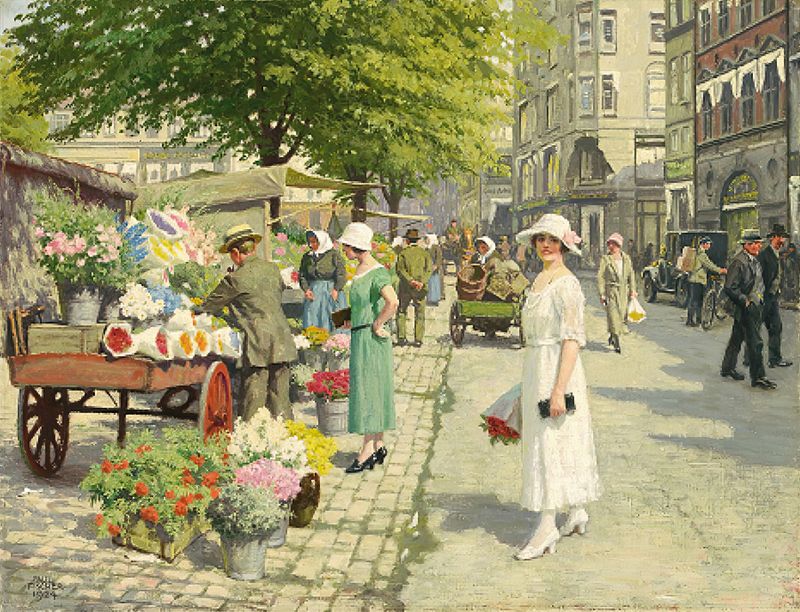
Did the painter know this moment would outlive them? An ephemeral scene captured in time, a fleeting exchange, and the essence of joy distilled into vibrant colors and life. Look to the center of the canvas, where clusters of blossoms burst forth in a riot of hues. Vibrant reds, yellows, and whites create a tapestry of life, drawing the eye into the heart of the composition. Notice how the sun seems to caress each flower, illuminating their delicate petals while casting soft shadows on the cobblestones.
The figures of the flower sellers, animated and engaged in their exchanges, invite you into the bustling atmosphere, where the air is filled with laughter and the subtle fragrance of fresh blooms. Within this lively scene lies a deeper narrative of resilience and connection. The flower sellers, adorned in simple attire, embody a spirit of hard work and community, symbolizing the joy found in everyday moments. Their expressions convey a shared ecstasy, a celebration of life amid the chaos of the city.
The vibrant flowers not only serve as a focal point but also mirror the vitality of human interaction, contrasting the stability of the bridge’s architecture with the transient beauty of both flowers and life itself. During the late 19th century, Paul Fischer was immersed in the vibrant art scene of Copenhagen, a period characterized by a growing appreciation for everyday life and realism. He painted this work amidst a rich cultural backdrop, capturing the essence of urban life with a brush that blended devotion and spontaneity. This painting reflects a moment of connection in a world on the cusp of modernity, emphasizing the beauty found in the ordinary.