A Sunlit Garden — History & Facts
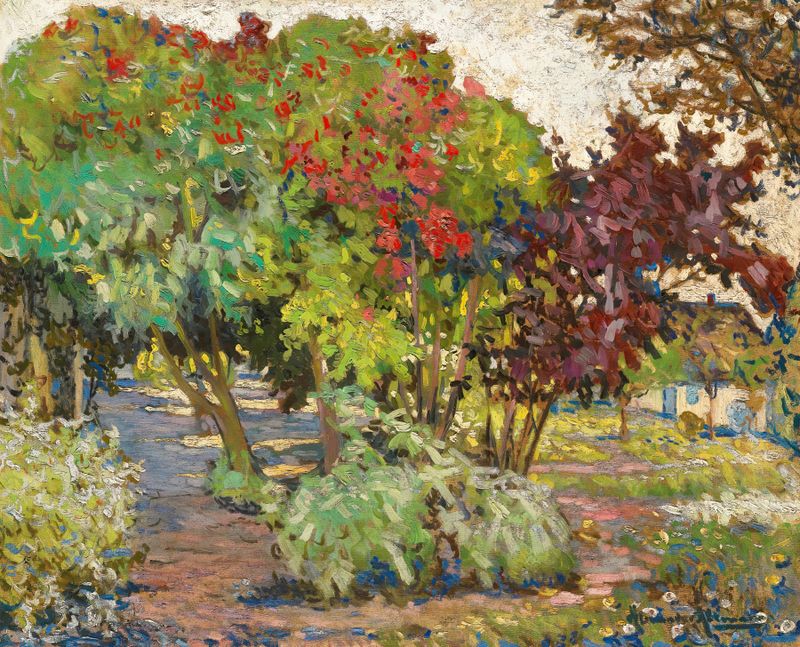
Morning light spills over the vibrant blossoms, igniting a garden alive with color and movement. A woman, her hair loose and wild in the gentle breeze, kneels among the flowers, her fingers caressing the petals as if sharing a secret with nature. The air is thick with the intoxicating scent of blooming lilacs and roses, each hue pulsating with the raw ecstasy of life itself. Look to the left at the vivid splashes of reds, yellows, and purples, where the wildflowers seem to dance in unison.
Notice how the sunlight filters through the leaves above, casting dappled shadows that breathe life into the scene. The masterful brushstrokes create a vibrant texture, pulling the viewer into the lushness of the garden and inviting them to experience the moment alongside the figure lost in her floral reverie. Yet, beneath the serene surface, there is an undercurrent of yearning—an exploration of intimacy between humanity and nature. The woman’s posture, both serene and evocative, suggests a longing for connection in a world increasingly divorced from its natural beauty.
The juxtaposition of the wild garden and her delicate form mirrors the tension between freedom and confinement, hinting at deeper emotional landscapes. Created in 1919, this piece reflects Alexander Altmann's exploration of post-war themes, combining the vibrancy of life with an underlying quest for serenity. Living in a world reshaped by conflict, the artist sought refuge in the beauty of nature, capturing moments of ecstasy and tranquility amidst the chaos. This work serves as a testament to his belief in the restorative power of the natural world during times of upheaval.