Paysage — History & Facts
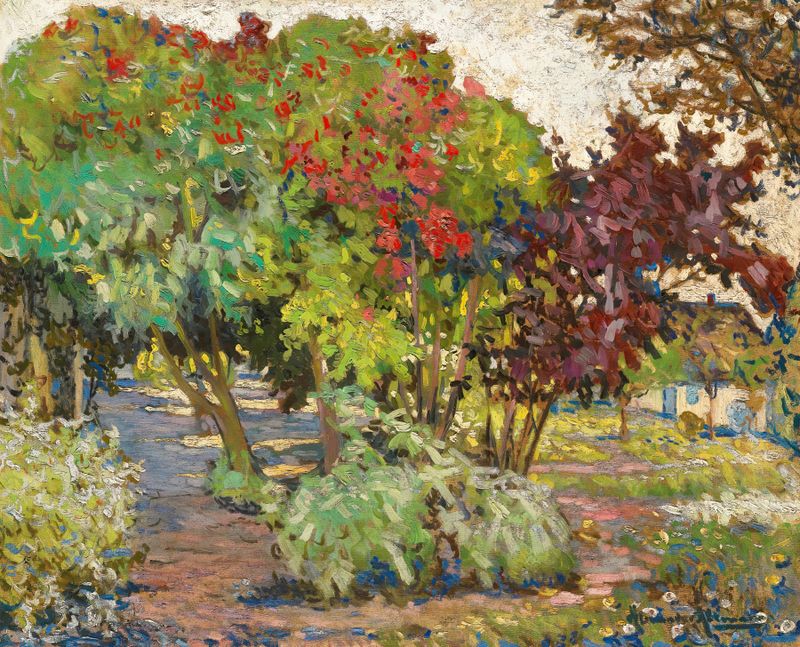
When did color learn to lie? In a world where hues can deceive, Paysage urges us to awaken to the truths buried beneath our perceptions. Look to the center of the canvas where vibrant greens pulse with life, anchoring a lush landscape that seems to breathe. Notice how the artist employs a delicate interplay of light, enhancing the rich textures of the foliage. The brushstrokes are both fluid and structured, drawing you deeper into the scene, inviting a sense of exploration.
The contrasting shades of blue and gold, framing the horizon, create a dialogue between sky and earth, fostering a feeling of harmony. Delve into the subtleties of emotion that permeate the work. The vibrant colors suggest a vivid reality, yet they also harbor a whisper of nostalgia, hinting at a longing for simpler times. The juxtaposition of light and shadow evokes the transient nature of moments, capturing the fragility of memories.
Here lies a tension between the serene beauty of the landscape and the deeper yearning it inspires within us. Created during a period of profound artistic evolution, the artist worked on Paysage in the early 20th century, amidst a backdrop of modernist experimentation. Altmann, a lesser-known figure, was influenced by the shifting tides of the avant-garde movement, seeking to capture the essence of the natural world while exploring abstraction. This painting reflects his quest for emotional resonance in a rapidly changing society, inviting viewers to experience both beauty and introspection.