
A Torrent at Romagnes — History & Facts
Can paint confess what words never could? In Corot's A Torrent at Romagnes, the essence of loneliness flows through the canvas, whispering secrets of nature and solitude. Focus on the tumultuous water cascading down the rocky terrain, creating a sense of motion that anchors the piece. Notice how the light dances on the water's surface, a fleeting shimmer against the muted tones of the surrounding foliage. The composition leads your gaze upward, where trees arch protectively over the stream, their branches forming a natural frame that heightens the feeling of isolation.
Corot's delicate brushwork captures the textures of the rocks and leaves, creating an interplay that invites you to linger in this quiet, yet dynamic, moment. Hidden within the chaos of the torrent lies a profound emotional tension: the contrast between the lively water and the stillness of the landscape. This duality reflects the artist’s inner yearning for connection amidst the wild beauty of nature. The muted colors evoke a melancholic atmosphere, suggesting that while nature is vibrant, the human experience can often feel solitary, as if one is adrift in a world that moves on without them. Corot painted A Torrent at Romagnes after 1862, during a period when he was deeply engaged with the themes of solitude and reflection in his work.
Living in France, he was influenced by the emerging Impressionist movement, yet he maintained his own distinctive style, blending realism with a poetic interpretation of the natural world. This painting echoes his exploration of human emotion and the landscapes that cradle it, marking a significant moment in his artistic evolution.
More Artworks by Jean-Baptiste-Camille Corot
Browse all →
View of Genoa
Jean-Baptiste-Camille Corot
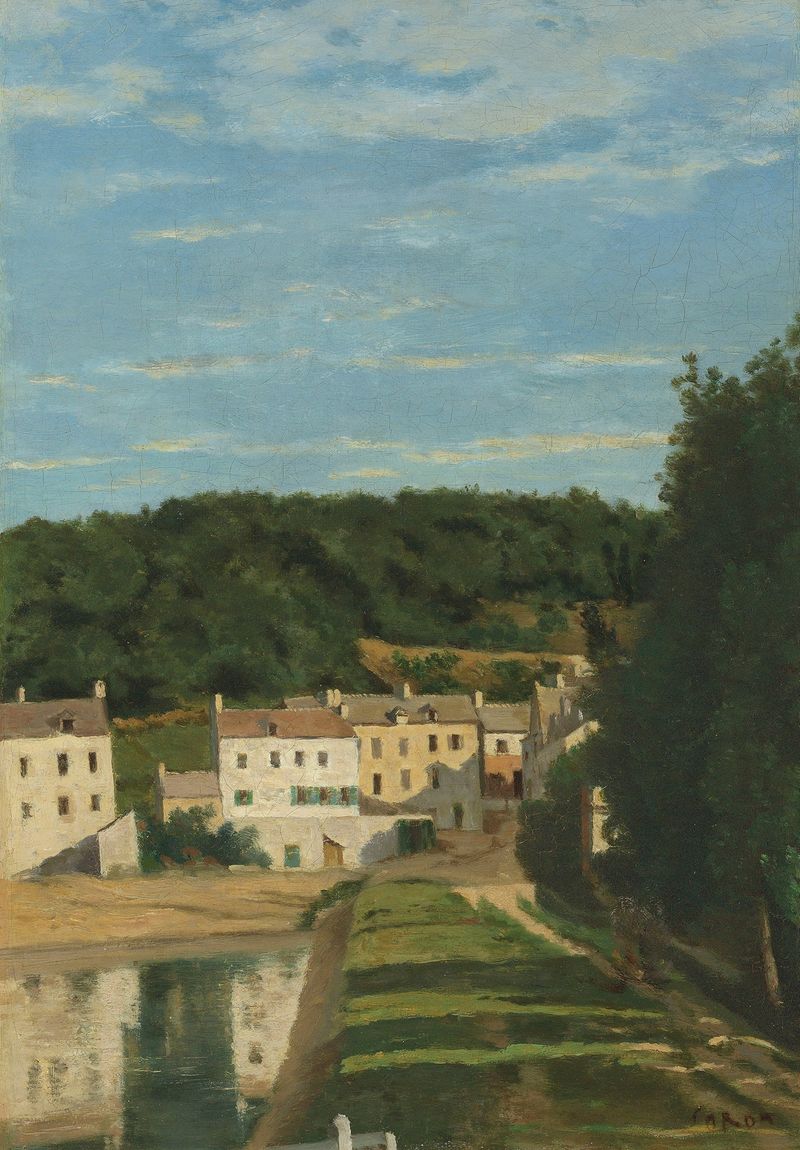
Les Maisons Cabassud À Ville D’avray
Jean-Baptiste-Camille Corot

La solitude. Souvenir de Vigen (Limousin)
Jean-Baptiste-Camille Corot
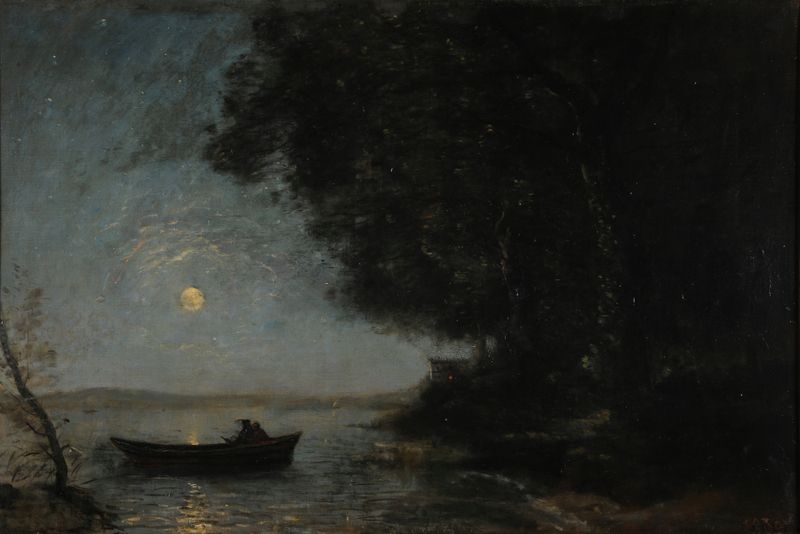
Le lac ; effet de nuit
Jean-Baptiste-Camille Corot
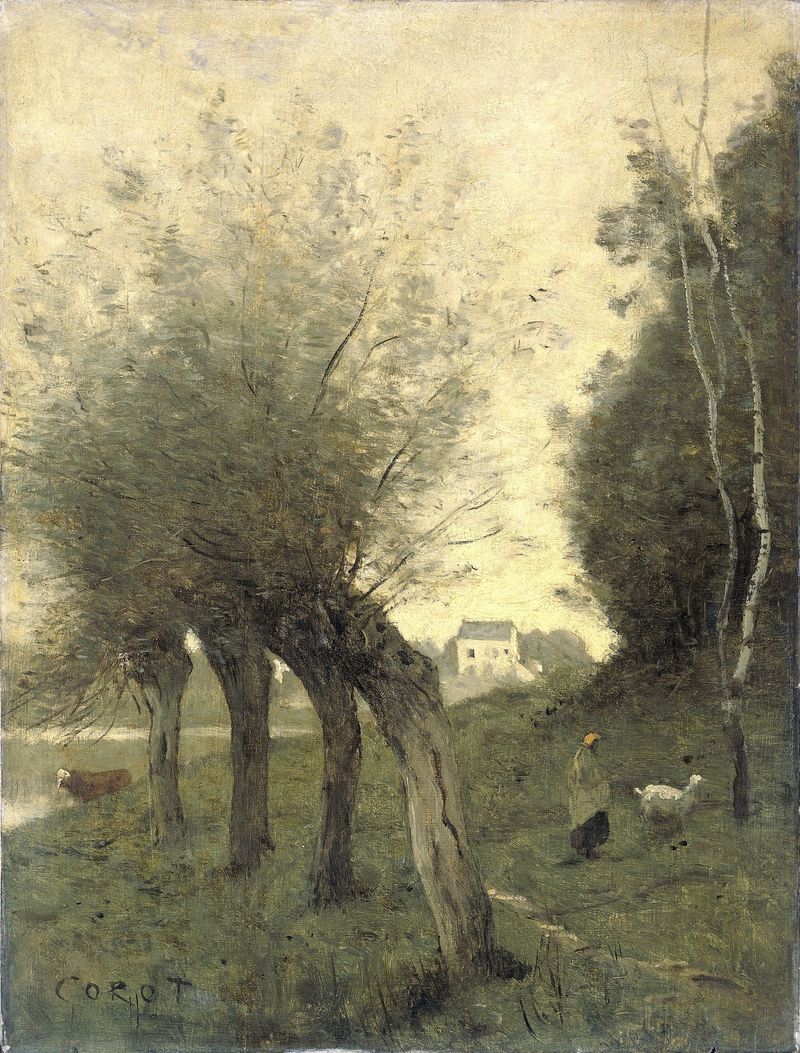
Landscape with Pollard Willows
Jean-Baptiste-Camille Corot
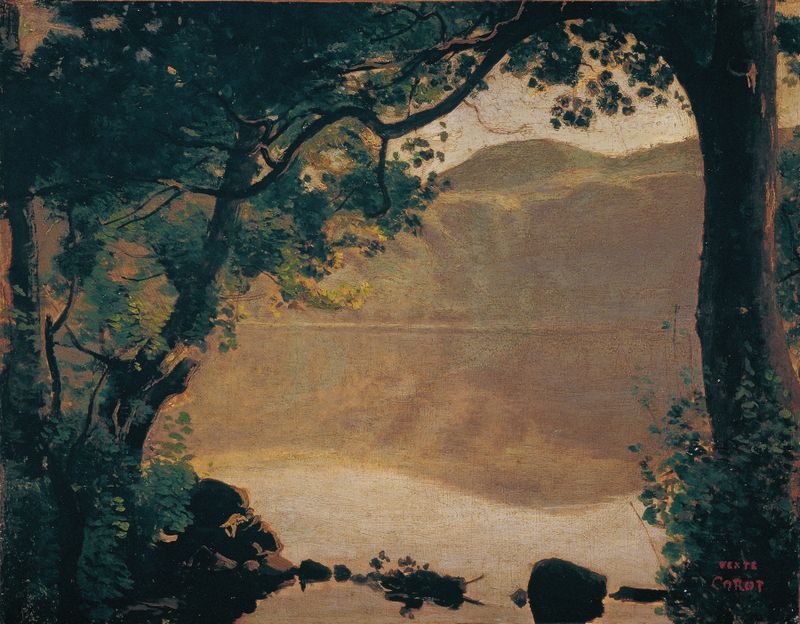
Der Nemisee
Jean-Baptiste-Camille Corot
Les Étangs De Ville D’avray
Jean-Baptiste-Camille Corot
Pond in the Woods
Jean-Baptiste-Camille Corot
Ville D’avray; L’abreuvoir Des Chevaux
Jean-Baptiste-Camille Corot
Le vallon au cavalier
Jean-Baptiste-Camille Corot





