
A View in China- Cultivating the Tea Plant — History & Facts
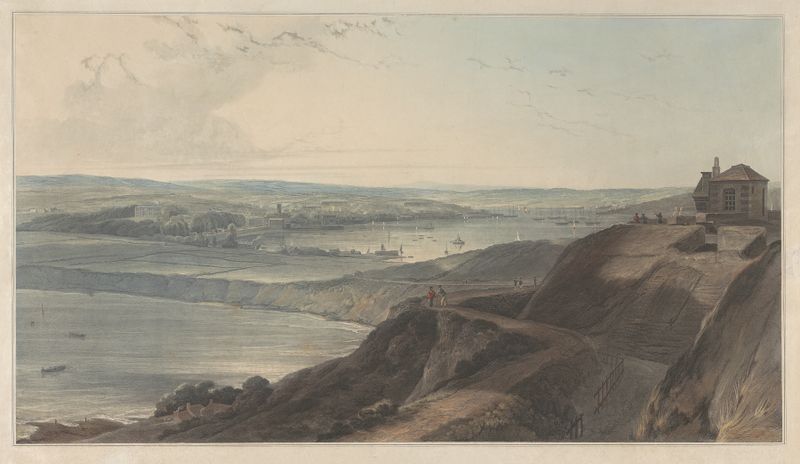
What if beauty was never meant to be finished? In the lush landscape of A View in China- Cultivating the Tea Plant, the essence of life’s labor and the passage of time intertwine, echoing a revolution of art and nature. Look to the foreground, where rows of meticulously cultivated tea plants stretch toward the horizon, their verdant leaves vibrantly contrasting with the earthy tones of the soil. The delicate interplay of light illuminates the scene, casting gentle shadows that enhance the texture of the foliage. Beyond, a cascading hill rises, blending softly into the sky, where wisps of clouds meet the sun's warmth, suggesting an infinite expanse of nature waiting to be explored. Within the tranquil beauty lies a deeper significance.
The act of cultivating tea reflects not merely agricultural labor but an age-old relationship between humanity and the land, one that speaks to the broader themes of cultural exchange and colonialism. The painting captures a moment of harmony, yet hints at the underlying tensions of exploitation and adaptation that define this era. The meticulous details of the tea plants serve as a reminder of the delicate balance between nature and industry, where beauty often lays in the struggle. William Daniell created this work during a time of significant exploration and cultural exchange, likely in the early 19th century.
As a British painter and engraver, he traveled extensively, documenting the landscapes and life in countries such as China. At that time, Western interest in Eastern art and culture was burgeoning, and Daniell's work reflects this fascination while also offering a glimpse into the complexities of colonial encounters and the transformative power of art.
More Artworks by William Daniell
Browse all →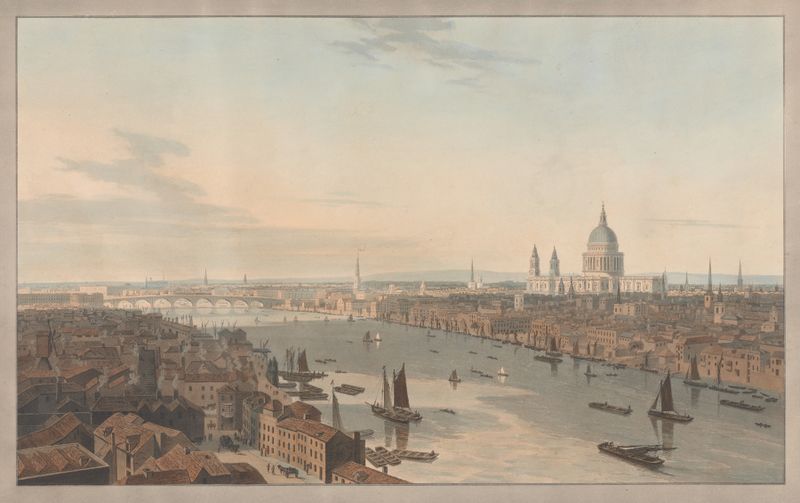
St. Paul’s and Blackfriars Bridge from Southwark
William Daniell
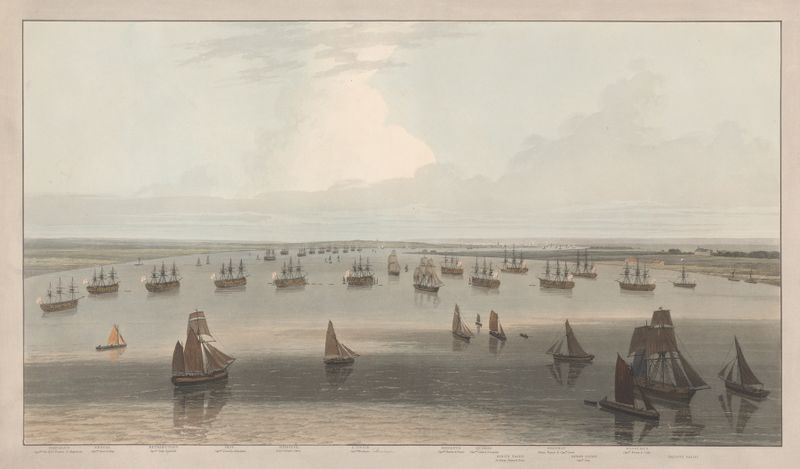
A View of the Frigates Stationed in the Hope under the Command of the Elder Brethen of the Trinity House, Thames Estuary
William Daniell

Main Entrance of the Jami Mosque, Jaunpur
William Daniell

London Bridge
William Daniell

London from Greenwich Park
William Daniell
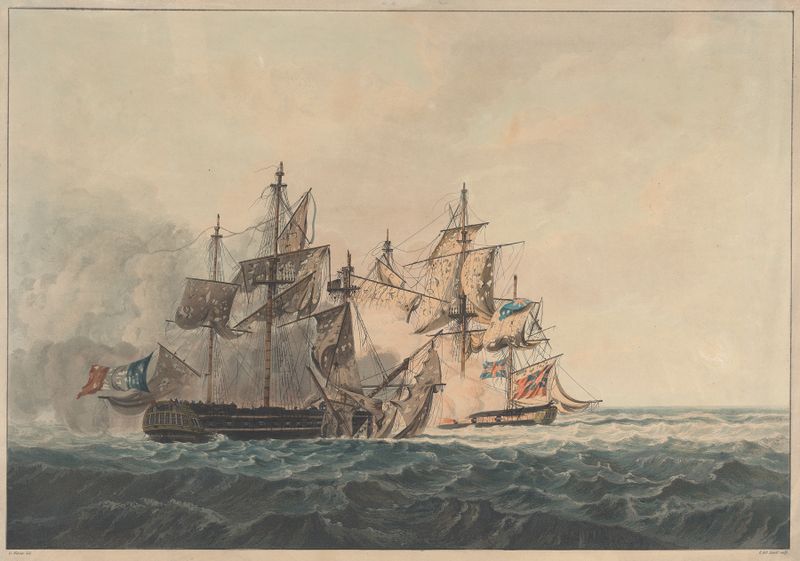
The Action between his Majesty’s Sloop ‘Bonne Citoyenne’ and the French Frigate ‘La Furieuse’
William Daniell
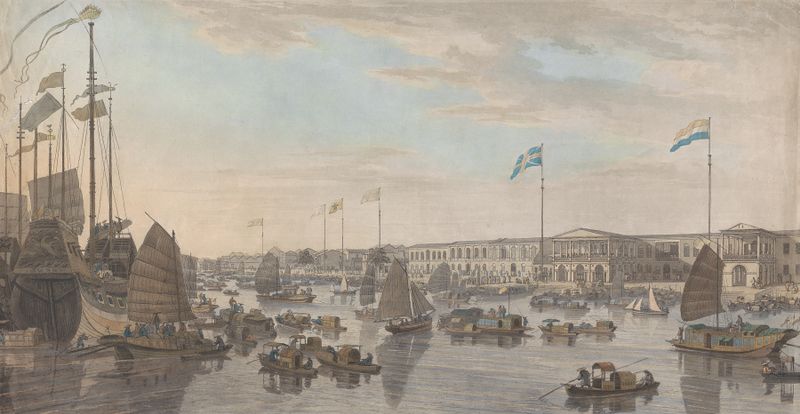
The European Factories at Canton in China
William Daniell

View of London Bridge and St. Paul’s Cathedral
William Daniell
View of the Town and Part of the Harbour of Falmouth from Pendennis Castel, Cornwall
William Daniell

Madras, or Fort St. George, in the Bay of Bengal — A Squall Passing Off
William Daniell





