
A View near Avoca — History & Facts
Can beauty exist without sorrow? In A View near Avoca, hints of longing and loss whisper through the verdant landscape, inviting contemplation on desire and the human condition. Look closely at the sweeping hills that cradle the scene, their lush greens contrasting with the soft blush of the sky as daybreak unfurls above. Notice how light dances across the water, shimmering with a gentle golden hue, inviting your gaze to linger. The composition draws you inward, creating a sense of movement that guides your eyes along the gentle curves of the landscape, from the cascading foliage to the serene river winding through the foreground. Yet, beneath the tranquil facade lies a tension.
The juxtaposition of the idyllic scenery and the looming, dark trees hints at an underlying melancholy, suggesting that beauty is often entwined with longing. The solitary figure in the distance, dwarfed by nature's expanse, evokes a profound sense of solitude that resonates with the viewer, beckoning them to ponder their own desires against the backdrop of a seemingly perfect world. Created around 1760, this piece emerged during a period when George Barret was establishing himself as a prominent landscape painter in England. Influenced by the picturesque movement, he sought to capture nature's beauty, even as he navigated the evolving art scene, which increasingly valued emotion alongside representation.
The artist's choice to depict this serene yet complex view reveals not only his technical prowess but also his deep understanding of the human spirit amid nature's splendor.
More Artworks by George Barret
Browse all →
A wooded landscape with a lake, anglers in the foreground
George Barret
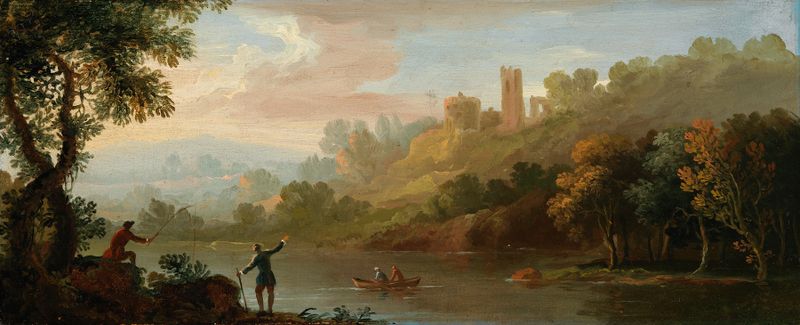
A River Scene
George Barret
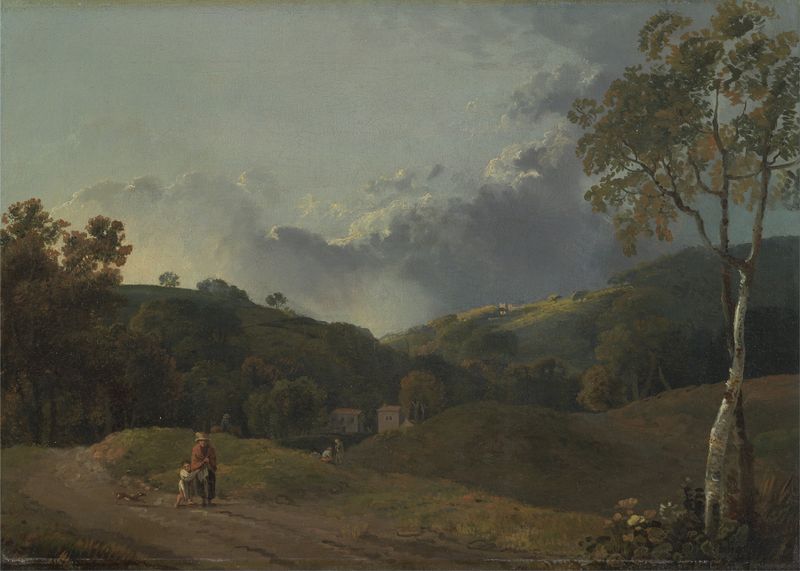
Landscape with Cottagers
George Barret

Landscape with Figures in the Background
George Barret

Morning: Landscape with Mares and Sheep
George Barret

View in a Park
George Barret
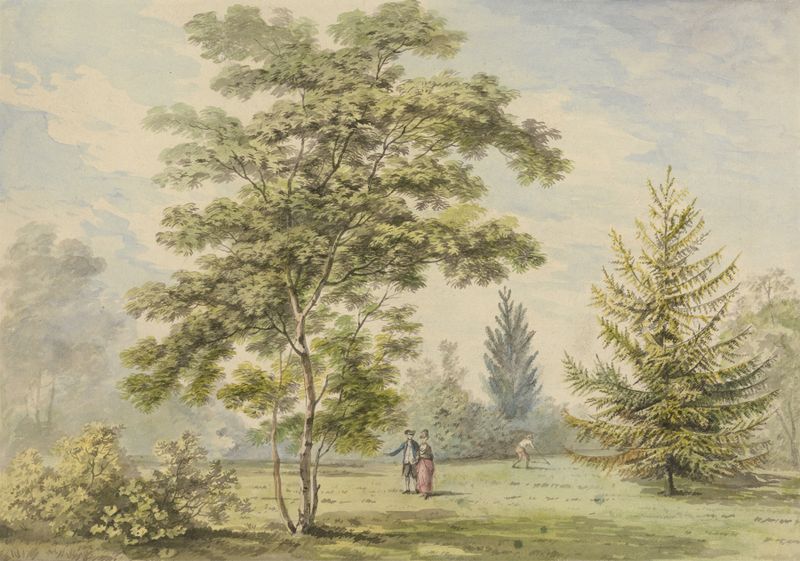
The Acacia Tree, Figures in a Park
George Barret

Timber Wain on a Rough Road
George Barret

Wooded Landscape with a Boy and his Dog
George Barret
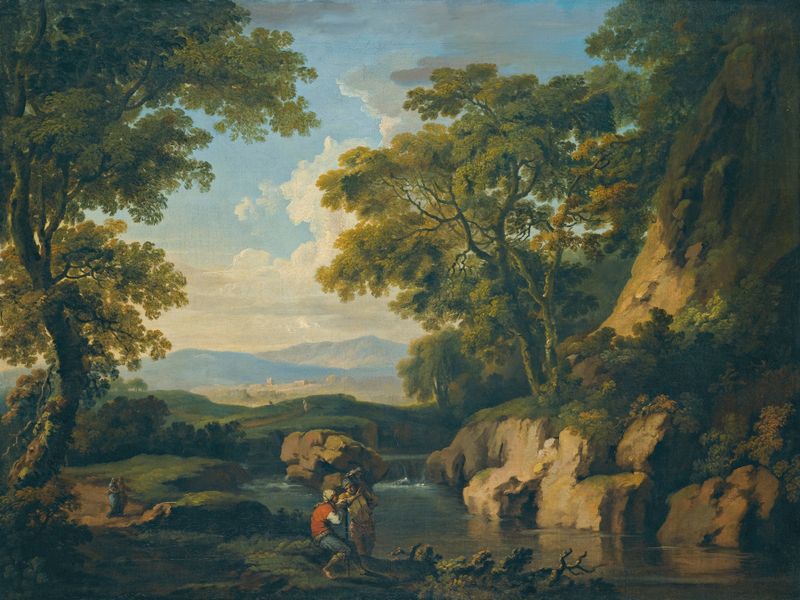
A Mountainous Wooded Landscape With Figures By A River In The Foreground
George Barret





