A View of a Canal in Winter — History & Facts
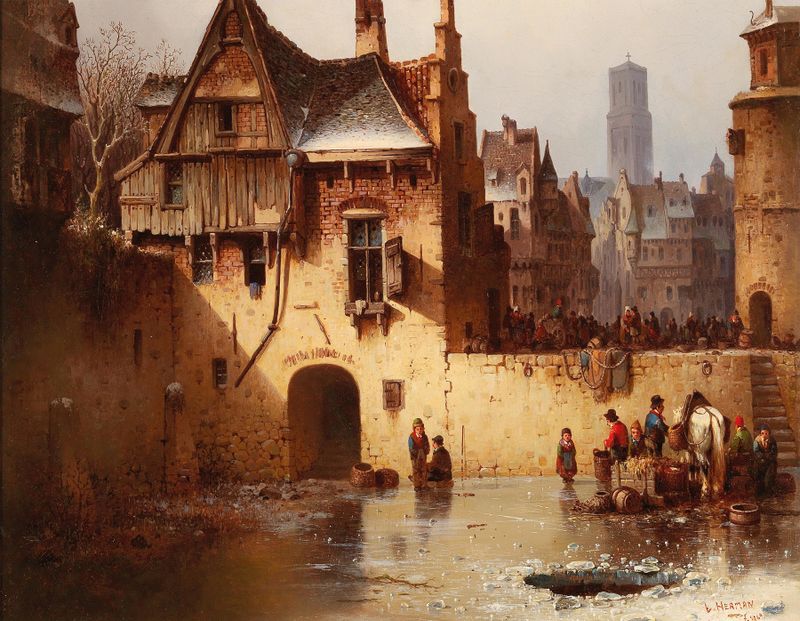
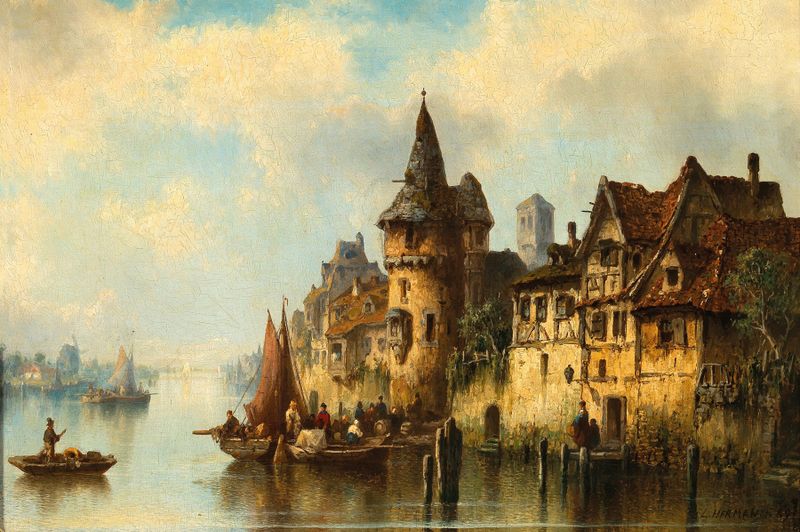
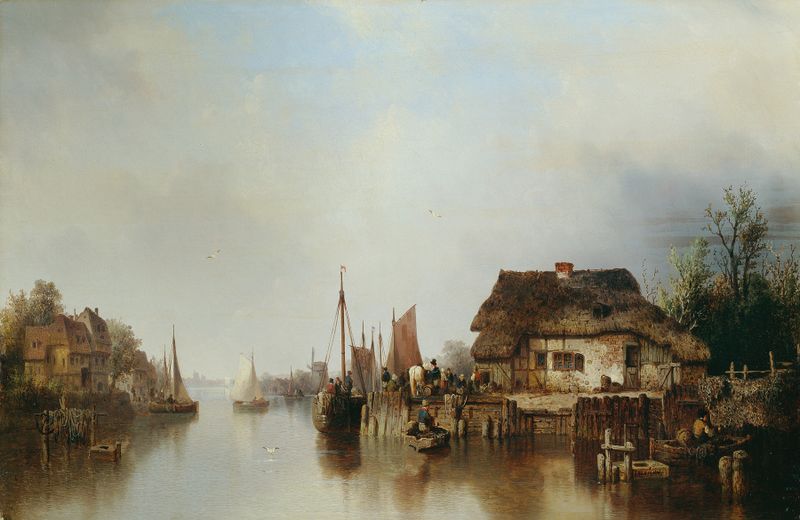
Did the painter know this moment would outlive them? In the quietude of a winter's day, nature and humanity coexist in delicate harmony, revealing a fleeting glimpse of divinity amid the stillness. Focus on the center of the canvas, where the canal glimmers beneath a fresh cover of snow, the surface reflecting soft blues and whites that seem to whisper tranquility. Notice how the gentle strokes of the brush create a dreamy haze around the trees that line the water’s edge, their bare branches intertwining with the sky in a silent dance. The muted palette evokes a sense of serenity, drawing your gaze toward the distant horizon where light breaks through the clouds, offering hope against the winter chill. Yet, look closer: beneath the surface beauty lies an emotional tension.
The stark contrast between the icy canal and the warmth suggested by distant houses hints at the duality of human existence. The figures moving along the snow-laden banks appear small and solitary, their presence a reminder of fragility amidst the grandeur of nature’s expanse. What stories are etched in the footsteps left behind? Each mark in the snow speaks to the ephemeral nature of life, urging a reflective pause. Created in 1852, this work emerges from Ludwig Hermann's time in the Netherlands, where he was influenced by the serene surroundings.
The mid-19th century was marked by a growing interest in realism and the exploration of natural settings, a movement that sought to capture the essence of everyday life. Hermann's careful attention to detail and light reveals a pivotal moment in art history, where sentimentality and observation intertwine, forging a deep connection to the divine in the ordinary.