Holländische Flußufer bei Delft — History & Facts
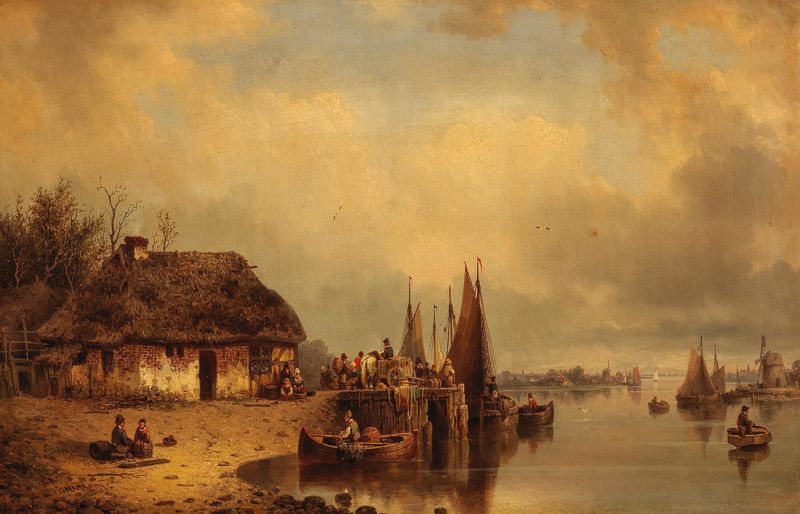
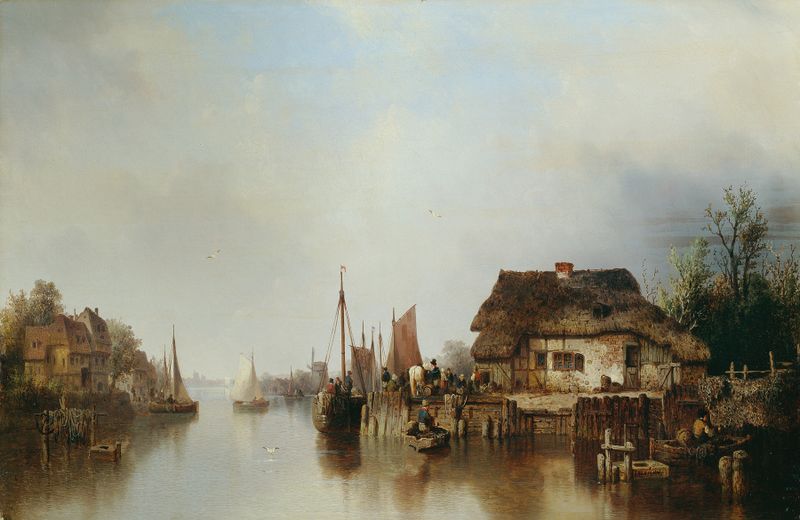
What if silence could speak through light? In Holländische Flußufer bei Delft, the unassuming banks of a river harbor whispers of violent contrasts masked beneath tranquil beauty. Look to the foreground, where the silvery waters reflect the nuanced hues of a sunset, capturing the fleeting moment when day succumbs to night. Notice how the gentle ripples shimmer with soft oranges and deep blues, drawing the viewer into a serene world. The painter's brushwork evokes a sense of calm, yet an undercurrent of tension lurks in the looming clouds, dark and heavy with unspoken storms.
It is this delicate interplay of light and shadow that invites contemplation. Delve deeper into the canvas, and the hidden violence reveals itself. The tranquil scene is pierced by the sharp lines of the willow trees, their twisted branches suggesting a struggle against the winds of change. The sky, although beautifully rendered, looms ominously, hinting at the unpredictability of nature and human existence.
Here, the calmness is almost deceptive, a façade covering the potential chaos and disturbance lurking just beyond the horizon. In 1869, while creating this piece, the artist was situated in a transformative period of Dutch art, where realism began to flourish. A proponent of capturing natural beauty, he sought to express not only the visual delights of the landscape but also the deeper emotional currents that surged beneath the surface. Such works emerged amidst a backdrop of social upheaval in Europe, reflecting a world caught in the throes of change—a silent confrontation between the serene and the tumultuous.