Scheldeufer — History & Facts
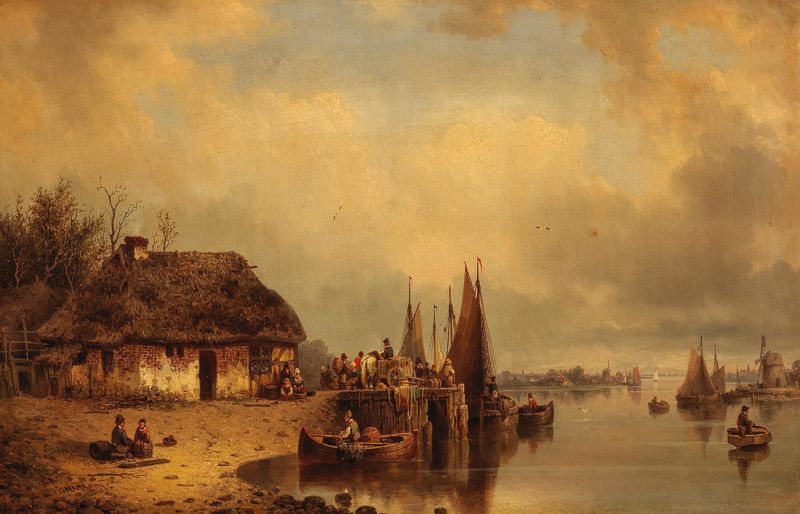
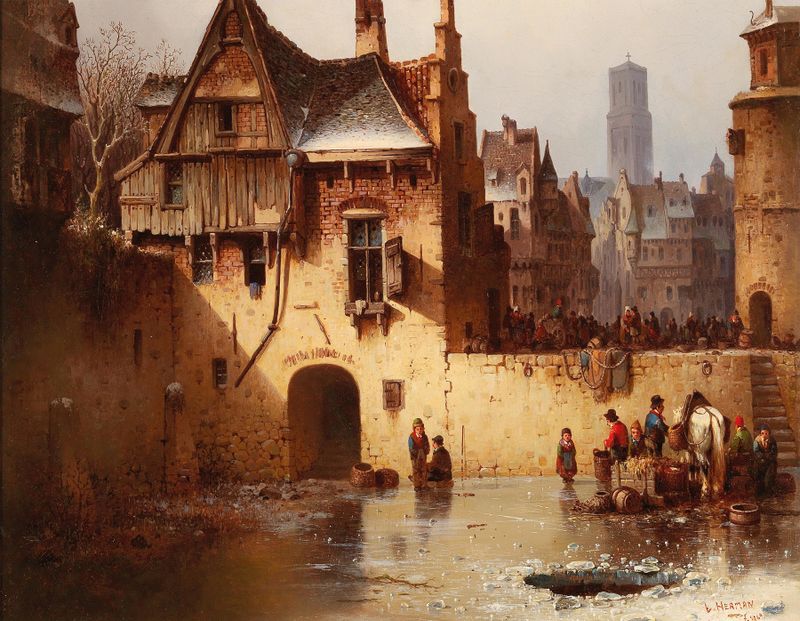
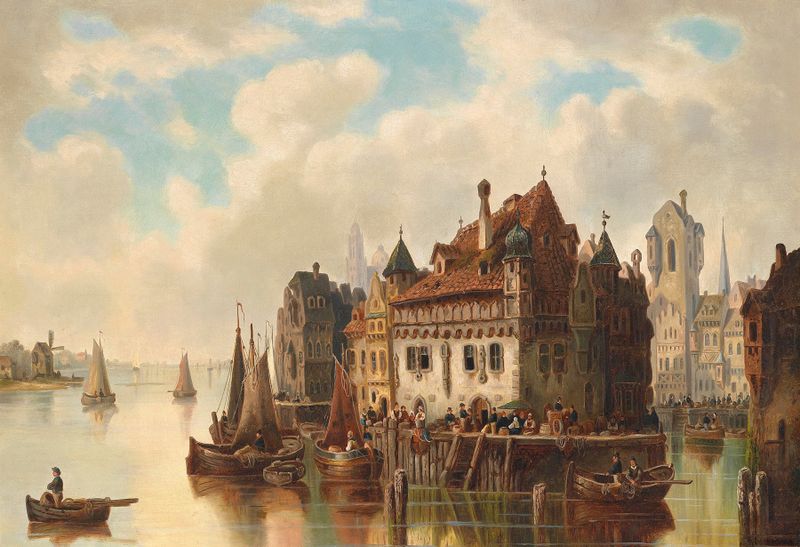
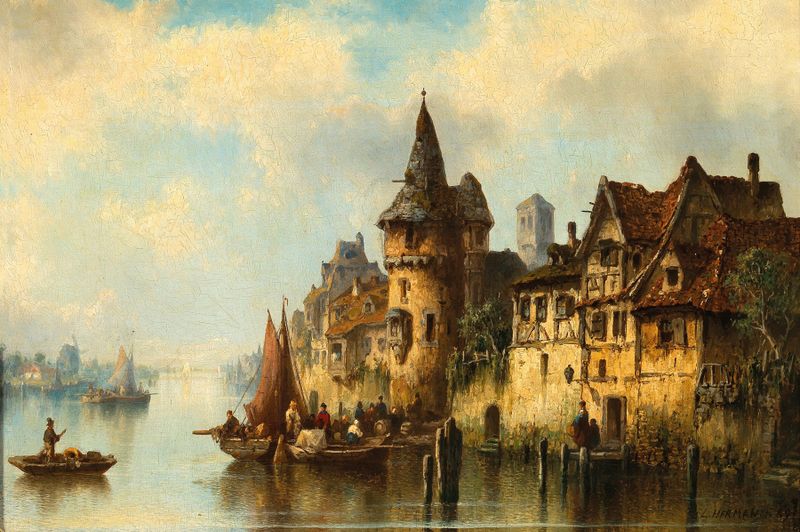
When did color learn to lie? In Ludwig Hermann's Scheldeufer, the hues unfurl like whispers, each stroke inviting uncertainty beneath a serene surface. Look to the foreground, where the water glimmers under a delicate balance of light and shadow, creating an ethereal path that draws the eye. The soft blues and greens meld seamlessly, but their tranquility belies an undercurrent of disquiet. Notice how the trees on the bank loom over the scene, their dark silhouettes framing the vibrant reflections beneath, as if guarding a secret obscured by nature's beauty. The interplay between the calm water and the jagged shoreline suggests a deeper tension—a juxtaposition of peace and foreboding.
The vibrant colors evoke an illusion of safety, while the stark contrasts hint at betrayal lurking just out of sight. This duality invites contemplation, challenging the viewer to consider the hidden narratives that often lie beneath the surface of appearances. Ludwig Hermann painted Scheldeufer in 1852 during a time of artistic evolution in Europe. The Romantic movement, influential in shaping his vision, embraced nature as both a subject and a metaphor for human emotions.
Living in Belgium, Hermann was immersed in a burgeoning art scene that sought to convey the complexities of the human experience through landscapes, reflecting personal and social upheavals of the era.