Fishermen at Work on a Jetty — History & Facts
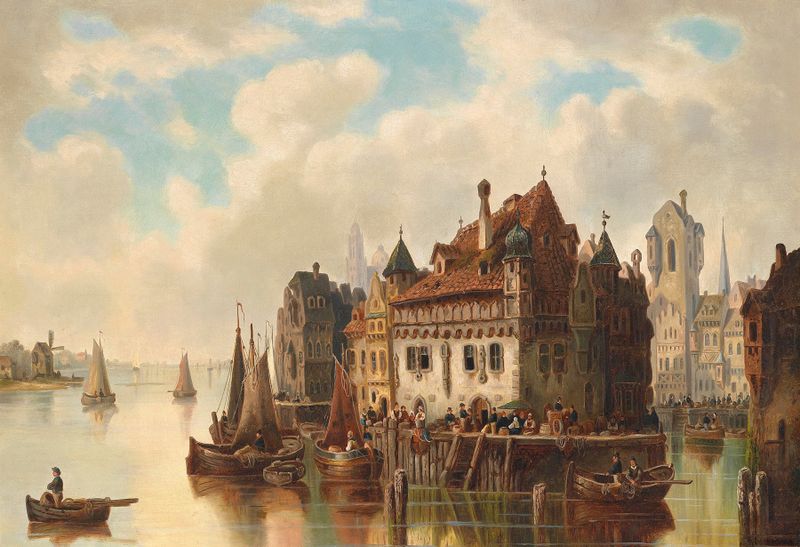
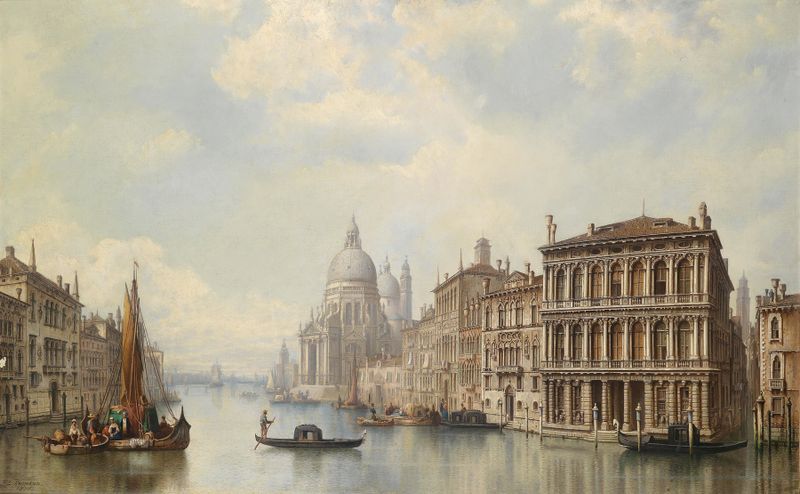
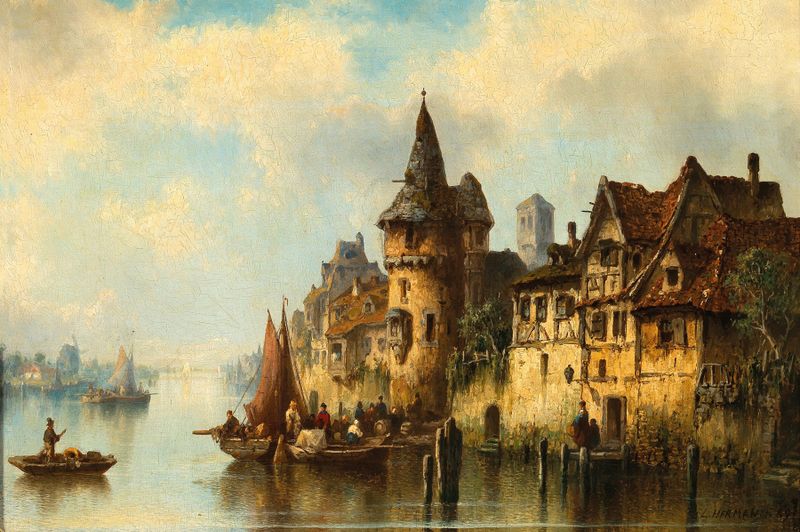
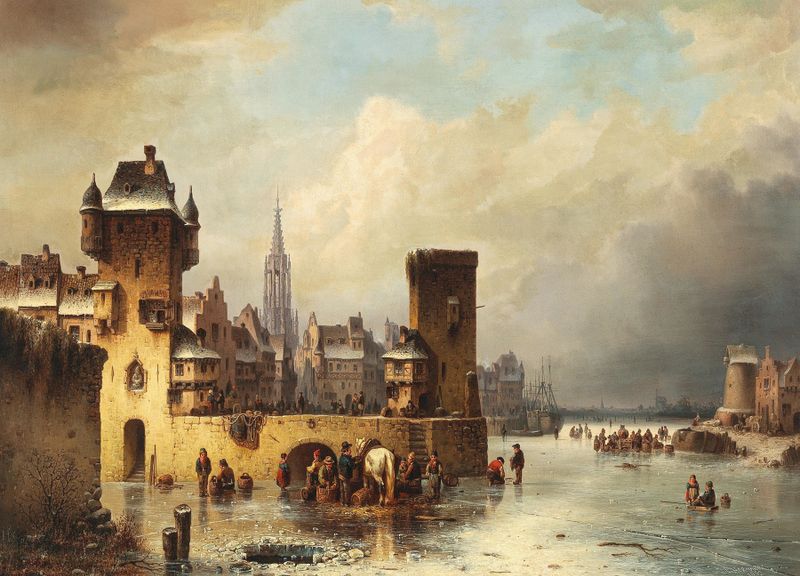
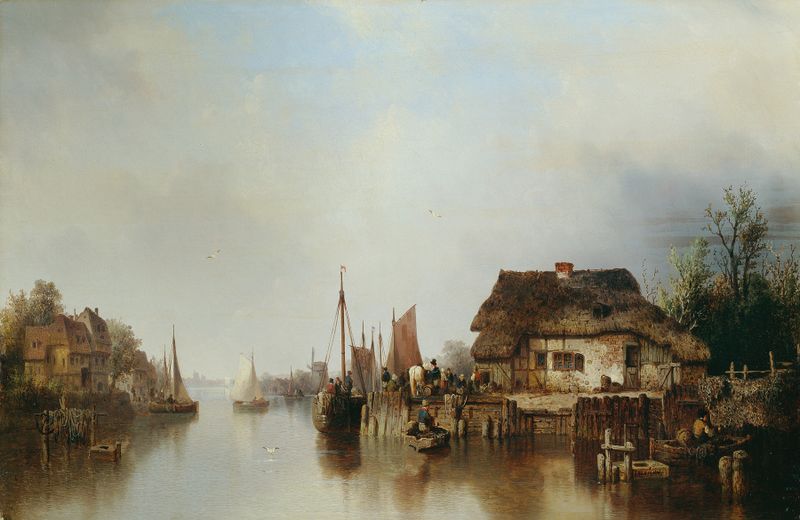
Did the painter know this moment would outlive them? As the figures toil upon the weathered jetty, their labor echoes through time—a fleeting instant, now eternalized. Look to the forefront of the composition, where the sturdy structures of the jetty lead your eye to the fishermen, their figures robust and engaging. Notice how the sunlight bathes the scene, casting golden hues on the fishermen's skin, while contrasting shadows stretch across the wooden planks. The blend of blues and greens in the water creates a serene backdrop, while the rich earth tones of the jetty ground the painting, offering a deep sense of place and reality. Embedded within the scene is a poignant contrast: the vitality of human effort against the vast, indifferent sea.
Each fisherman, hunched with purpose, reflects both individual determination and collective existence, suggesting a symbiotic relationship with nature. The void of the horizon looms, representing both promise and uncertainty, hinting at the mysteries beyond the visible waves. The choice of palette serves to emphasize not just the physical labor but also the emotional weight of their undertaking. In 1853, Ludwig Hermann painted this work amidst a burgeoning interest in capturing everyday life in its raw form.
Living in Germany during a time of significant industrial advancement, he sought to document the resilience and struggles of laborers against the backdrop of a rapidly changing world. This painting stands as a testament to that era, preserving a way of life soon to be overshadowed by modernity.