A View of Budapest with the Chain Bridge — History & Facts
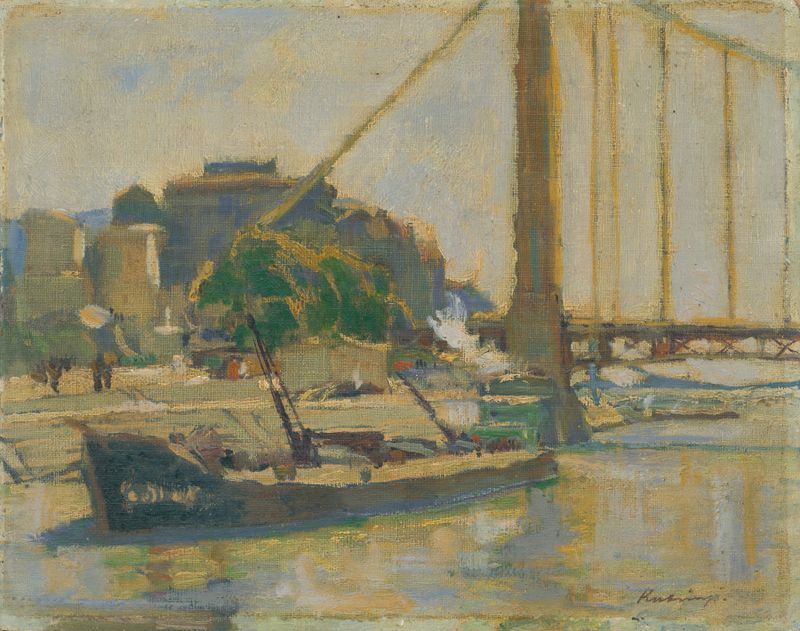
Could a single brushstroke hold eternity? In A View of Budapest with the Chain Bridge, the longing for connection and place pulses beneath each delicate layer of paint, revealing a world suspended in time. Look to the foreground, where the Chain Bridge stretches gracefully across the river, its arches mirroring the soft curves of the water below. The artist’s use of muted earth tones contrasts with the vibrant blues and greens of the landscape, drawing the eye to the bridge as both a physical structure and a metaphor for connection. Notice how the light dances on the water’s surface, creating a shimmering pathway that invites the viewer into the scene, while the soft haze in the background envelops the city, suggesting an air of mystery and nostalgia. The emotional tension in this piece lies in the interplay between the solid strength of the bridge and the ethereal quality of the cityscape behind it.
The juxtaposition of the robust, unyielding structure against the delicate, almost dreamlike skyline captures a sense of yearning, as if the bridge itself is a bridge to the past—a silent witness to countless stories. The gentle brushwork conveys a wistfulness, hinting at untold narratives waiting to be discovered beneath the layers of paint. During the time Alexander Kubínyi created this work, he was immersed in the vibrant artistic movements of late 19th-century Hungary, a period marked by national pride and a burgeoning sense of identity. While the exact date of this painting remains uncertain, it reflects a moment in his career when he was exploring the balance between realism and impressionism, capturing the essence of his beloved Budapest amidst a backdrop of cultural transformation.