Study of Landscape — History & Facts
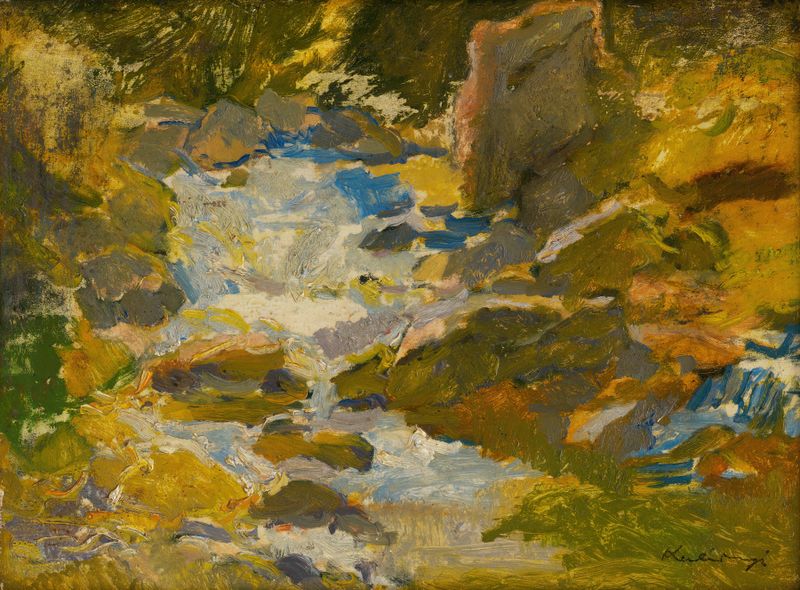
Could beauty survive in a century of chaos? In a world marked by upheaval, innocence stands as a fragile beacon, inviting reflection and contemplation. Focus first on the harmonious blend of colors in Study of Landscape, where lush greens and warm earthy tones envelop the canvas. The sweeping horizon draws the eye towards the distance, creating a sense of limitless space. Notice how the delicate brushstrokes mimic the gentle sway of grass, whispering secrets of the land.
The interplay of light and shadow offers a dynamic contrast that breathes life into the scene, inviting you to pause and wander through this tranquil vision. In this work, the tranquil landscape serves as a stark counterpoint to the turmoil of the early 20th century. The serene composition suggests a yearning for simplicity amidst the anxieties of modern life. Subtle details, like the soft clouds hanging low in the sky, evoke a sense of nostalgia for a lost innocence, while the scattered wildflowers hint at impermanence—beauty that flourishes briefly before fading away.
This poignant balance of tranquility and transience underlines the fragile existence of peace in a world on the brink of change. Created in 1905, this piece emerged during a transformative period for Alexander Kubínyi, who was living in Hungary amid social and political unrest. The art world was shifting dramatically, embracing modernity while grappling with the remnants of tradition. His exploration of landscape at this time reflected not only his personal struggles but also a collective desire to find solace in nature as the world around him began to fracture.