Krajina s vodou — History & Facts
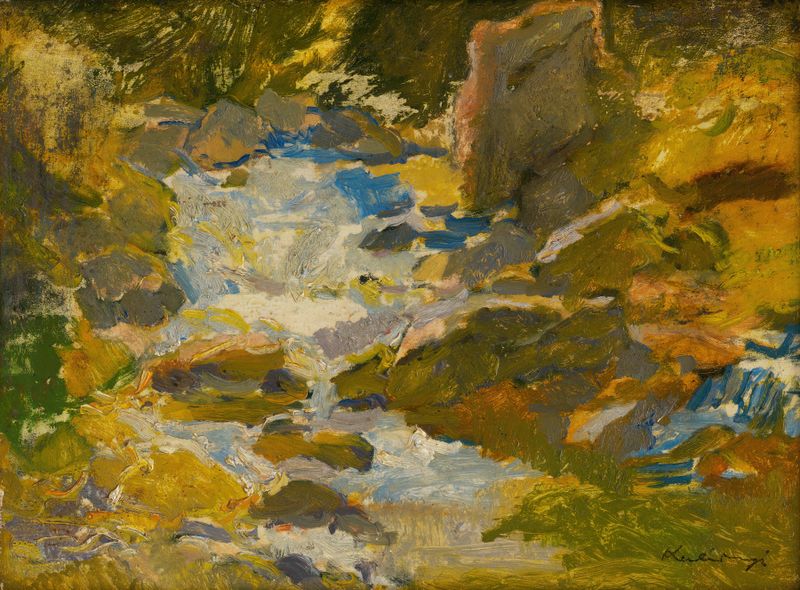
When did color learn to lie? The innocent hues of a landscape can veil deeper truths, whispering secrets in the gentle strokes of a master’s hand. Begin by focusing on the vibrant blues and greens in Krajina s vodou, where the interplay of water and sky beckons the eye. Notice how the brushstrokes create a fluid sense of movement, drawing you towards the shimmering surface that reflects the world above. The composition invites you to traverse the horizon, where the blending of natural elements captures a moment of serene harmony. Yet, beneath the tranquil facade lies an undercurrent of contradiction.
The colors, while seemingly bright and inviting, evoke a sense of longing and nostalgia. Look closely at the interplay of light and shadow; the juxtaposition between the bright foliage and the darker, murky waters suggests hidden depths, both literal and metaphorical. This visual tension speaks to the complexities of innocence lost, challenging the viewer to ponder what lies beneath the surface. Created during an uncertain time in the mid-20th century, Krajina s vodou reflects Alexander Kubínyi’s exploration of identity and environment amidst the backdrop of post-war Europe.
As he painted this piece, Kubínyi grappled with the remnants of conflict, seeking solace in nature’s beauty even as the scars of history lingered. This painting, undated yet evocative, captures both the fleeting joys and underlying struggles of existence.