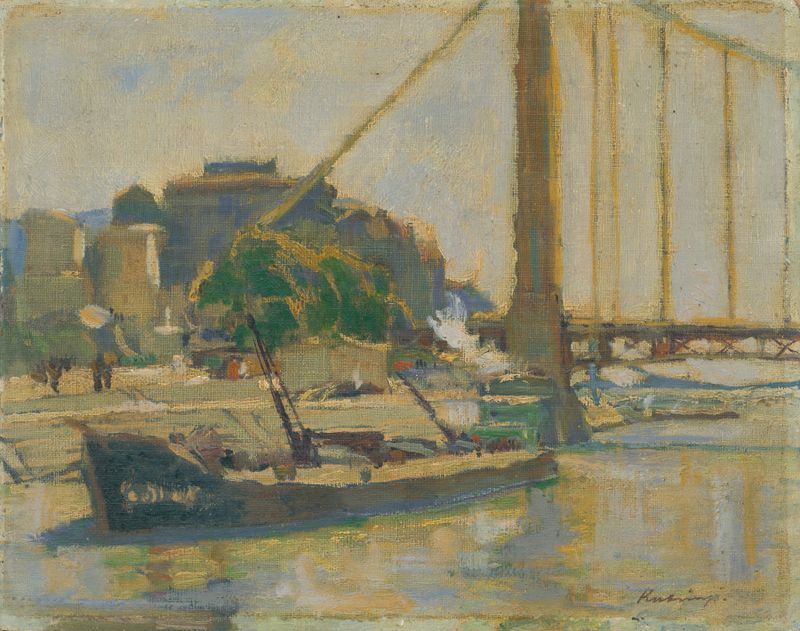
Forest Brook — History & Facts
In the delicate intermingling of colors and forms, ecstasy emerges from nature’s wild embrace, inviting one to lose themselves in the rhythm of the wilderness. Focus on the vibrant greens and rich browns that swirl into one another, drawing your attention to the brook that flows through the heart of the canvas. Notice how the dappled light filters through the leaves, casting a mosaic of shadows on the water’s surface. The artist’s brushstrokes dance with energy, creating movement that echoes the gentle rush of the stream, while the trees bend slightly, as if whispering secrets to the flowing water. The contrast between the serenity of the brook and the chaotic brushwork evokes a profound emotional tension.
Each stroke captures a fleeting moment of ecstasy, suggesting both tranquility and tumult. Hidden within the scene are glimpses of life's interplay: the shimmering water represents clarity amid the turbulent undercurrents of existence, while the lush foliage hints at the vibrant beauty that can stem from disorder. Kubínyi painted this piece in 1900, during a time when the art world was embracing the transition into modernism. Living in the heart of Europe, he was influenced by the impressionist movement, which celebrated light and color over precise detail.
His work reflects a quest for expression that mirrored the changing tides of society, where artistic exploration was becoming a pathway to personal and emotional truths.