
A view of Mount Sassolungo — History & Facts
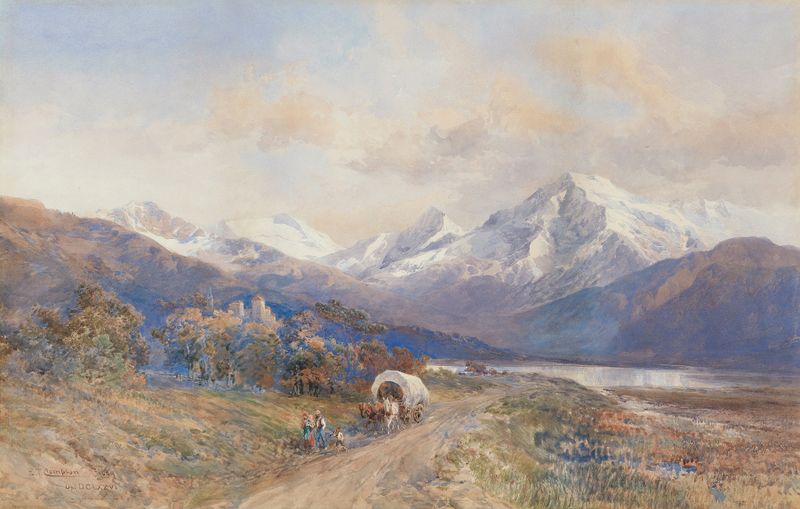
Can paint confess what words never could? In Edward Theodore Compton's A View of Mount Sassolungo, nature speaks through the vibrant strokes of color and light, revealing secrets that resonate beyond the confines of language. Look to the left at the towering presence of Sassolungo, its jagged peaks crowned with ethereal wisps of clouds. Notice how the sunlight dances across the mountain’s face, casting deep shadows that enhance its dramatic form. The rich greens of the valley below contrast beautifully with the cool grays and whites of the rocky summit, creating a harmonious tension between earth and sky.
The composition is masterfully balanced, drawing the viewer's eye toward the mountain while inviting exploration of the surrounding landscape. As you dive deeper into the artwork, observe the interplay of light and shadow, which serves as a metaphor for the passage of time and the ephemeral nature of beauty. The subtle reflections in a nearby lake suggest a momentary pause, an invitation to contemplate the essence of solitude amidst grandeur. Additionally, the foreground's lush vegetation hints at life thriving in the shadow of the mountain, symbolizing resilience in the face of nature's enormity. Compton created this piece in 1914, during a period when he was deeply engaged with the landscapes of the Dolomites, reflecting both his admiration for nature and his desire to convey its majesty.
At the time, the world was on the brink of war, a stark contrast to the serene beauty captured in this artwork. The calmness of this scene stands in poignant juxtaposition to the chaos that would soon envelop Europe, making the painting resonate with both tranquility and foreboding.
More Artworks by Edward Theodore Compton
Browse all →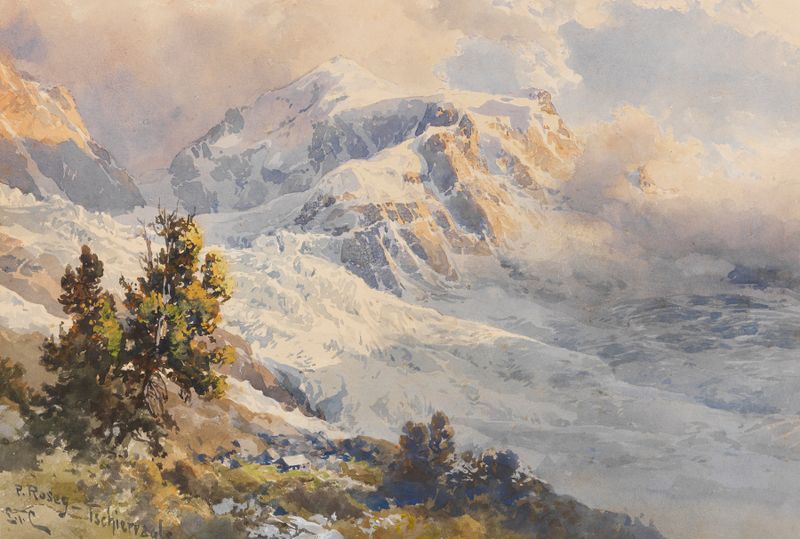
Piz Roseg – Tschiervagletscher
Edward Theodore Compton
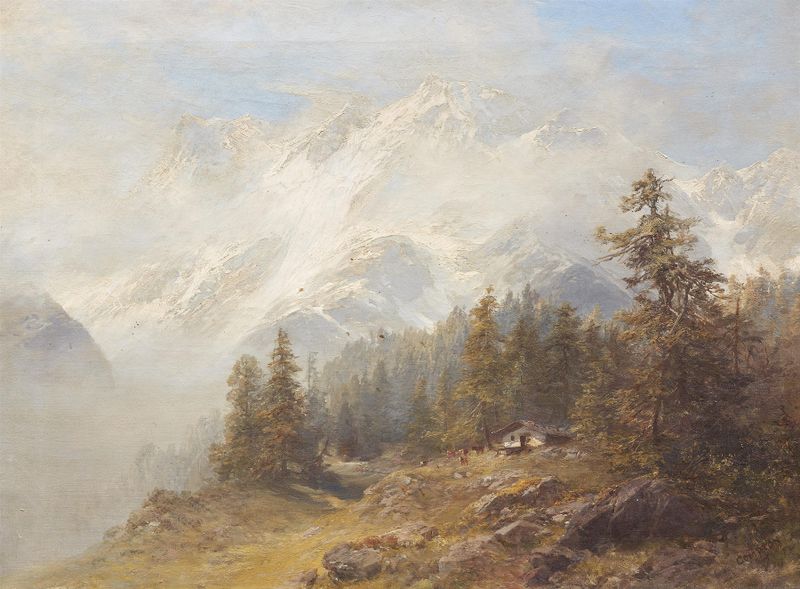
Alpenlandschaft vor schneebedecktem Massiv
Edward Theodore Compton
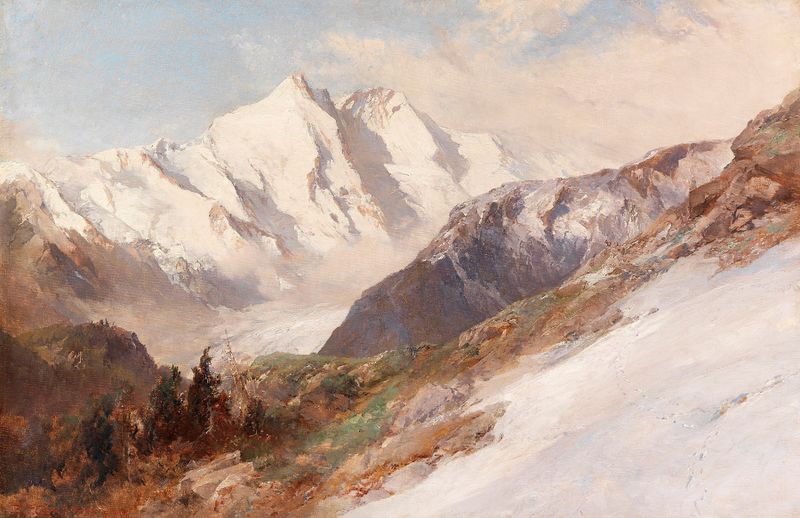
Blick auf die Nordseite des Großglockners
Edward Theodore Compton
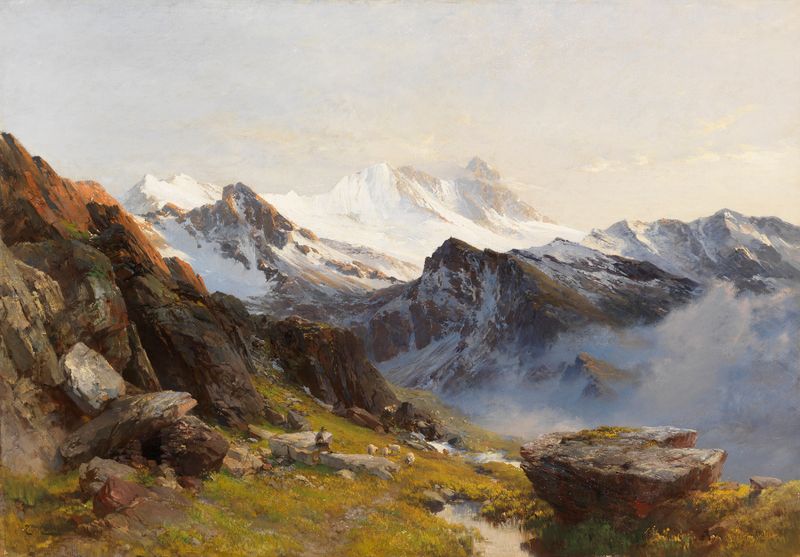
Großglockner von der Prager Hütte aus, früh
Edward Theodore Compton
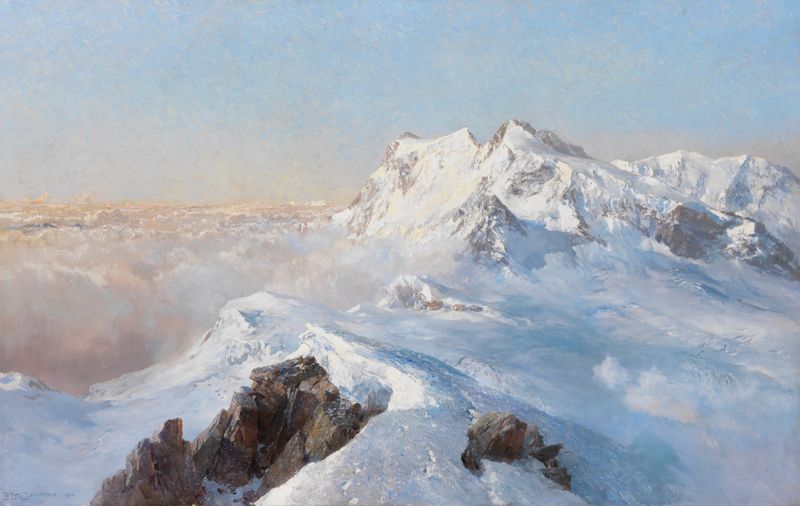
Über dem Nebelmeer (Monte Rosa vom Rimpfischhorn)
Edward Theodore Compton
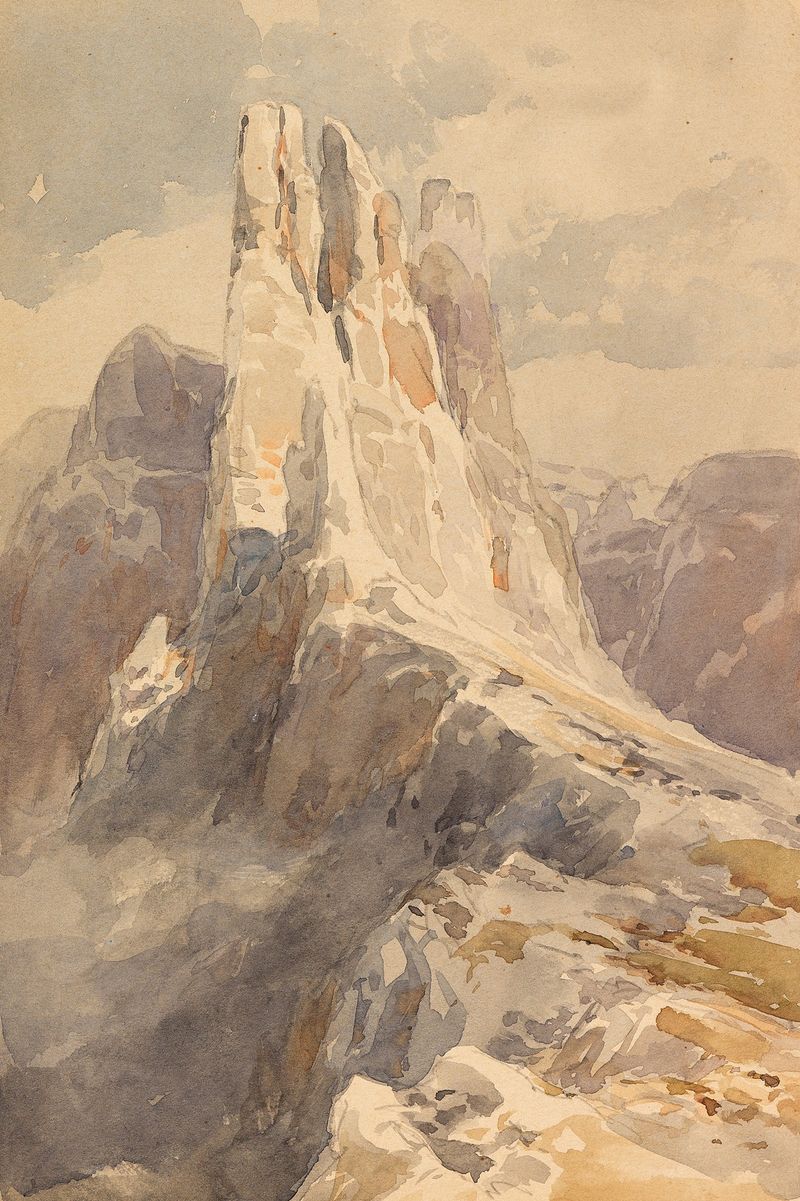
Blick auf die Vajolet-Türme in den Dolomiten
Edward Theodore Compton
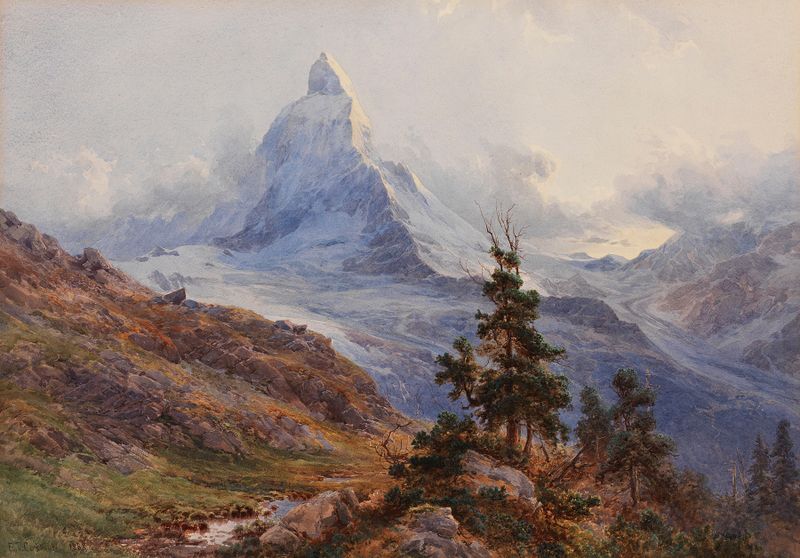
View of the Matterhorn
Edward Theodore Compton
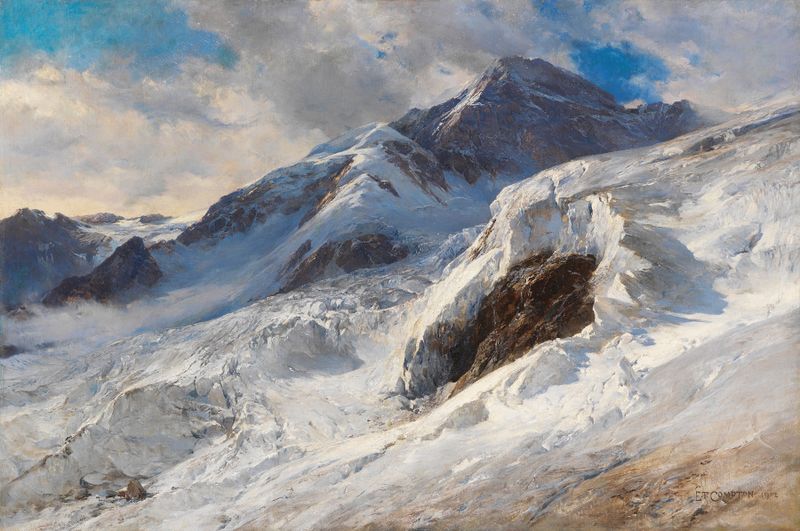
Lyskamm (Monte-Rosa)
Edward Theodore Compton
Blick auf den Ortler von St. Valentin
Edward Theodore Compton
Das Matterhorn von der Triftkumme
Edward Theodore Compton





