
Blick auf die Nordseite des Großglockners — History & Facts
What secret hides in the quiet of the canvas? In the stillness of nature, a sense of hope emerges, whispering of resilience amid the towering peaks and vast landscapes. Look to the foreground where the rugged terrain unfolds with dynamic brushstrokes, inviting the viewer to explore. Notice how the rocky outcrops, meticulously rendered, lead the eye upward toward the enormous presence of the Großglockner, its icy summit glistening under a gentle wash of pastel sky. The palette dances between earthy browns and blues, capturing the serene yet formidable majesty of the mountains, evoking a profound connection to the natural world. The contrast between the solid, unyielding stone and the delicate hues of the sky signifies a tension between permanence and transience.
This duality reflects an internal struggle—human vulnerability faced with nature's grandeur. The distant clouds, soft and ephemeral, suggest the possibility of change, hinting at the hope that arises even in the most daunting landscapes. Each detail, from the wispy clouds to the textured rock, resonates with a quietude that invites contemplation and introspection. In 1919, during a period marked by turmoil and rebuilding post-World War I, Edward Theodore Compton created this piece in his studio in the Bavarian Alps.
Known for his vivid landscapes, Compton captured the essence of the natural world while grappling with the emotional aftermath of war. His focus on the majestic beauty of mountains serves as a reminder of endurance and the unyielding spirit of hope in times of uncertainty.
More Artworks by Edward Theodore Compton
Browse all →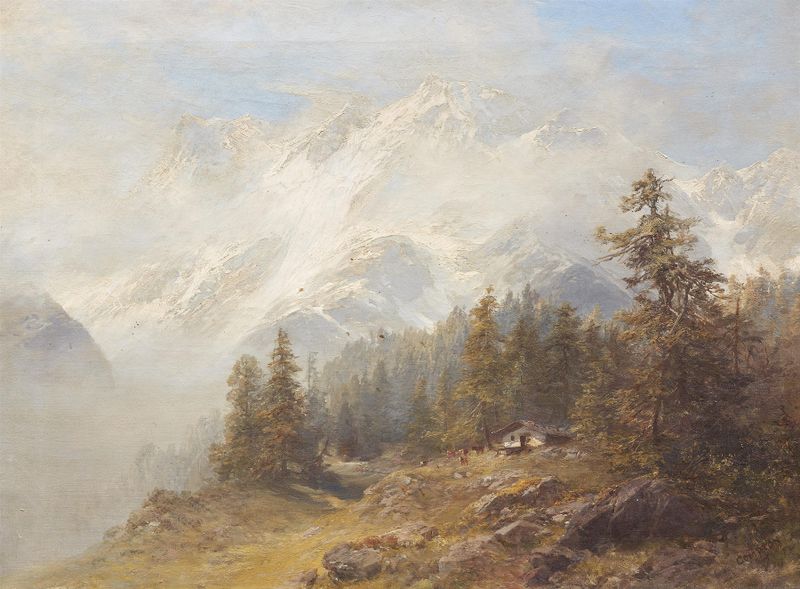
Alpenlandschaft vor schneebedecktem Massiv
Edward Theodore Compton
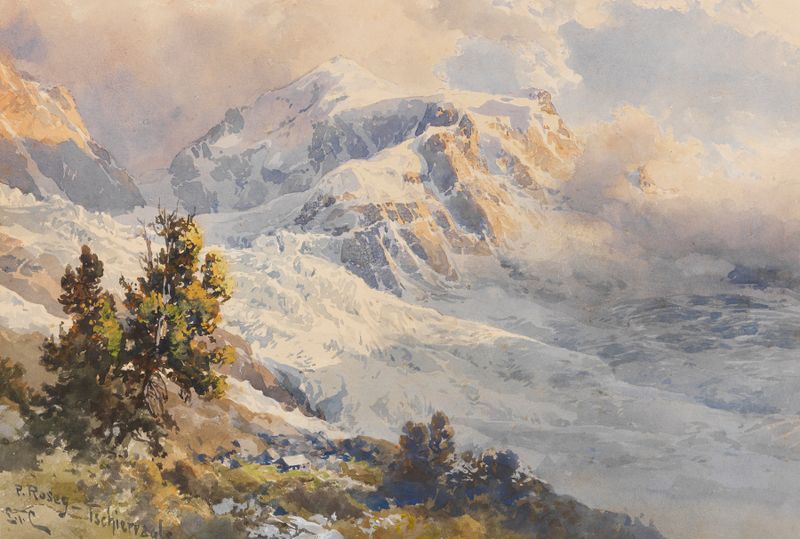
Piz Roseg – Tschiervagletscher
Edward Theodore Compton
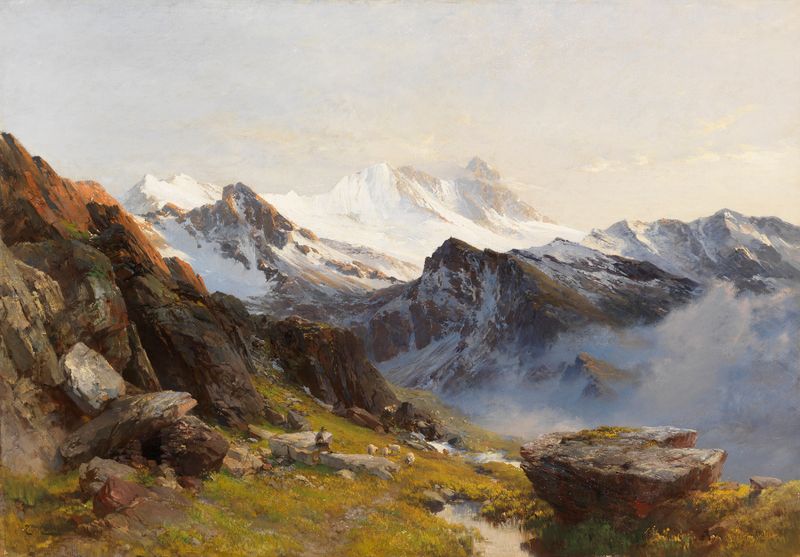
Großglockner von der Prager Hütte aus, früh
Edward Theodore Compton
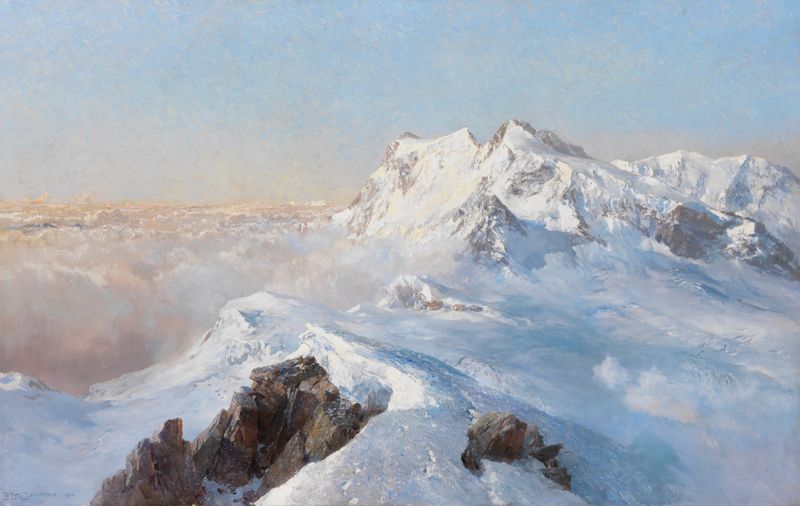
Über dem Nebelmeer (Monte Rosa vom Rimpfischhorn)
Edward Theodore Compton
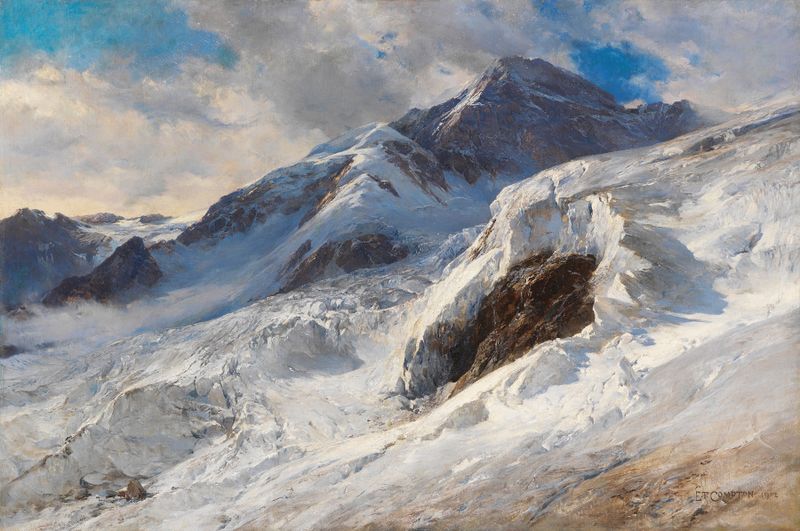
Lyskamm (Monte-Rosa)
Edward Theodore Compton
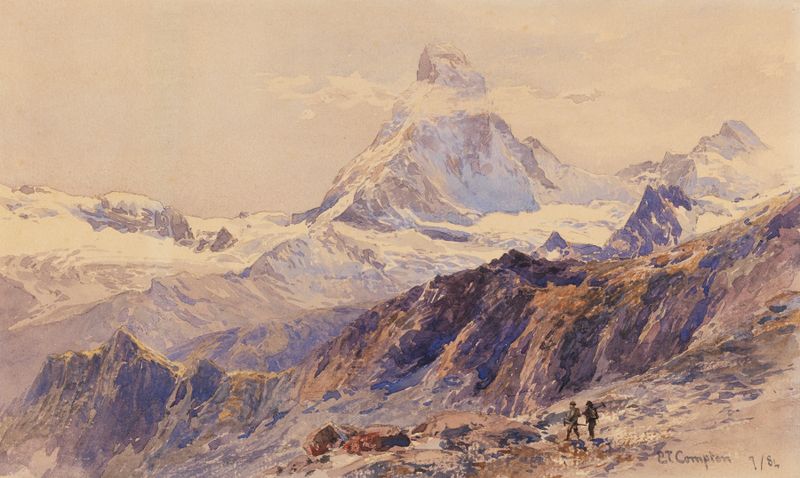
Das Matterhorn von der Triftkumme
Edward Theodore Compton
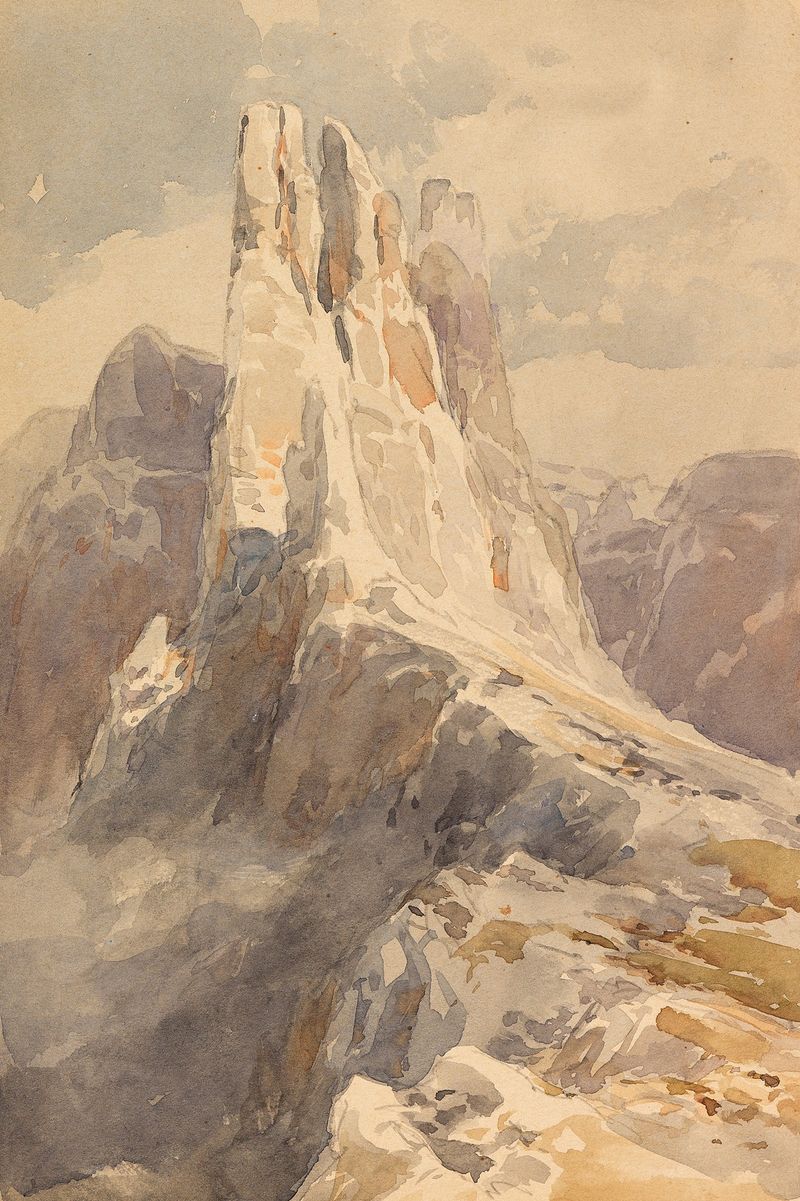
Blick auf die Vajolet-Türme in den Dolomiten
Edward Theodore Compton
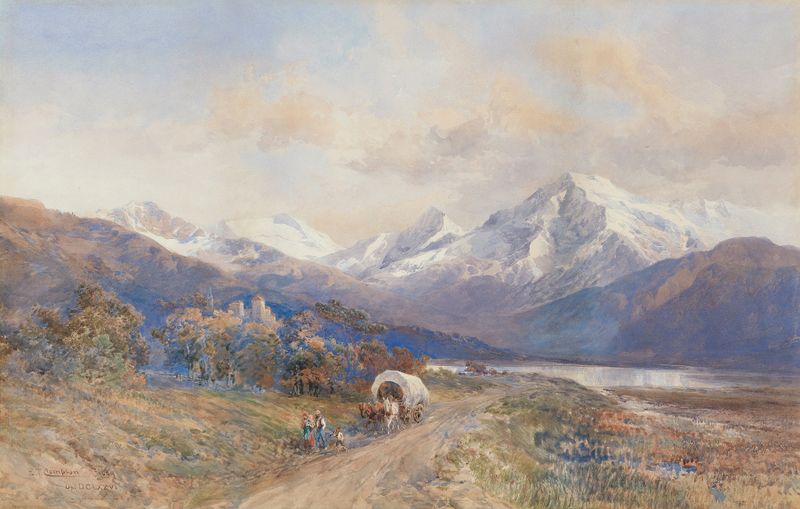
Blick auf den Ortler von St. Valentin
Edward Theodore Compton
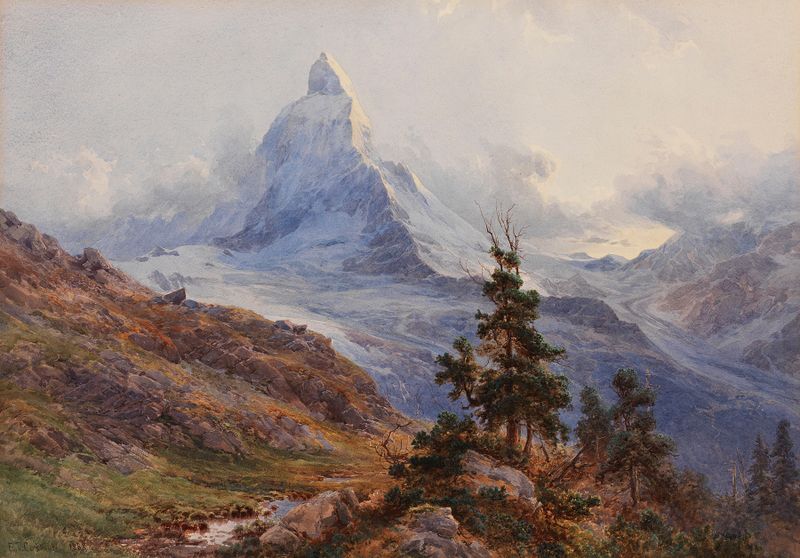
View of the Matterhorn
Edward Theodore Compton
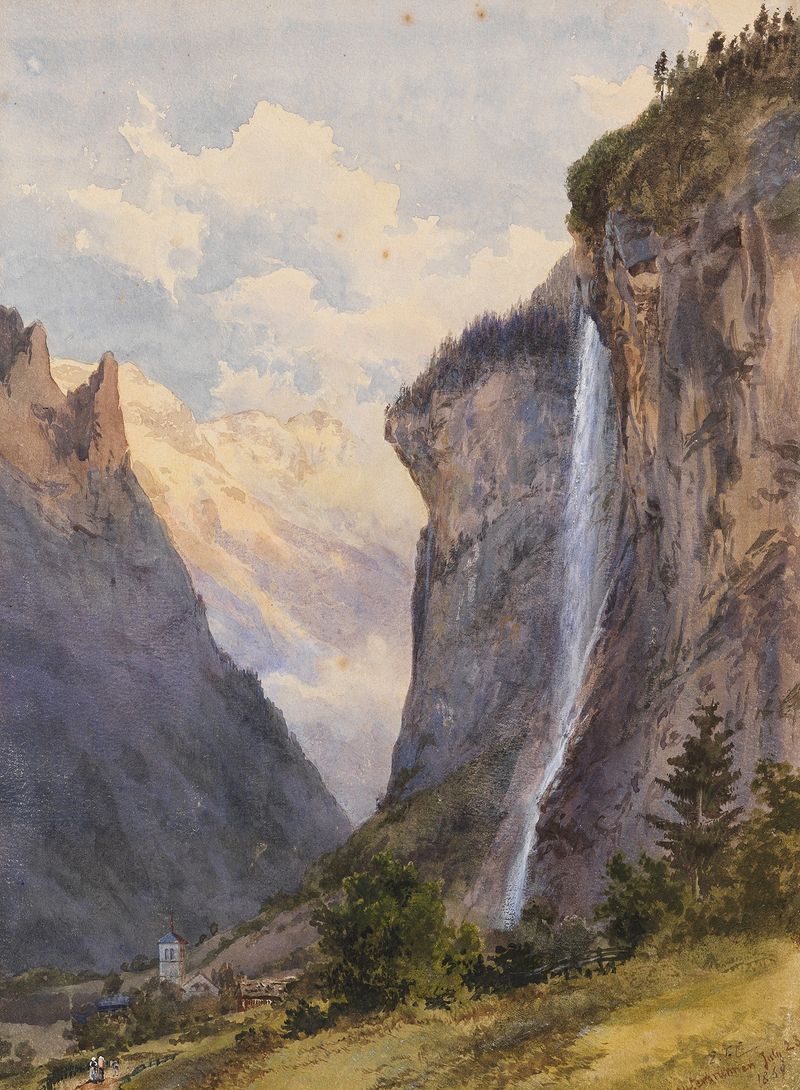
Der Staubbachfall in Lauterbrunnen (Schweiz)
Edward Theodore Compton





