
Piz Roseg – Tschiervagletscher — History & Facts
In the stillness of a majestic alpine landscape, the yearning for connection and understanding pulses through the air, whispering secrets to those who dare to listen. Look to the left at the towering peaks, their jagged edges illuminated by the soft caress of dawn light, which spills gently over the snow-capped summits. Notice how the gentle gradient of blues and whites in the sky meld seamlessly with the mountainous backdrop, creating a harmony that draws the eye upward. The cool tones contrast with the warm hues of the foreground, where the textured grass and rocky outcrops invite the viewer into a dialogue between land and sky. The scene encapsulates a sense of longing—an echo of nature's solitude.
The expansive vista beckons the viewer to contemplate their place within this vast wilderness, while the mountain's grandeur simultaneously evokes feelings of insignificance. There’s an inherent tension between the beauty of the untouched landscape and the deep desire for human presence, suggesting a quest for connection in an otherwise isolating environment. In the early 1900s, Edward Theodore Compton created this work amidst a surge of interest in alpine scenery, reflecting the Romantic fascination with nature. Residing in the Swiss Alps during this period, he was deeply influenced by the beauty surrounding him, which inspired a series of landscape paintings.
This particular piece, painted between 1900 and 1910, captures not only the physical beauty of Piz Roseg and Tschiervagletscher but also the emotional landscape of desire and solitude that defined the artist’s experience.
More Artworks by Edward Theodore Compton
Browse all →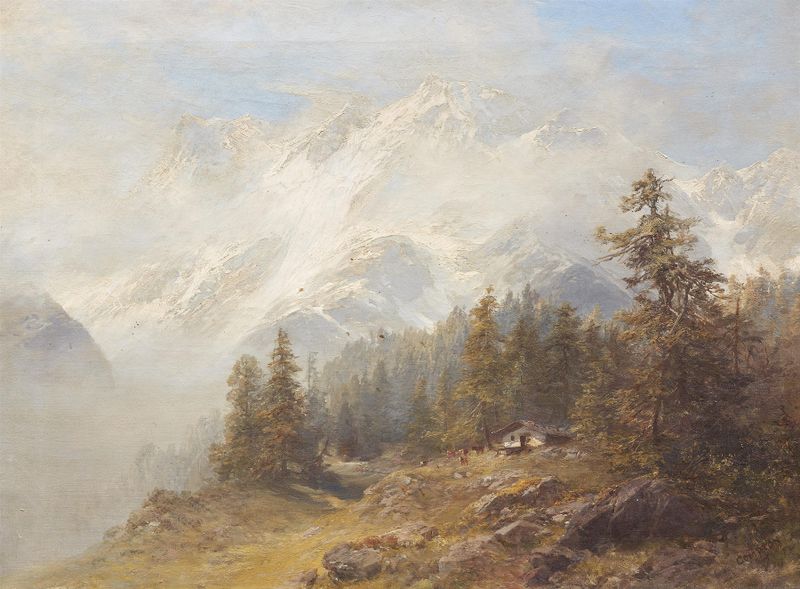
Alpenlandschaft vor schneebedecktem Massiv
Edward Theodore Compton
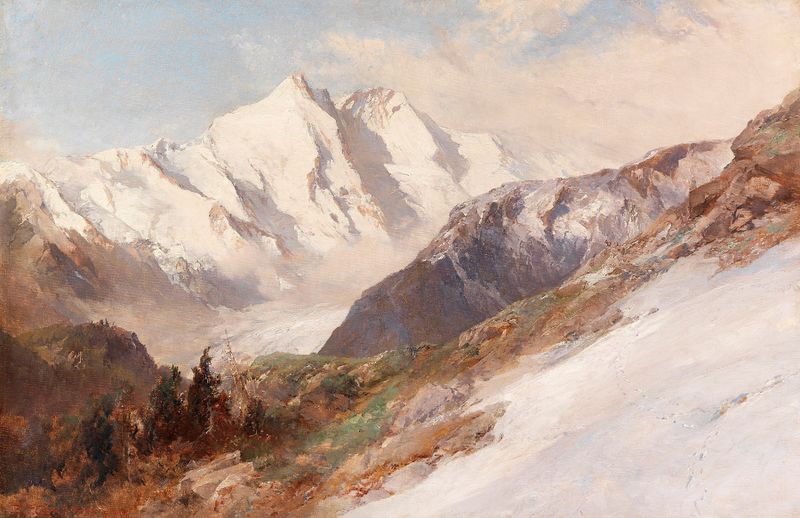
Blick auf die Nordseite des Großglockners
Edward Theodore Compton
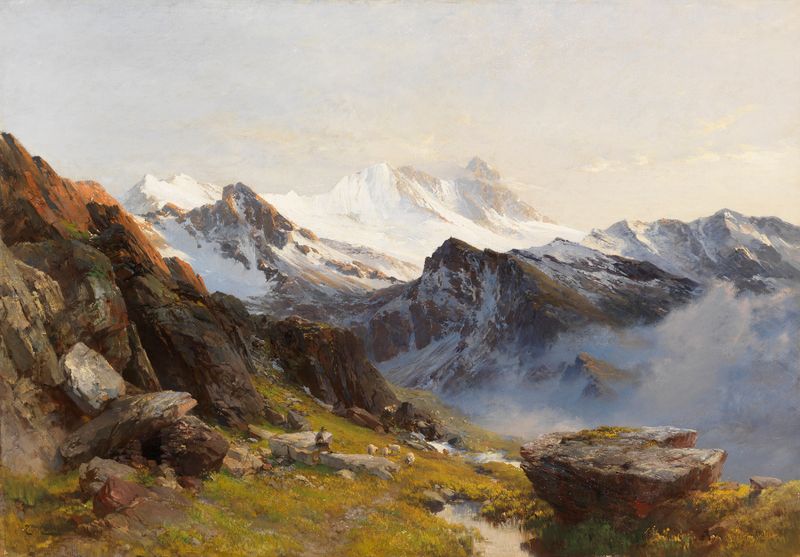
Großglockner von der Prager Hütte aus, früh
Edward Theodore Compton
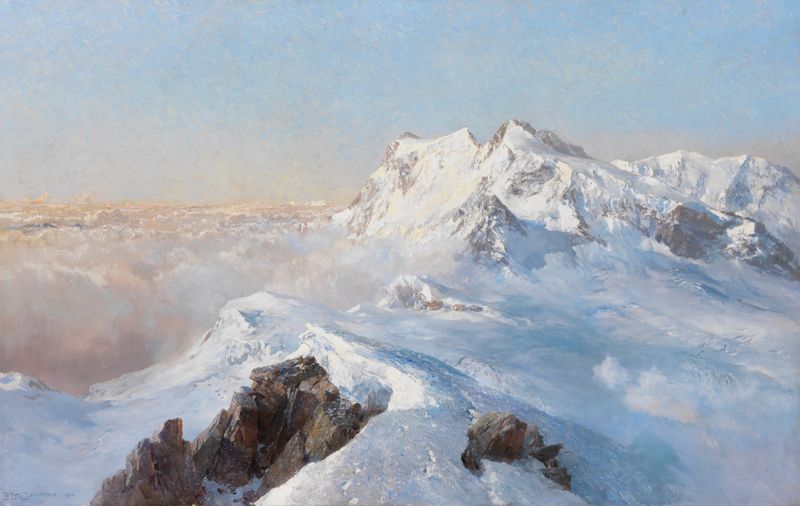
Über dem Nebelmeer (Monte Rosa vom Rimpfischhorn)
Edward Theodore Compton
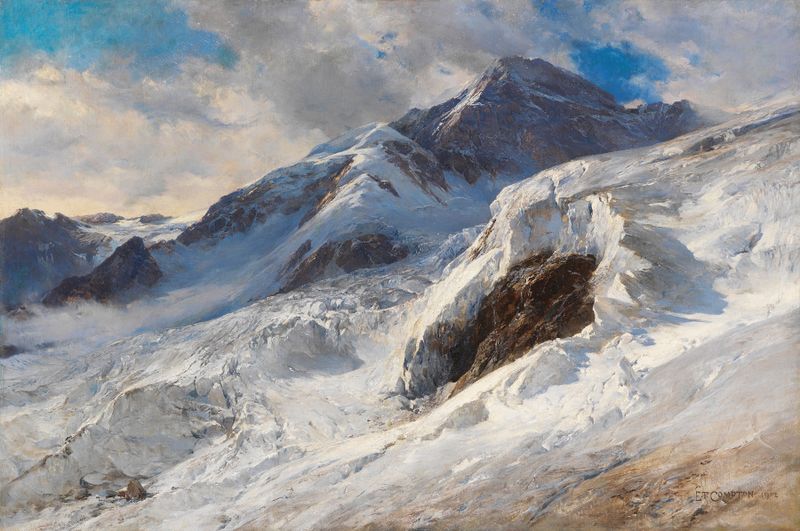
Lyskamm (Monte-Rosa)
Edward Theodore Compton
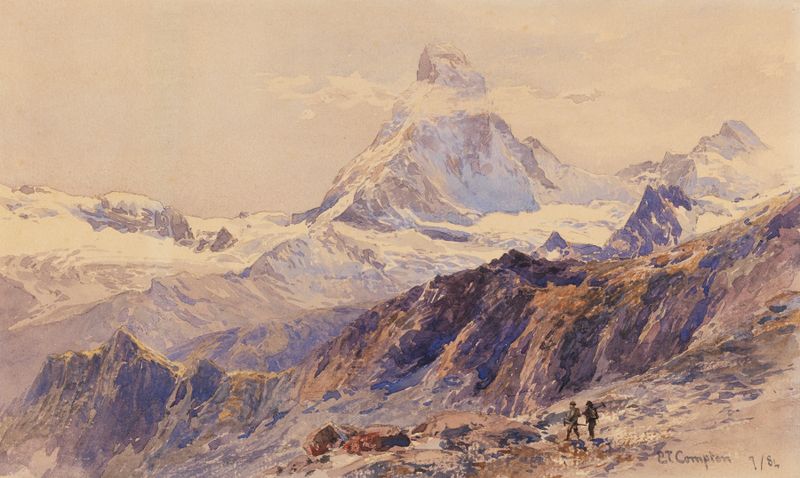
Das Matterhorn von der Triftkumme
Edward Theodore Compton
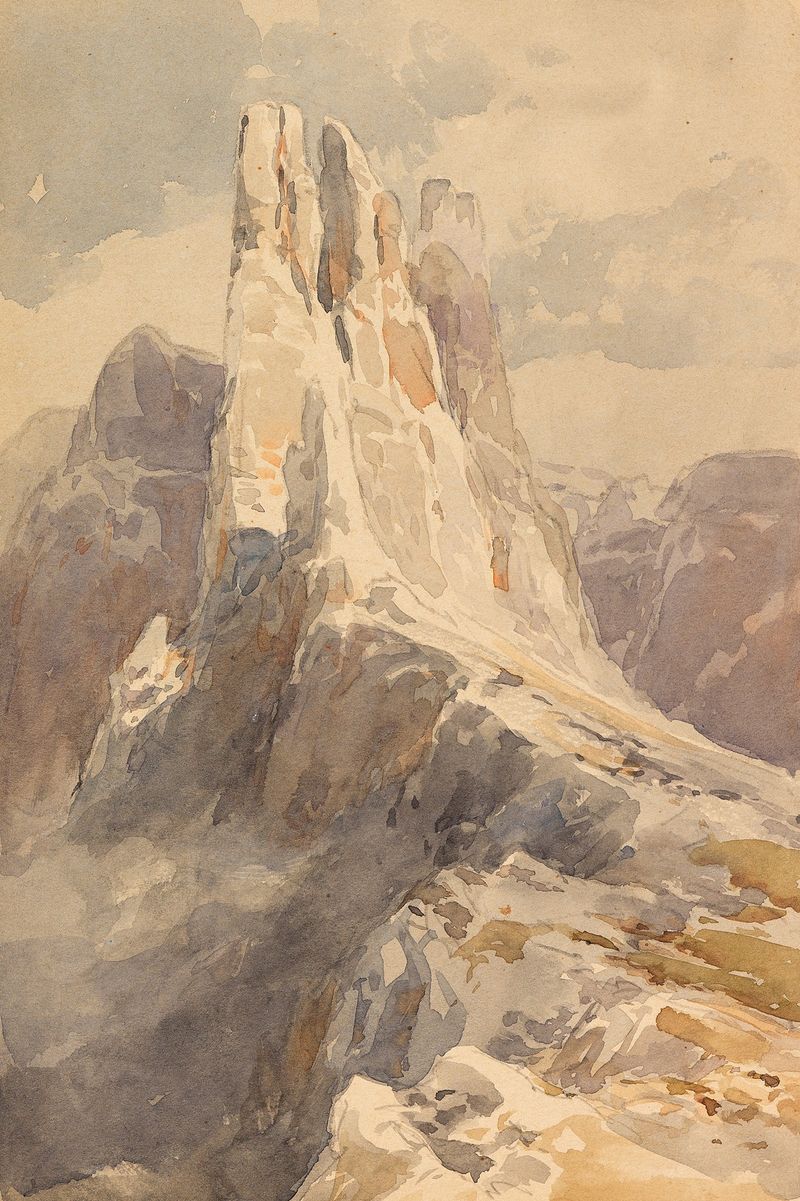
Blick auf die Vajolet-Türme in den Dolomiten
Edward Theodore Compton
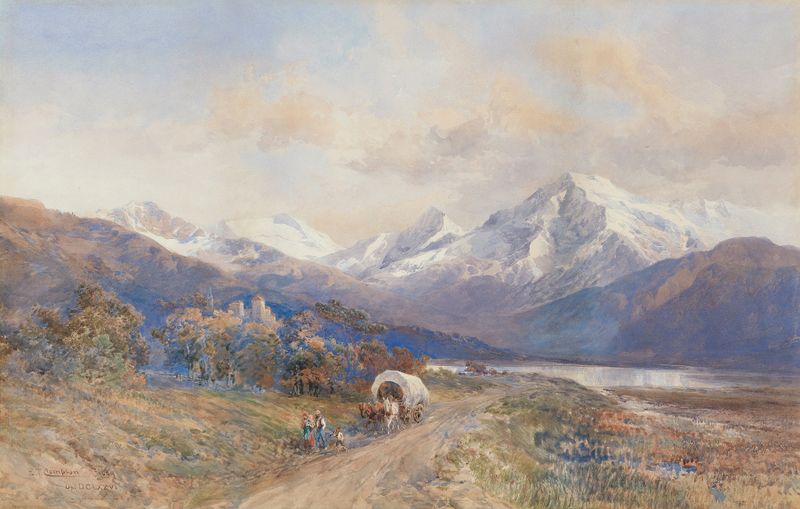
Blick auf den Ortler von St. Valentin
Edward Theodore Compton
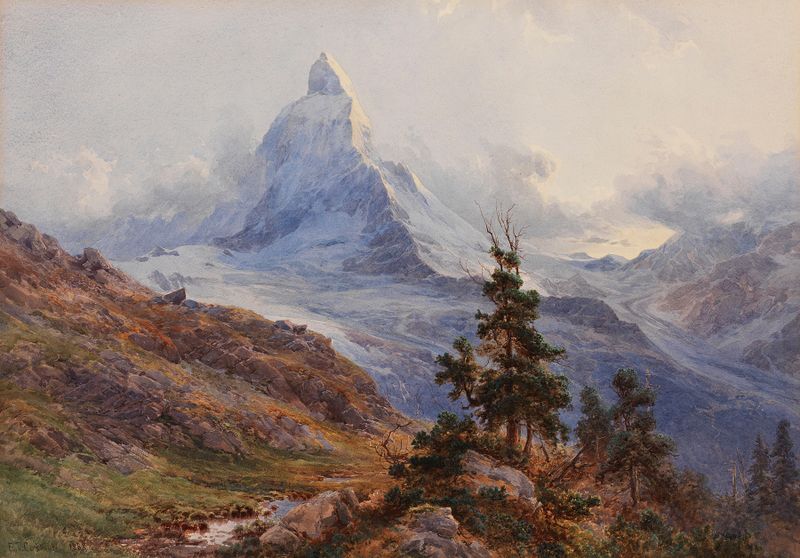
View of the Matterhorn
Edward Theodore Compton
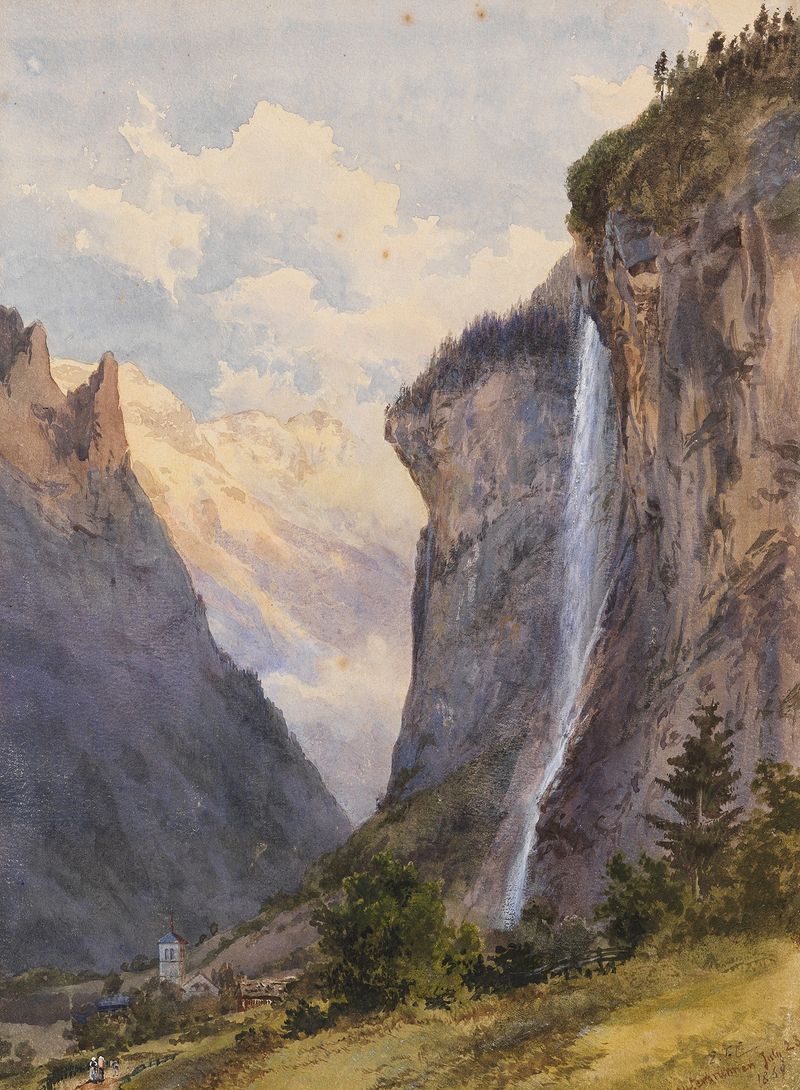
Der Staubbachfall in Lauterbrunnen (Schweiz)
Edward Theodore Compton





