
A View of Neuschwanstein — History & Facts
Can paint confess what words never could? In the stillness of A View of Neuschwanstein, the viewer is drawn into a world where beauty cloaks a deeper madness lingering beneath the surface. Look to the left at the castle, its grandeur rising majestically against the backdrop of distant mountains. The artist employs a delicate palette of earthy tones and soft blues, creating a dreamlike quality that infuses the scene with both elegance and eeriness. Notice how the sunlight bathes the castle’s turrets, highlighting their intricate design while casting long shadows that hint at the enigma within.
The expansive sky, painted with ethereal clouds, frames the scene, drawing your gaze upward and inviting contemplation. In the juxtaposition of light and shadow lies a tension that speaks to the duality of aspiration and madness. The castle, a symbol of Romantic idealism, is positioned precariously amidst nature’s raw beauty, suggesting both a refuge and a prison for the mind. The surrounding landscape, lush yet foreboding, emphasizes a sense of isolation, hinting at the artist's own struggles with the complexities of existence.
Each brushstroke conveys a longing for connection, intertwined with the awareness of inevitable solitude. During the late 19th century when this piece was created, Compton, an English landscape painter, was exploring the allure of Germanic and fairy tale motifs. The Romantic movement was in full swing, emphasizing emotion and the sublime, even as society grappled with rapid industrialization. In this context, the artist’s gaze at Neuschwanstein reflects both a fascination with fantasy and a deep awareness of the fragility of human dreams.
More Artworks by Edward Theodore Compton
Browse all →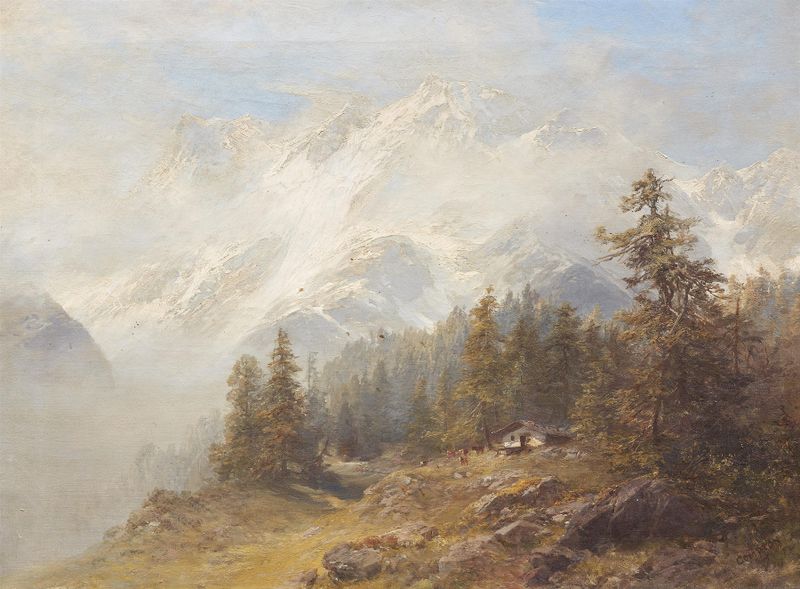
Alpenlandschaft vor schneebedecktem Massiv
Edward Theodore Compton
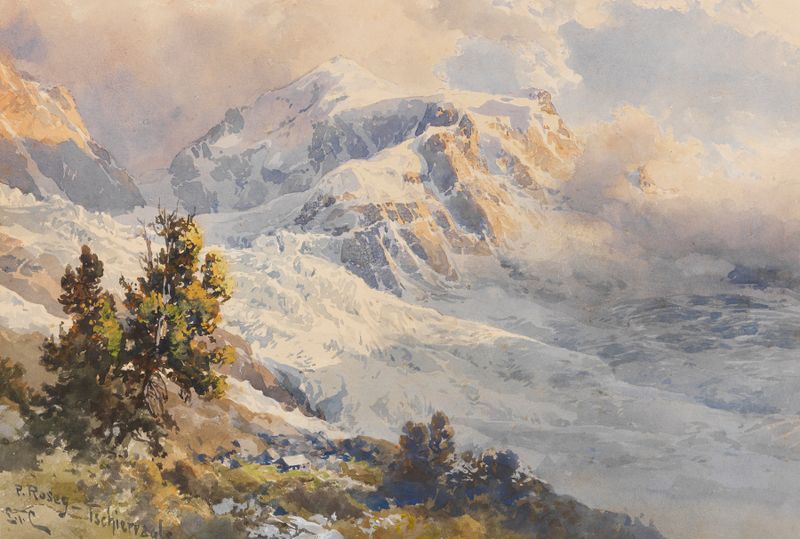
Piz Roseg – Tschiervagletscher
Edward Theodore Compton
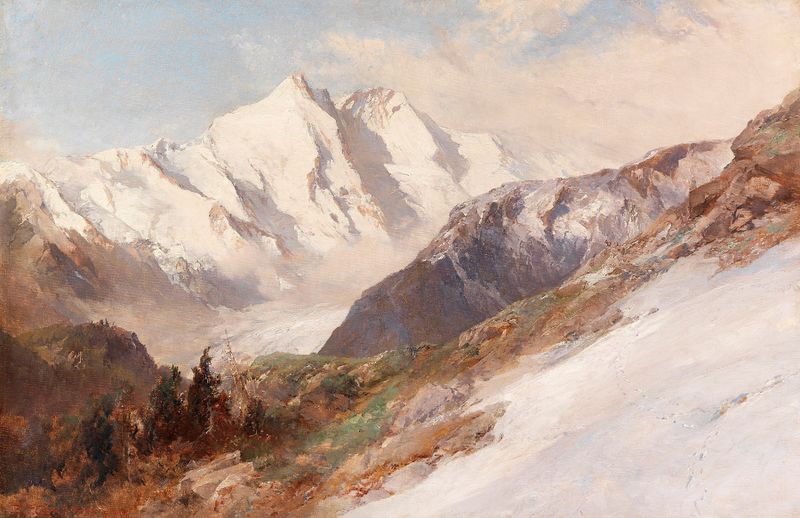
Blick auf die Nordseite des Großglockners
Edward Theodore Compton
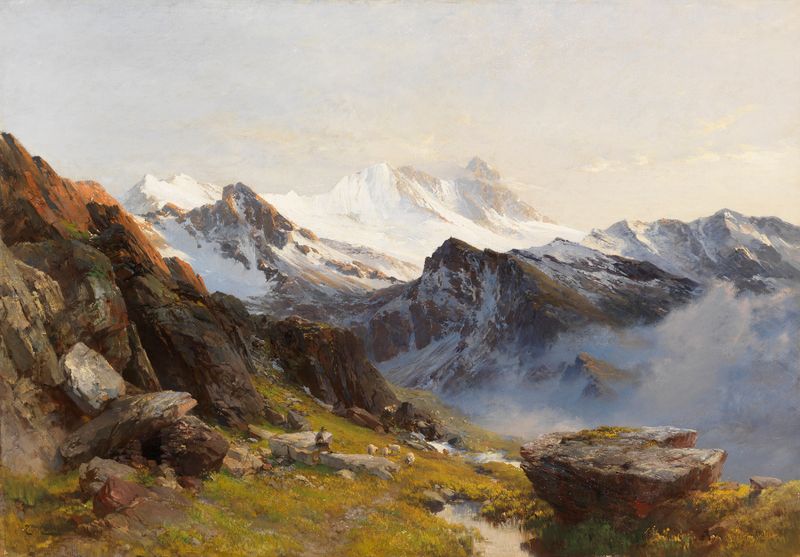
Großglockner von der Prager Hütte aus, früh
Edward Theodore Compton
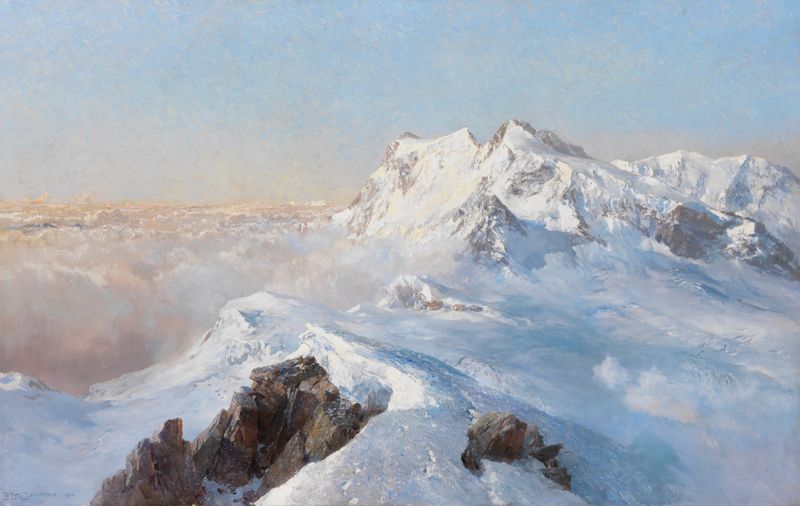
Über dem Nebelmeer (Monte Rosa vom Rimpfischhorn)
Edward Theodore Compton
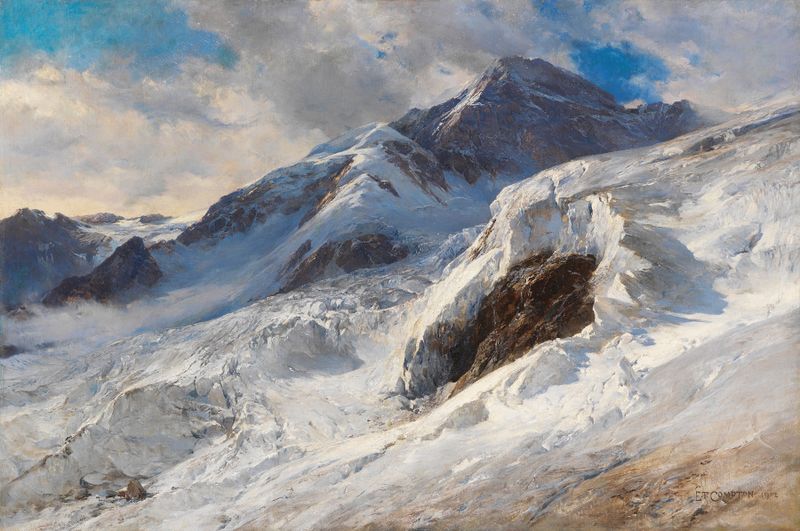
Lyskamm (Monte-Rosa)
Edward Theodore Compton
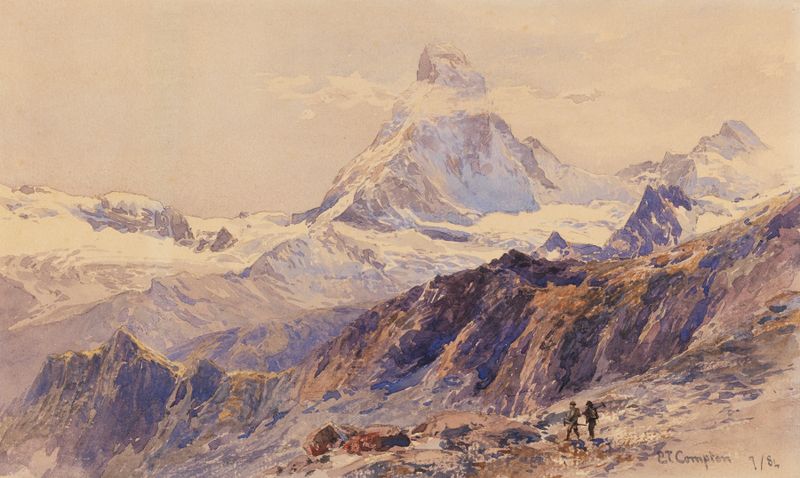
Das Matterhorn von der Triftkumme
Edward Theodore Compton
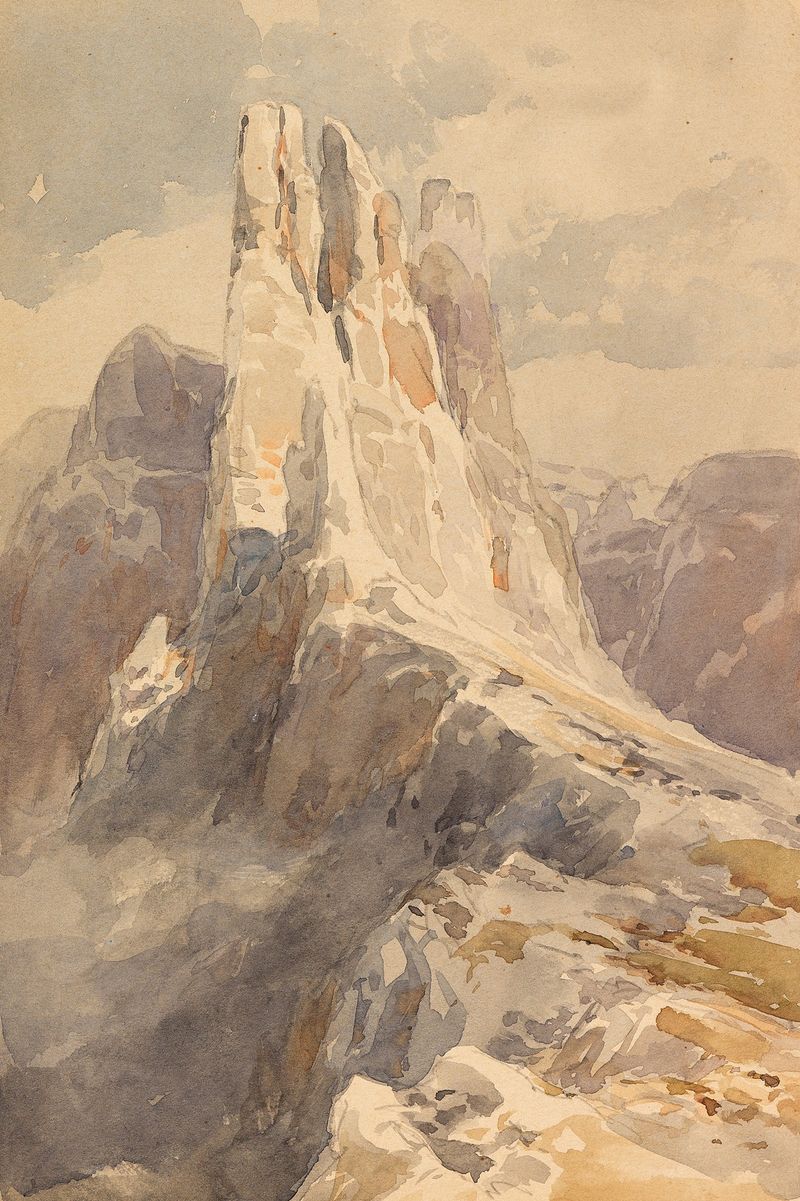
Blick auf die Vajolet-Türme in den Dolomiten
Edward Theodore Compton
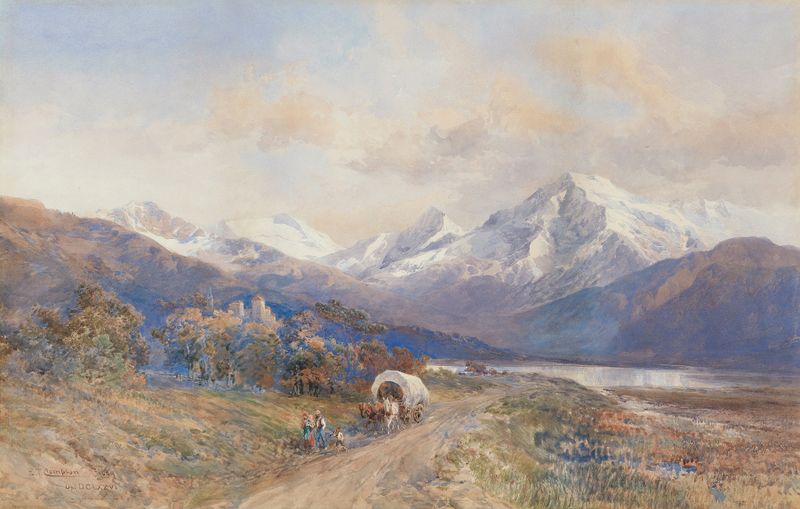
Blick auf den Ortler von St. Valentin
Edward Theodore Compton
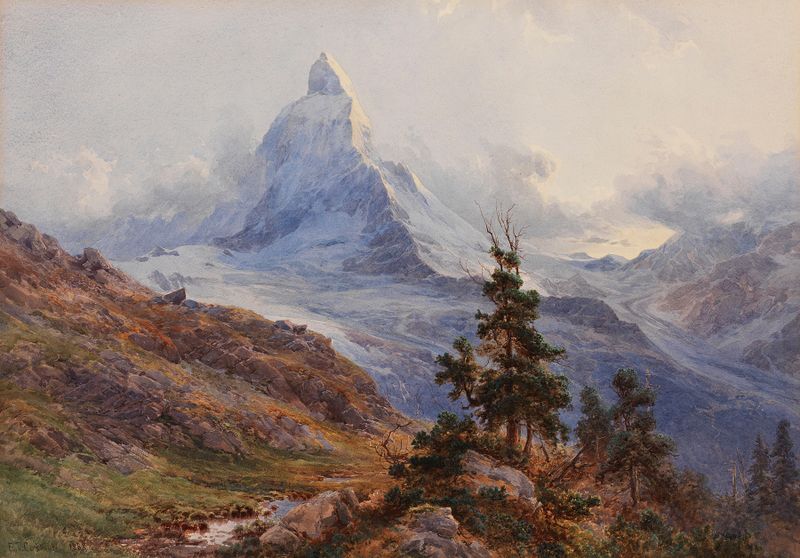
View of the Matterhorn
Edward Theodore Compton





