
A View of the Bank of England — History & Facts
Is this a mirror — or a memory? In A View of the Bank of England, the essence of urban life flows like a river, capturing not just a moment, but the very heartbeat of a bustling city. Look to the center, where the grand facade of the Bank towers with neoclassical elegance, bathed in a soft, golden light that highlights the intricate architectural details. The rhythm of life pulses around it; figures in period attire traverse the cobblestone streets, their movement creating a dynamic contrast to the solid architecture. The muted palette grounds the scene, while hints of brighter colors in the passersby suggest vitality amidst the solemnity of finance. Beneath the surface of this seemingly straightforward view lies a tapestry of contrasts.
The imposing structure represents both economic stability and societal ambition, yet the human figures evoke a sense of fleeting time, reminding us that progress is often rooted in the mundane. Each passerby, a fleeting moment of life, faces the weight of their own stories, while the bank stands unmoved, a silent witness to the dance of history and commerce. Painted in 1816, during a time of great change in England, the artist was immersed in a vibrant art scene that reflected the country's shifting dynamics. Shepherd captured a city on the brink of industrialization, where commerce and culture intertwined, forever altering the landscape of London.
In this moment, the Bank of England became more than a building; it emerged as a symbol of an era, echoing the hopes and struggles of a society evolving.
More Artworks by Thomas Hosmer Shepherd
Browse all →
A View of the Bank of England
Thomas Hosmer Shepherd

East India House
Thomas Hosmer Shepherd
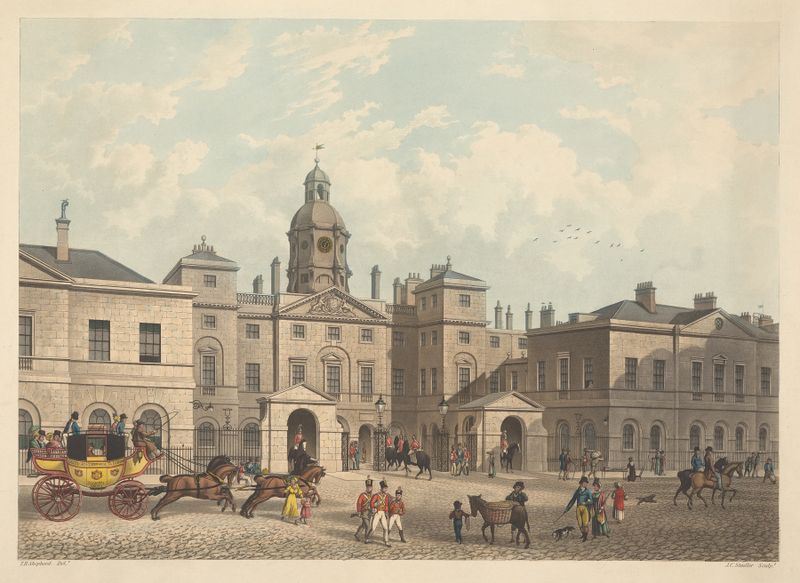
A View of Horse Guards from Whitehall
Thomas Hosmer Shepherd

St. Paul’s Cathedral
Thomas Hosmer Shepherd
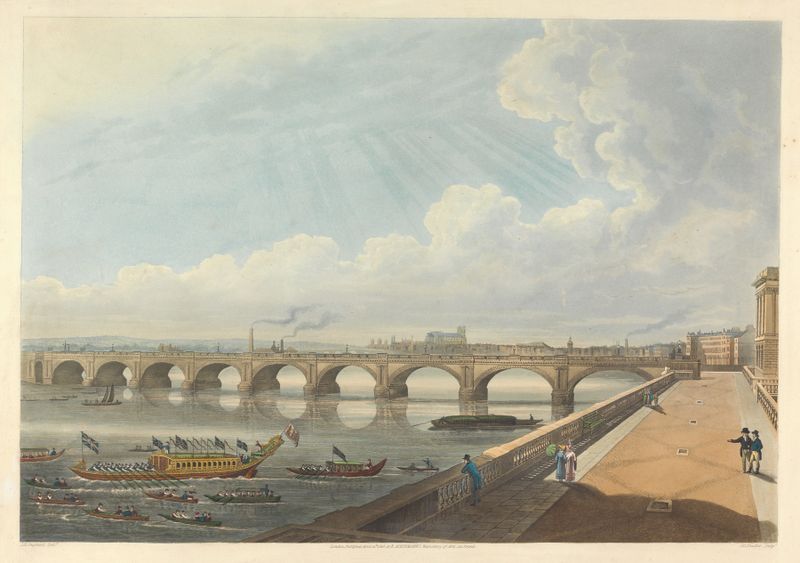
View of Waterloo Bridge from the East End of Somerset House Terrace
Thomas Hosmer Shepherd
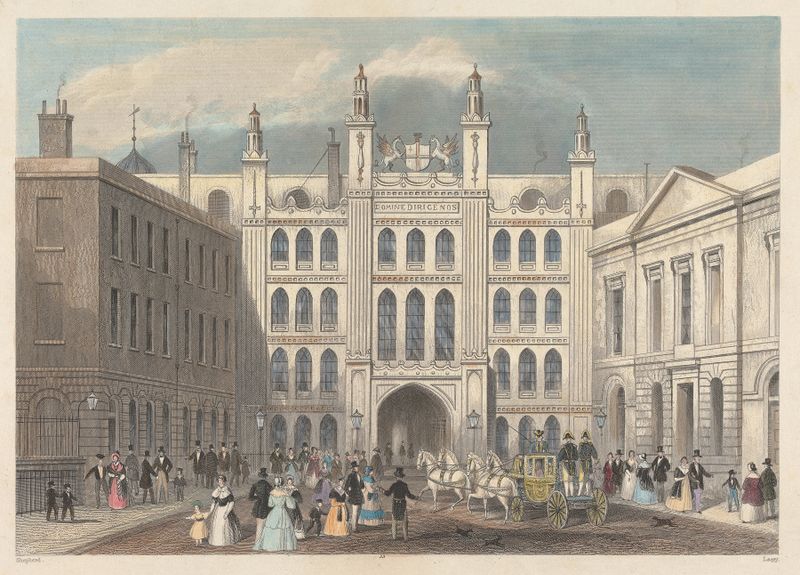
Guildhall, King Street
Thomas Hosmer Shepherd
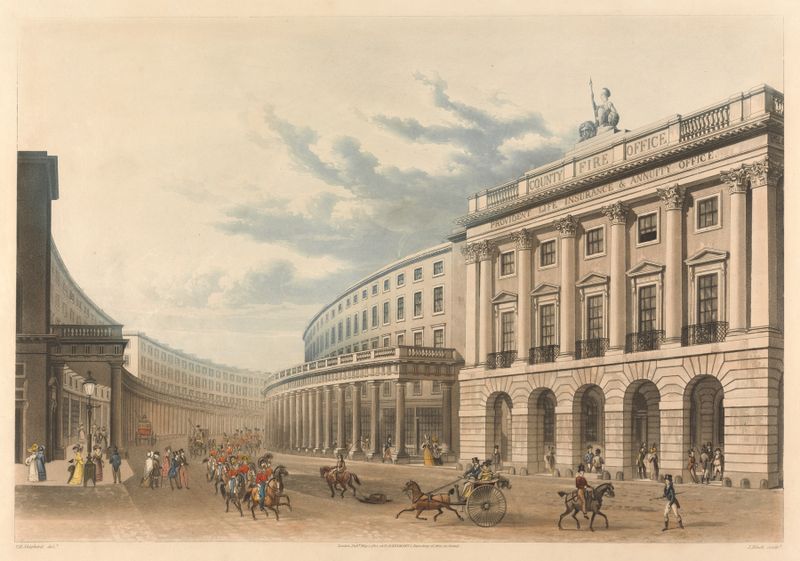
The Quadrant – Regent Street
Thomas Hosmer Shepherd

A View of the Royal Exchange
Thomas Hosmer Shepherd
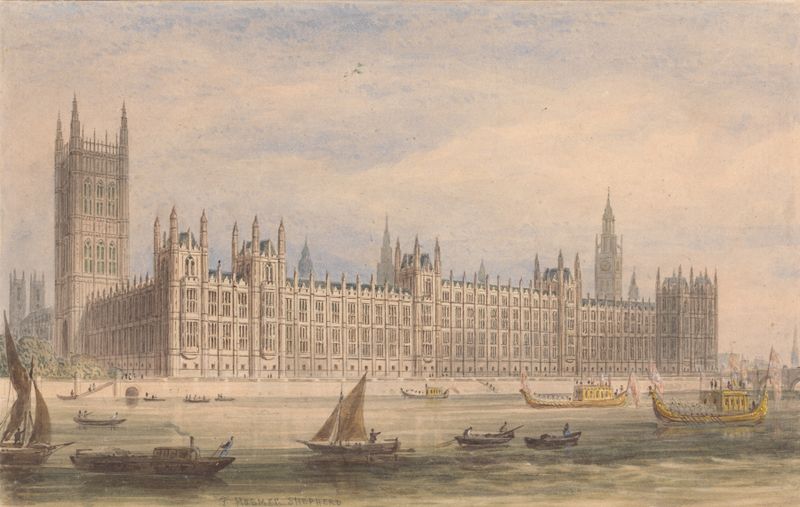
The Houses of Parliament
Thomas Hosmer Shepherd

Sir Paul Pindar’s House, Bishopsgate Street
Thomas Hosmer Shepherd
More Architecture Art
Browse all →
The statue of Liberty
Frédéric Auguste Bartholdi

View of Houses in Delft, Known as ‘The Little Street’
Johannes Vermeer

View of Houses in Delft, Known as ‘The Little Street’
Johannes Vermeer

The Cathedral in Rouen. The portal, Grey Weather
Claude Monet

The yellow house
Vincent van Gogh

The Church in Auvers-sur-Oise, View from the Chevet
Vincent van Gogh