
A View of the Bank of England — History & Facts
What if beauty was never meant to be finished? The notion lingers as one gazes upon a timeless representation of ambition and innocence captured in A View of the Bank of England. This work invites contemplation on the very essence of progress, where the sturdy edifice stands as a symbol of aspirations yet unrealized. Look to the foreground, where the grand architecture rises, dominating the composition with its neoclassical details. The careful brushstrokes delineate the ornate columns and intricate friezes, capturing the sunlight that dances off the stone façade.
Notice how the muted palette of greens and browns creates a harmonious backdrop against the building's striking white, emphasizing its monumental presence while evoking a sense of quiet reverence in a bustling London landscape. Delve deeper into the shadows cast by the towering structure. There lies a contrast between the solidity of the bank and the delicate figures of passersby, hinting at the fragility of human aspiration against the titans of industry. The inclusion of children playing in the foreground draws forth a juxtaposition of innocence and the weight of financial power, suggesting that while institutions may loom large, the spirit of youth and possibility remains resilient and untouched. During the mid-19th century, A View of the Bank of England emerged from the hand of Thomas Hosmer Shepherd while he worked in London.
This was a pivotal period in the art world, as the shift towards realism and urban landscapes began to take hold. Amidst this transformation, Shepherd captured the Bank not just as an architectural wonder but as a beacon of hope, reflective of a society at the cusp of modernity, where innocence and ambition intermingle.
More Artworks by Thomas Hosmer Shepherd
Browse all →
East India House
Thomas Hosmer Shepherd
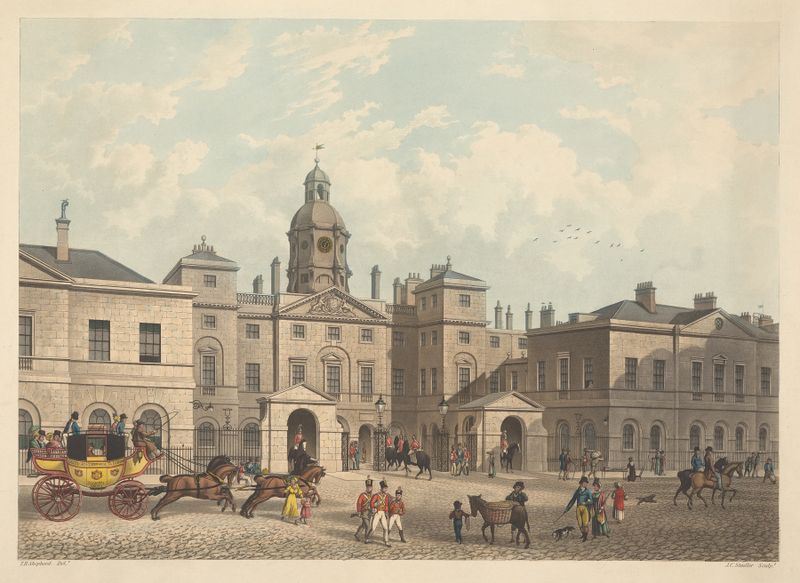
A View of Horse Guards from Whitehall
Thomas Hosmer Shepherd

St. Paul’s Cathedral
Thomas Hosmer Shepherd
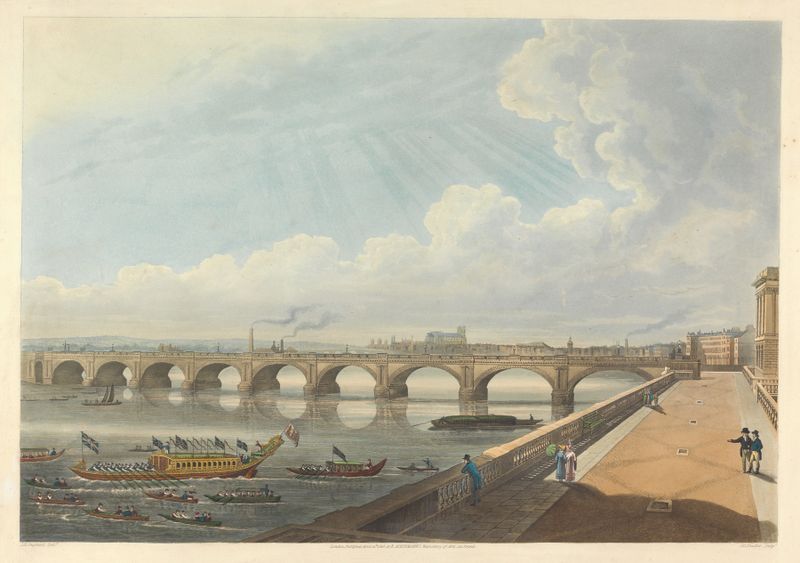
View of Waterloo Bridge from the East End of Somerset House Terrace
Thomas Hosmer Shepherd
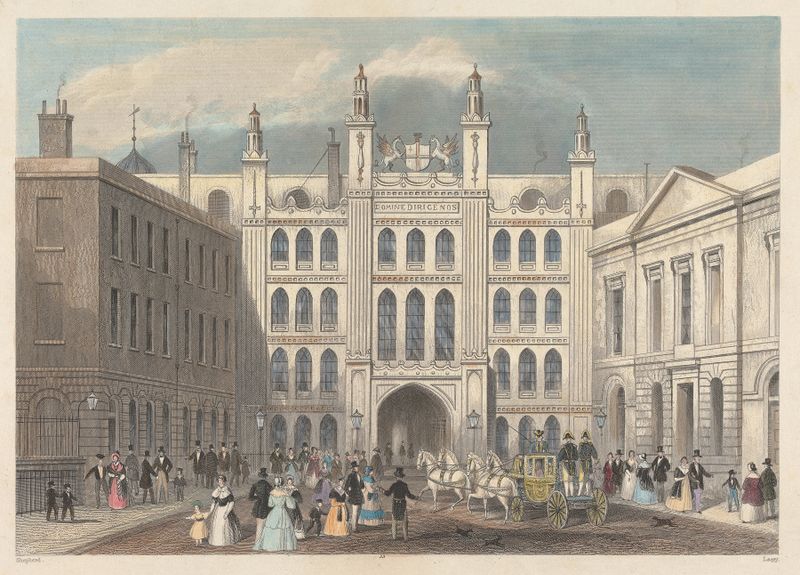
Guildhall, King Street
Thomas Hosmer Shepherd
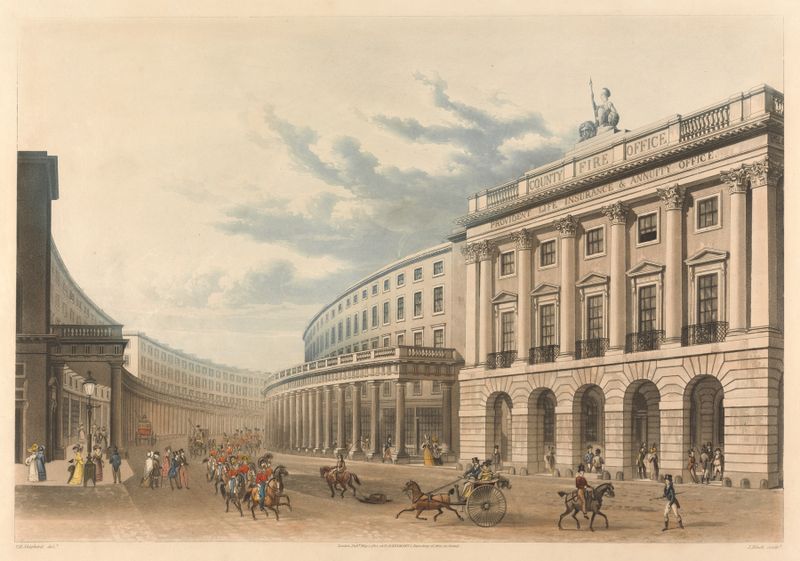
The Quadrant – Regent Street
Thomas Hosmer Shepherd

A View of the Bank of England
Thomas Hosmer Shepherd

A View of the Royal Exchange
Thomas Hosmer Shepherd
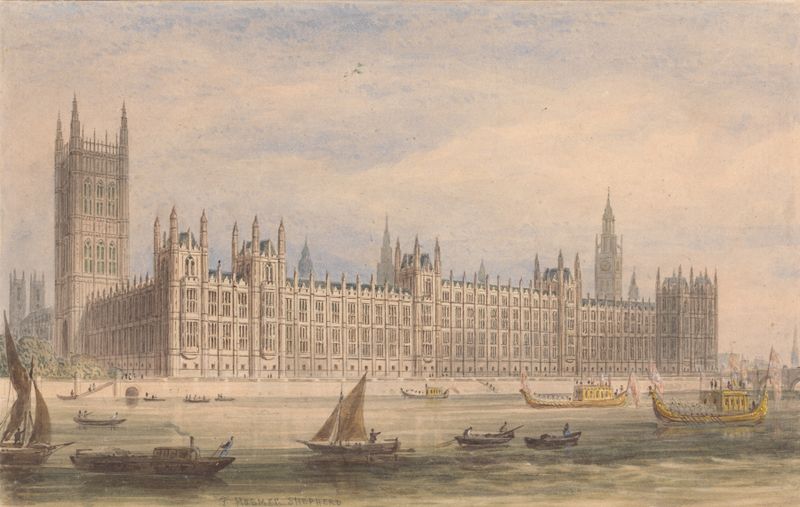
The Houses of Parliament
Thomas Hosmer Shepherd

Sir Paul Pindar’s House, Bishopsgate Street
Thomas Hosmer Shepherd
More Architecture Art
Browse all →
The statue of Liberty
Frédéric Auguste Bartholdi

View of Houses in Delft, Known as ‘The Little Street’
Johannes Vermeer

View of Houses in Delft, Known as ‘The Little Street’
Johannes Vermeer

The Cathedral in Rouen. The portal, Grey Weather
Claude Monet

The yellow house
Vincent van Gogh

The Church in Auvers-sur-Oise, View from the Chevet
Vincent van Gogh