
View of Waterloo Bridge from the East End of Somerset House Terrace — History & Facts
When did color learn to lie? In the delicate brushstrokes of a city caught between the past and the present, hues mask decay with remarkable grace. Look to the left at the verdant trees, their lush greens a stark contrast to the faded elegance of Waterloo Bridge. The soft blues and muted grays of the river reflect an ethereal light, inviting your gaze to wander across the water’s surface, where life and history seem to flow together. Notice how the play of light creates shadows that dance along the architecture, breathing life into the structures while subtly hinting at their gradual decline. Hidden within this picturesque view lies a duality—the vibrancy of the foreground juxtaposed with the more somber tones of the bridge, evoking a sense of nostalgia.
Each element speaks of a time gone by, where the splendor of this locale meets the inevitability of decay. The viewer is left with a haunting awareness of what was, as vibrant life quietly yields to the passage of time. In 1818, Thomas Hosmer Shepherd painted this scene against the backdrop of a city evolving post-Industrial Revolution. Living in London, he observed the rapid changes reshaping urban landscapes, capturing the tension between beauty and deterioration.
This period marked a pivotal moment in art, where romanticism began to intertwine with emerging modern sensibilities, and Shepherd's work reflects both the charm and the fragility of this transitional era.
More Artworks by Thomas Hosmer Shepherd
Browse all →
A View of the Bank of England
Thomas Hosmer Shepherd

East India House
Thomas Hosmer Shepherd
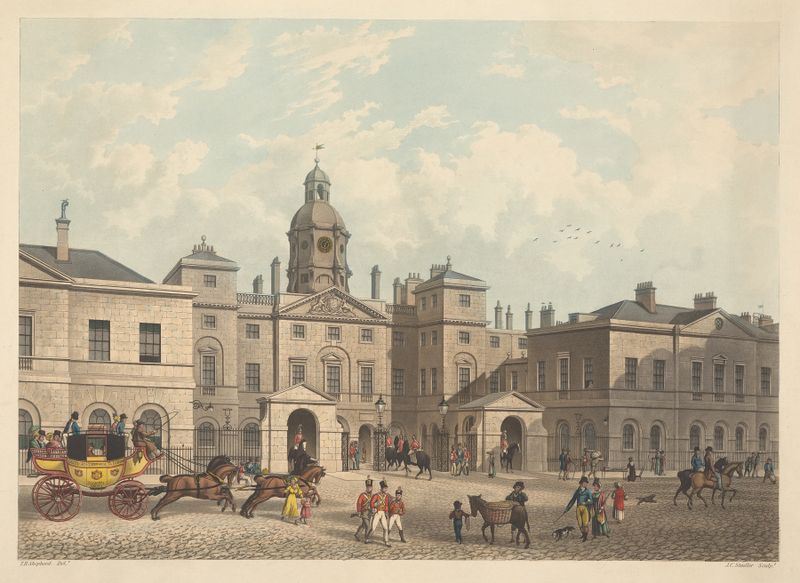
A View of Horse Guards from Whitehall
Thomas Hosmer Shepherd

St. Paul’s Cathedral
Thomas Hosmer Shepherd
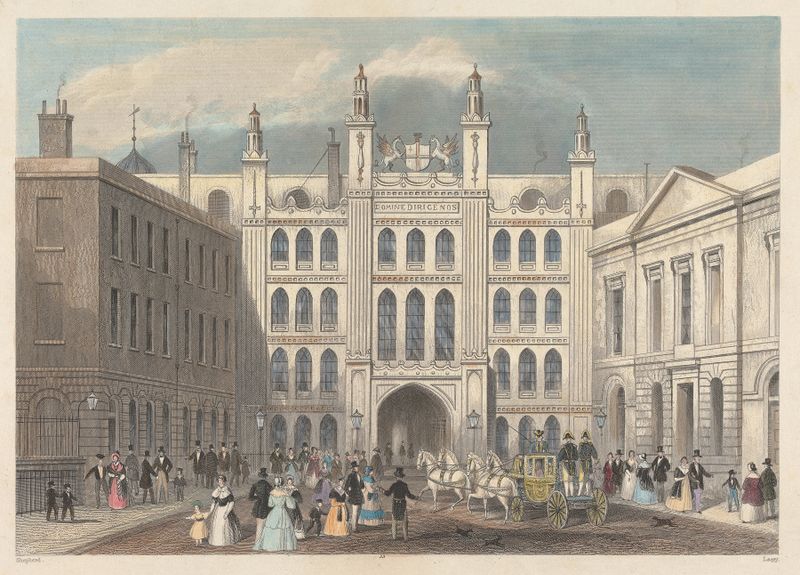
Guildhall, King Street
Thomas Hosmer Shepherd
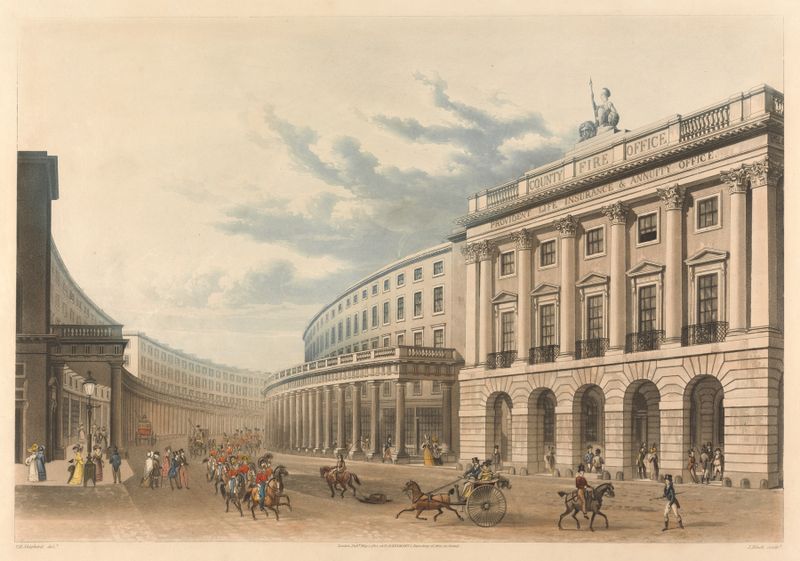
The Quadrant – Regent Street
Thomas Hosmer Shepherd

A View of the Bank of England
Thomas Hosmer Shepherd

A View of the Royal Exchange
Thomas Hosmer Shepherd
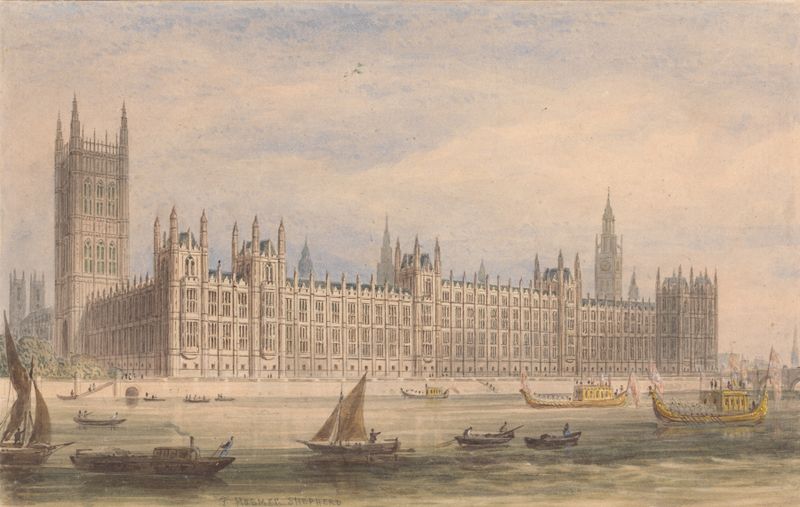
The Houses of Parliament
Thomas Hosmer Shepherd

Sir Paul Pindar’s House, Bishopsgate Street
Thomas Hosmer Shepherd





