
Sir Paul Pindar’s House, Bishopsgate Street — History & Facts
Can beauty exist without sorrow? This question lingers in the air as one gazes upon the meticulously crafted image of a grand house nestled within the bustling heart of Bishopsgate. A moment captured in time—a reminder of a world both exquisite and fleeting. Look to the center of the canvas, where the stately façade of Sir Paul Pindar’s house commands attention. Notice the intricate detailing that adorns the structure, from the elegant window frames to the lush garden that spills forth with life.
The delicate play of light and shadow enhances the architectural features, imbuing the scene with a sense of depth. The soft hues of the trees contrast with the more neutral tones of the surrounding buildings, creating a harmonious balance that invites the viewer deeper into this urban oasis. Yet, beneath the surface beauty lies an undercurrent of tension. The vibrant greenery hints at life and renewal, while the imposing façade of the house evokes a sense of permanence and isolation.
This duality reflects the broader human experience—a reminder that beauty often exists alongside the melancholy of time’s passage, whispering stories of those who once inhabited these walls. The careful arrangement of figures—pedestrians caught in their own hurried lives—serves as a poignant reminder of the transience of existence, even in the presence of such grandeur. In 1856, the artist was immersed in a rapidly changing London, a city bustling with progress and innovation. As Shepherd created this piece, he sought to document the architectural gems of the city, capturing both the elegance and the complexities of urban life.
The era was marked by a longing for beauty amidst the chaos of industrialization, a theme that resonated deeply in Shepherd’s work as he endeavored to preserve the memory of structures that defined the city’s rich history.
More Artworks by Thomas Hosmer Shepherd
Browse all →
A View of the Bank of England
Thomas Hosmer Shepherd

East India House
Thomas Hosmer Shepherd
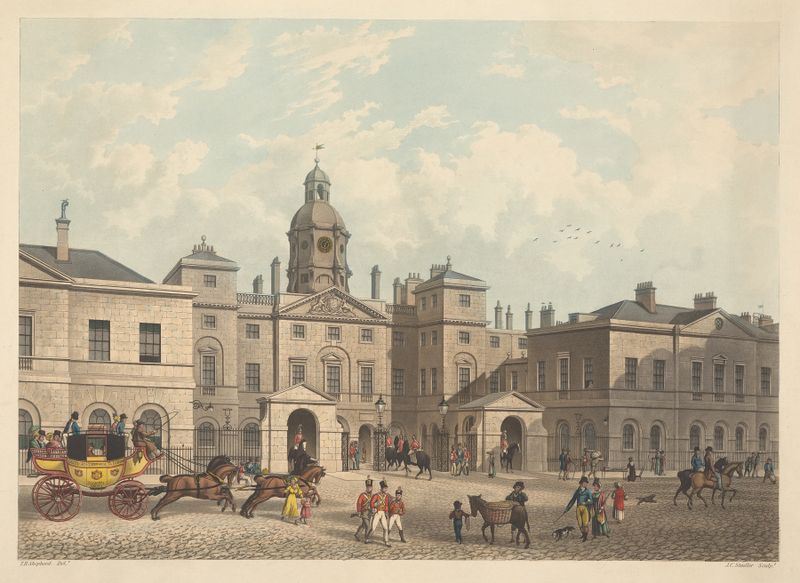
A View of Horse Guards from Whitehall
Thomas Hosmer Shepherd

St. Paul’s Cathedral
Thomas Hosmer Shepherd
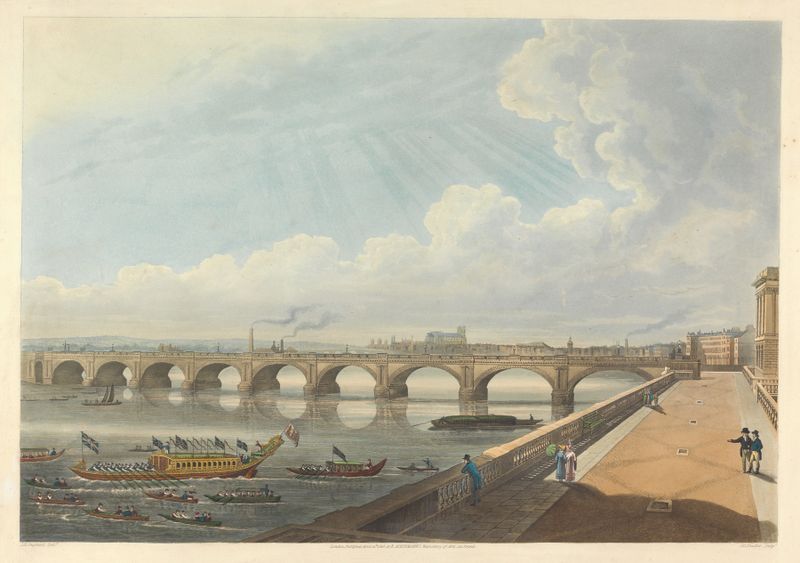
View of Waterloo Bridge from the East End of Somerset House Terrace
Thomas Hosmer Shepherd
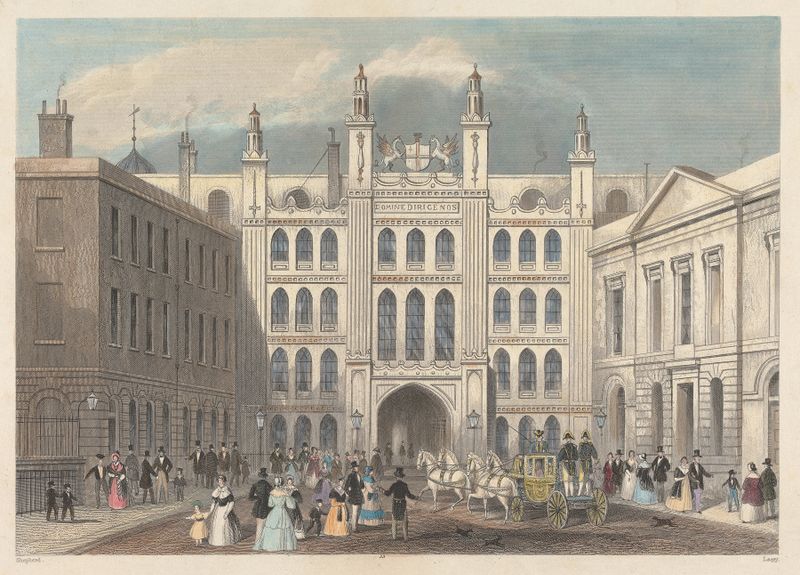
Guildhall, King Street
Thomas Hosmer Shepherd
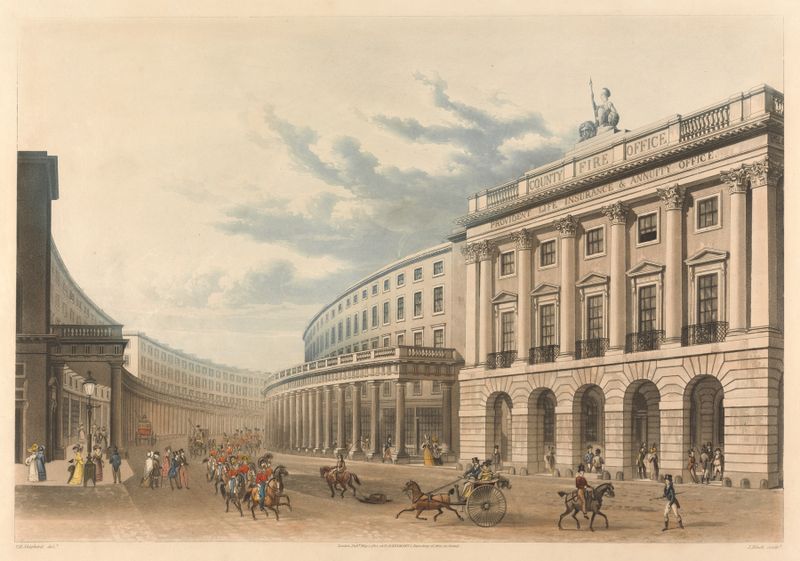
The Quadrant – Regent Street
Thomas Hosmer Shepherd

A View of the Bank of England
Thomas Hosmer Shepherd

A View of the Royal Exchange
Thomas Hosmer Shepherd
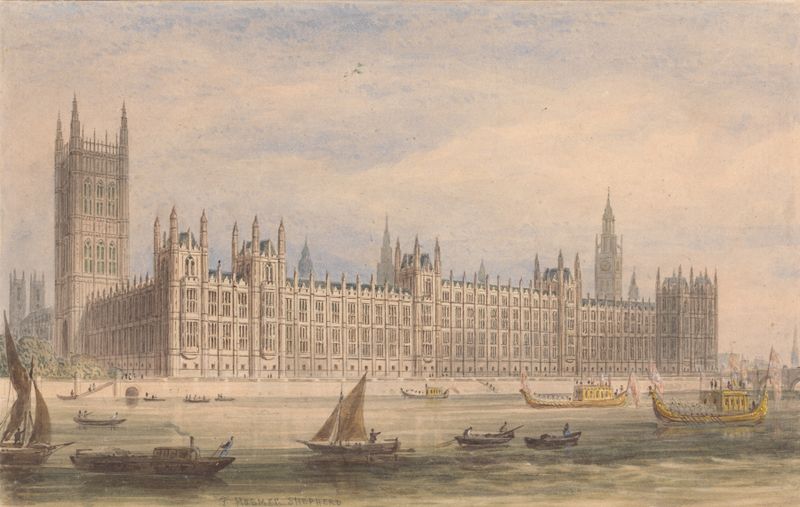
The Houses of Parliament
Thomas Hosmer Shepherd
More Architecture Art
Browse all →
The statue of Liberty
Frédéric Auguste Bartholdi

View of Houses in Delft, Known as ‘The Little Street’
Johannes Vermeer

View of Houses in Delft, Known as ‘The Little Street’
Johannes Vermeer

The Cathedral in Rouen. The portal, Grey Weather
Claude Monet

The yellow house
Vincent van Gogh

The Church in Auvers-sur-Oise, View from the Chevet
Vincent van Gogh