
A Village Celebration — History & Facts
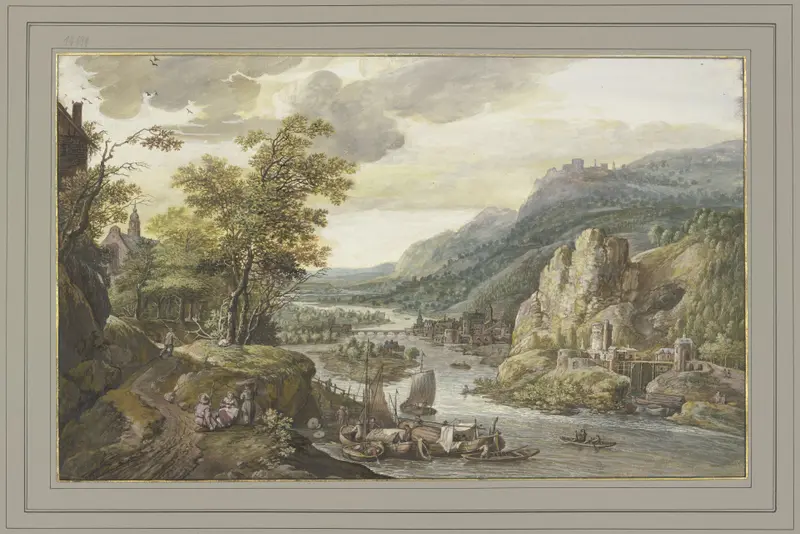
The essence of light dances across the canvas, illuminating the joy of life’s simplest moments. Look to the bottom left, where a group of villagers clusters around a table laden with food and drink, their faces aglow with merriment. The artist employs a vibrant palette of yellows and greens, contrasting with deep shadows that create depth and draw attention to the figures’ animated gestures. Notice how the light spills from the center, casting a warm aura that unites the revelers, as if inviting the viewer into their intimate world. As you explore further, consider the juxtaposition of celebration and the presence of nature surrounding the scene.
The lush greenery frames the gathering, suggesting life’s abundance, while the shadows hint at impending dusk, a reminder that joy is fleeting. Each expression, from laughter to whispers, tells a story of connection amidst a communal spirit, evoking nostalgia for times shared, yet fleeting. During the years 1651 to 1684, when this work was created, the artist thrived in the vibrant cultural milieu of the Dutch Golden Age, a time when art flourished with themes of daily life and community. Battem's focus on local celebrations reflects both personal experiences and societal values, capturing a moment of unity amidst the ever-changing tides of life.
More Artworks by Gerrit Battem

More Genre Scene Art

Banquet of the Officers of the St George Civic Guard
Frans Hals

Rembrandt and Saskia in the Scene of the Prodigal Son
Rembrandt van Rijn

Bal du moulin de la Galette
Pierre-Auguste Renoir

Quadrille at the Moulin Rouge
Henri de Toulouse-Lautrec

A Burial at Ornans
Gustave Courbet

When Will You Marry?
Paul Gauguin