
A Village Kermesse With Numerous Figures And Market Stalls — History & Facts
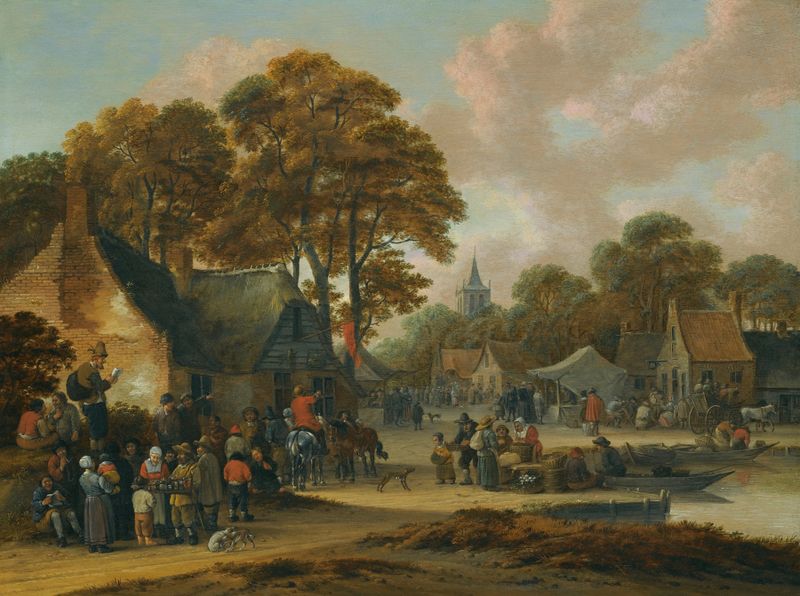
When did color learn to lie? The vibrancy of hues can mask deeper truths, concealing underlying tensions beneath layers of festive joy. In A Village Kermesse With Numerous Figures And Market Stalls, the bright marketplace draws the eye, yet whispers of chaos linger like shadows beneath the laughter. Look closely at the bustling scene, where figures meander through a vibrant tapestry of stalls. Notice how the warm golds and deep reds dominate the canvas, illuminating the joyous expressions of the villagers and their lively interactions.
The placement of the stalls creates a rhythmic flow, guiding the viewer’s gaze across the multitude of characters, each seemingly engaged in the delights of the fair. Yet, amidst this apparent celebration, the artist’s brush hints at something unsettling lurking just beneath the surface. Consider the juxtaposition of joy and the tension of the crowd. While the vendors display their wares in brilliant colors, their postures and expressions convey a mix of excitement and unease.
A child clutching a toy stands too close to a group of animated adults, suggesting that innocence exists in the precarious balance of this festive gathering. The vibrancy of the market stalls and the clamor of voices mask an underlying current of violence—a reminder that even the most joyous occasions can be steeped in conflict. Created in the late 17th century, Rombouts painted this lively scene during a time when the Netherlands was increasingly affected by social and economic turbulence. The era was marked by a flourishing of genre painting, as artists sought to reflect everyday life.
Yet, amid this artistic celebration, the shadows of societal unrest were never far from the surface, infusing the vibrant colors with a tension that speaks to the complexities of human experience.
More Artworks by Salomon Rombouts
Browse all →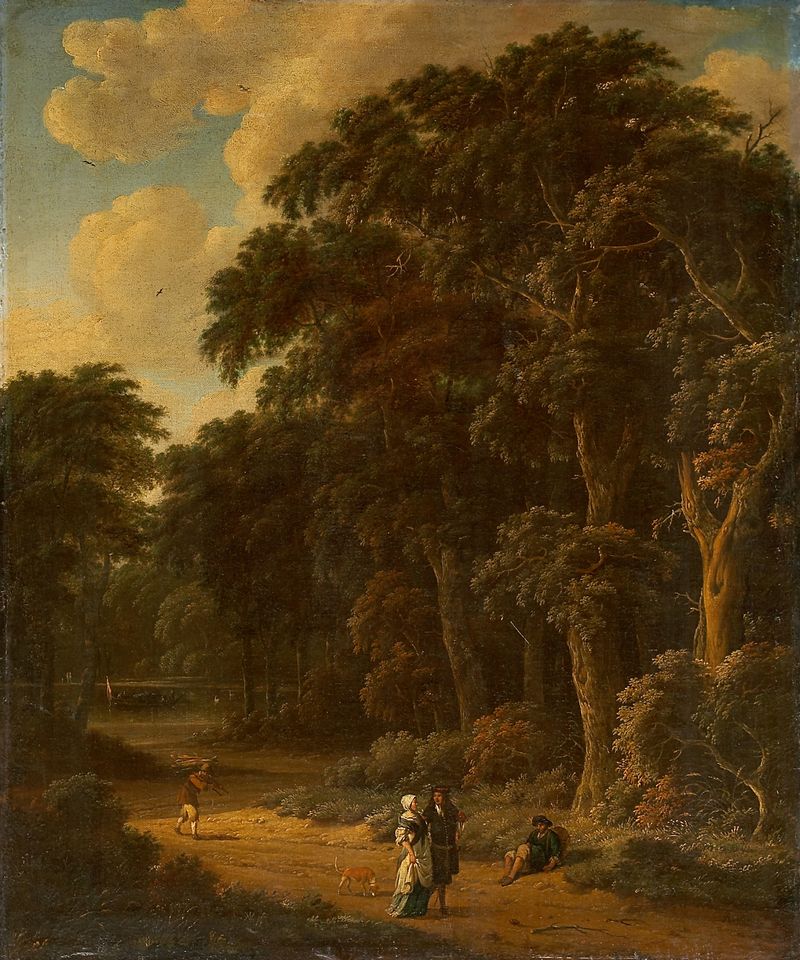
Forest Landscape with Forest Workers and People Strolling
Salomon Rombouts
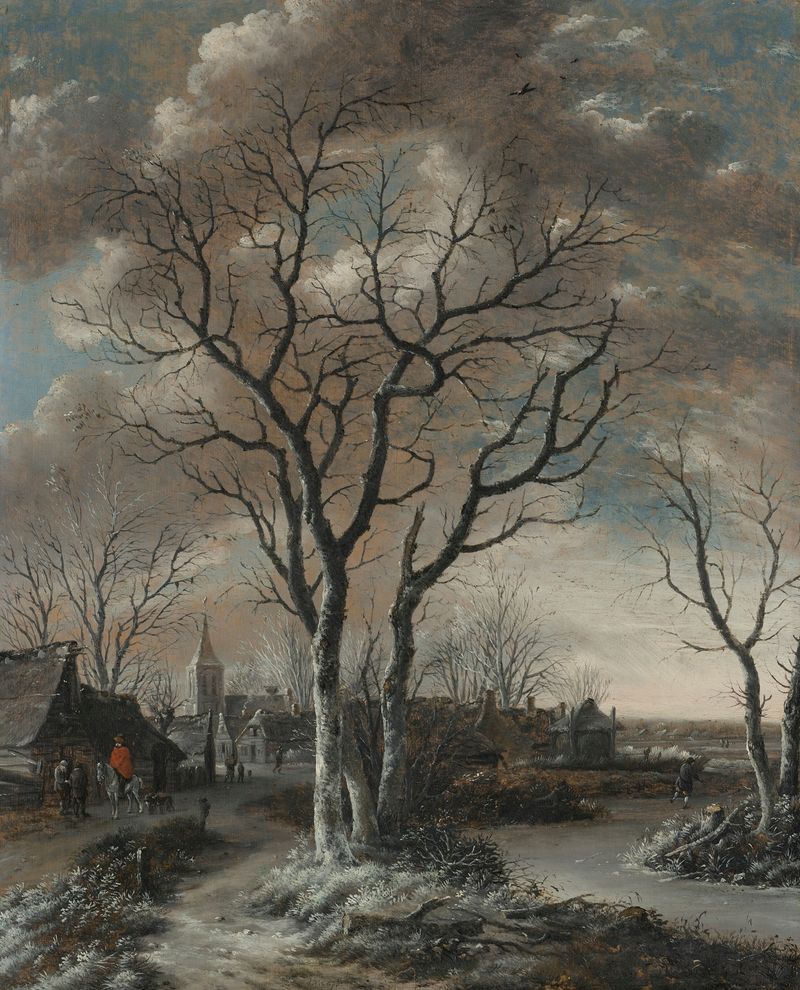
A winter landscape with skaters and other figures near a village, with a church
Salomon Rombouts
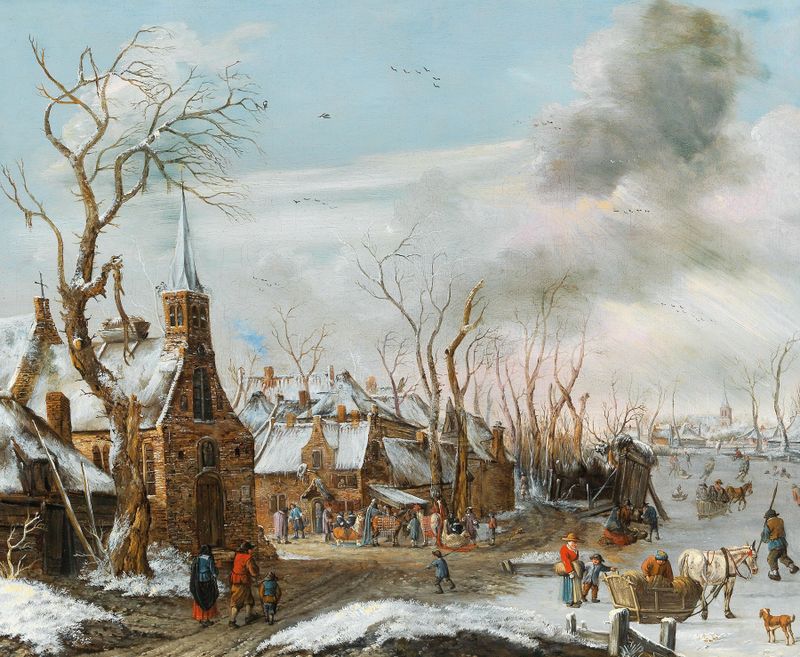
A winter landscape with a market scene
Salomon Rombouts
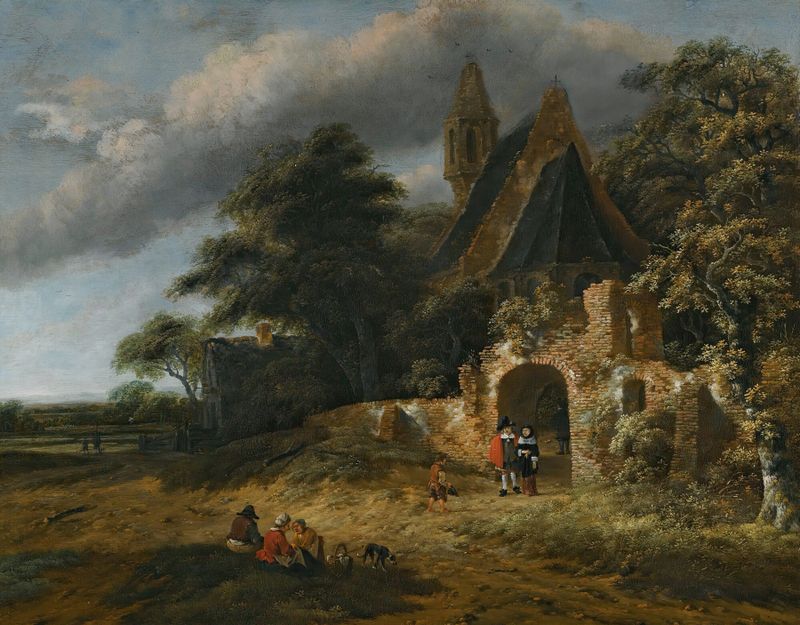
A Landscape With Figures Outside The Walls Of A Ruined Church
Salomon Rombouts
Landscape with a windmill
Salomon Rombouts
A Village Market Scene
Salomon Rombouts
Winter scene
Salomon Rombouts





