
A Winter’s Day in the Kempen — History & Facts
Who listens when art speaks of silence? In A Winter’s Day in the Kempen, the stillness of the winter landscape beckons contemplation of fleeting moments and the inevitability of mortality. Look to the left at the stark contrast of the bare trees, their branches etched against a pale sky, as if holding their breath in the cold air. The muted palette of grays and blues creates a somber atmosphere, while a soft glow from the low winter sun delicately illuminates the untouched snow. Notice how the artist masterfully employs brushwork to convey texture and depth, inviting the viewer to feel the chill of the scene, yet also fostering a sense of calm amidst the starkness. Delve deeper into the painting, and you find a quiet dialogue between life and death.
The bare trees symbolize the passage of time, a reminder of the cycles of nature, while the untouched snow speaks to purity and quietude. Each element captures the tension between stillness and movement, as if the landscape is caught in a moment of reflection, urging us to confront our own transience. In 1879, Joseph Théodore Coosemans painted this piece during a period marked by a growing interest in realism. Living in Belgium, he was influenced by his contemporaries who sought to capture the essence of the everyday.
This work reflects not only the beauty of the natural world but also the artist's introspection at a time when the complexities of life and death were becoming increasingly relevant in art.
More Artworks by Joseph Théodore Coosemans
Browse all →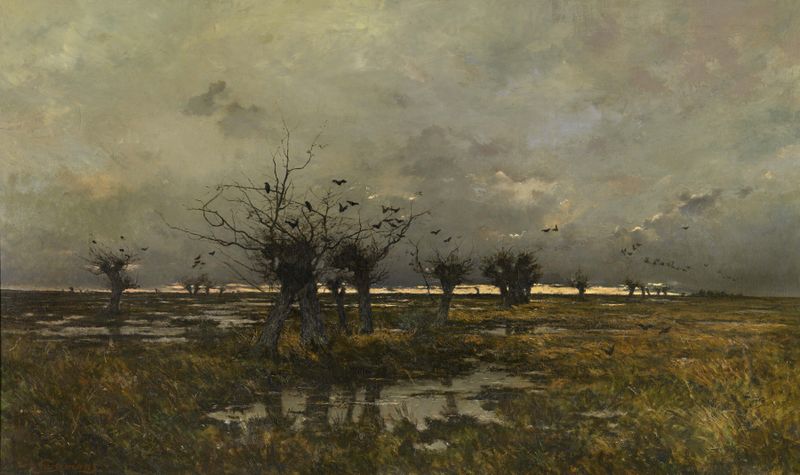
Evening in the Limburg Kempen
Joseph Théodore Coosemans
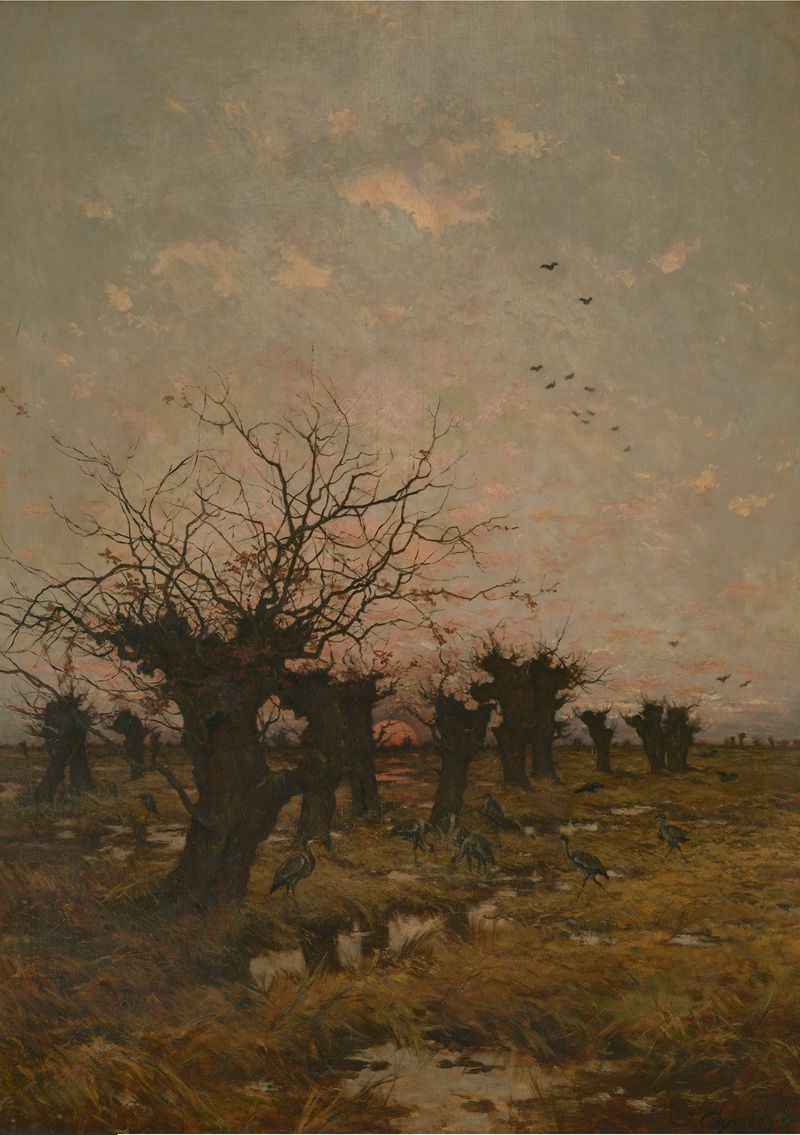
Sunset in the Kempen
Joseph Théodore Coosemans
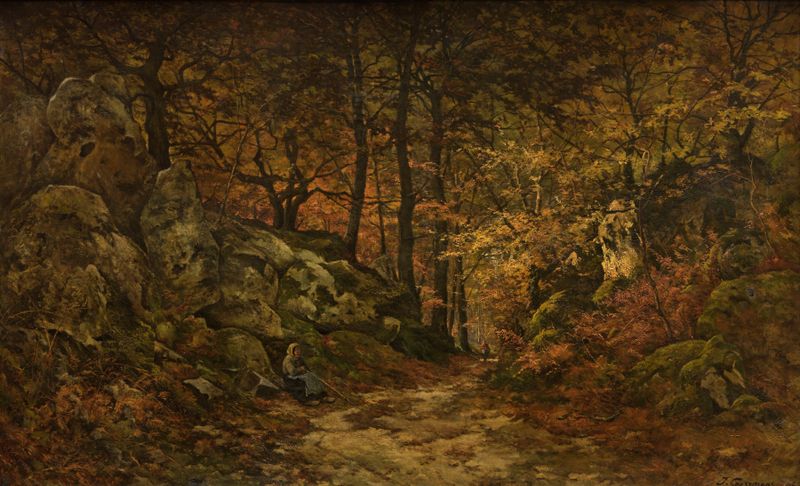
The Gorge aux Loups in Fontainebleau
Joseph Théodore Coosemans
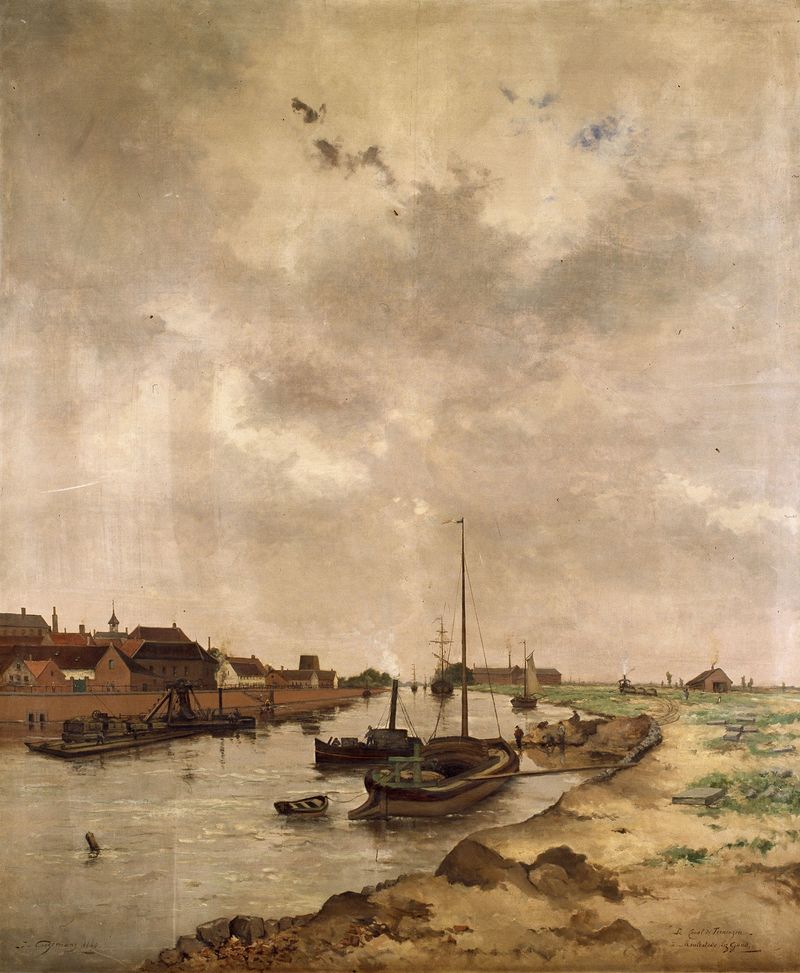
The Ghent-Terneuzen Canal in Ghent
Joseph Théodore Coosemans
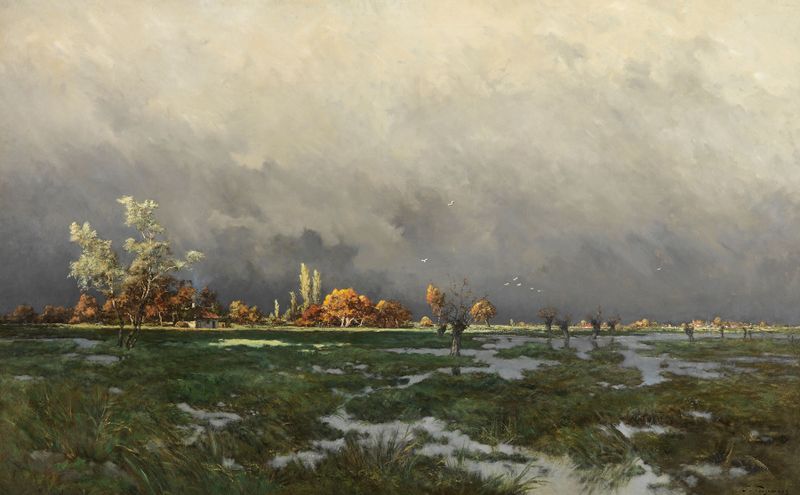
Ray of Sun after the Storm
Joseph Théodore Coosemans
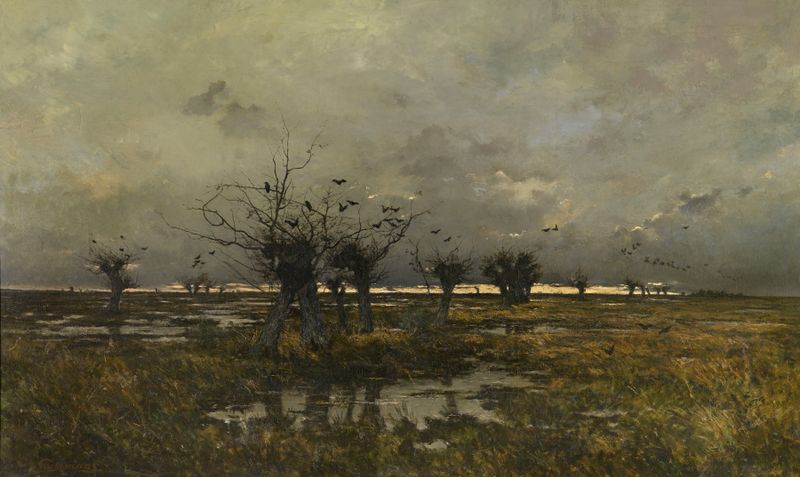
Evening in the Limburg Kempen
Joseph Théodore Coosemans





